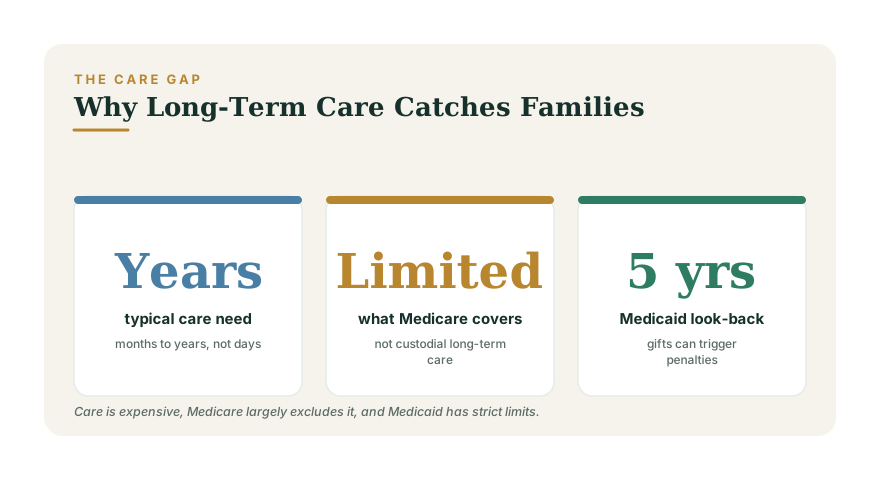
Long-term care — help with daily activities like bathing, dressing, and eating, whether at home or in a facility — is one of the largest and least-planned-for costs in retirement. A meaningful share of people who reach 65 will need it at some point, and the bills run high, often for years. The hard surprise for most families is that Medicare does not pay for ongoing custodial care. It covers short, skilled stints after a hospitalization, not the months or years of help many aging adults eventually need.
That gap is where Medicaid and long-term-care planning come in. This is a genuinely complex area where state rules vary and professional advice matters, but the core concepts are worth understanding well before they are needed.
The three ways people pay for care
Broadly, long-term care gets funded in one of three ways. You can pay out of pocket from savings and income, which works until the money runs low. You can buy long-term-care insurance ahead of time, which spreads the risk but has its own costs and tradeoffs — covered in Long-Term-Care Insurance Explained. Or, once assets are largely spent, you can qualify for Medicaid, the joint federal-state program that is the largest payer of long-term care in the country. Many people end up using a combination over time.
How Medicaid eligibility works
Unlike Medicare, Medicaid is means-tested — it is for people with limited income and assets. To qualify for long-term-care benefits, you generally must spend down your countable assets below a low threshold. Some assets are typically exempt: a primary home up to an equity limit, one vehicle, personal belongings, and certain prepaid funeral arrangements. Everything else — bank accounts, brokerage accounts, most investments — generally counts.
For married couples, special spousal-impoverishment rules let the healthy spouse keep a portion of assets and income so they are not left destitute when the other spouse enters care. These protections are important and easy to mishandle without guidance.
The five-year look-back
You cannot simply give your money to your children the month before applying. When you apply for Medicaid long-term-care coverage, the state reviews your finances for the prior five years (the look-back period). Assets you gave away or sold for less than fair value during that window can trigger a penalty period — a stretch of time during which Medicaid will not pay, calculated from the value transferred. Transfer too much too late, and you can be left without coverage and without the money. This is why genuine planning happens years ahead, not in a crisis.
Where trusts fit in
One advanced tool is an irrevocable trust (sometimes called a Medicaid asset-protection trust). Assets placed in such a trust, if it is structured correctly and funded outside the five-year window, may no longer count as yours for eligibility — while still passing to your heirs. The tradeoff is real: irrevocable means you give up control and access, which is a serious decision. A revocable living trust, by contrast, does not protect assets from Medicaid, a point many people get wrong. The distinctions are nuanced; a primer is in Trusts Beyond the Basics, but this is squarely territory for a qualified elder-law attorney.
Estate recovery: the part nobody mentions
Even after Medicaid pays for care, the story is not over. States are required to seek repayment from the estates of deceased Medicaid recipients through estate recovery — often a claim against the home after death. This is one reason families plan ahead: an asset that seemed protected during life can still be pursued afterward.
Balancing care planning with leaving an inheritance
This is the emotional heart of the decision. Aggressive asset protection can preserve an inheritance but may steer you toward Medicaid-funded care, which can be more limited in setting and choice. Paying privately preserves flexibility and dignity of choice but can consume the estate. There is no universally right answer — it depends on your values, your family, and your resources.
A reasonable framing: protect the surviving spouse first, plan early enough to have options, and be honest about the tradeoff between maximizing an inheritance and maximizing your own care. Whatever you decide should connect to the rest of your estate plan — see Healthcare Costs in Retirement for the broader budget, and check that your wishes are documented with the Estate Readiness Assessment. The single best move is to start the conversation years before care is needed, while every option is still open.