Disability insurance replaces a portion of your income if illness or injury keeps you from working — and for most working-age people, their ability to earn is their single largest financial asset. But when you buy a policy, one setting quietly shapes both what you pay and how much risk you keep: the elimination period, sometimes called the waiting period. It is the stretch of time you must be disabled before benefits actually begin, and getting it right can save real money without leaving a dangerous gap.
What the elimination period is
The elimination period is a deductible measured in time rather than dollars. If your policy has a 90-day elimination period and you become disabled, you receive no benefits for those first 90 days; the insurer starts paying only after the waiting window closes. Common choices are 30, 60, 90, 180, and 365 days. During that gap you are on your own financially, which is why the elimination period and your cash reserves are two halves of the same decision.
How it moves your premium
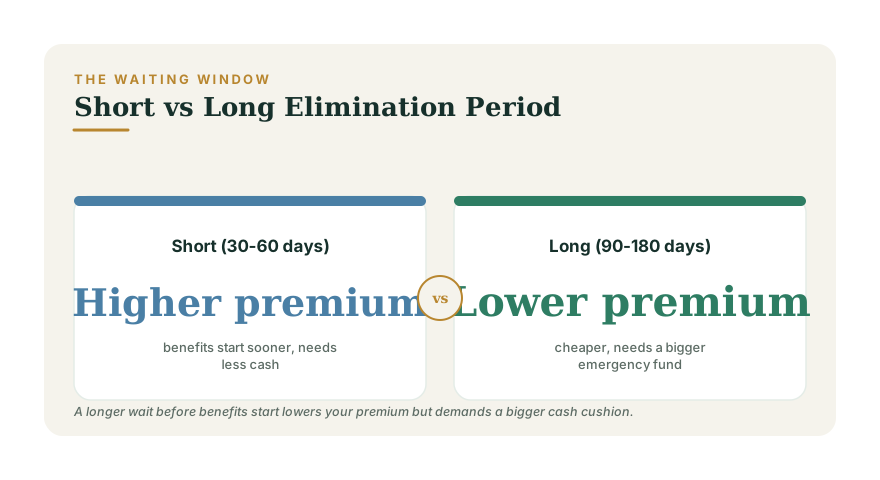
Insurers price the elimination period the way they price any deductible: the more you agree to cover yourself, the less they charge. A short elimination period — say 30 days — means the insurer starts paying quickly and covers more claims, so premiums are higher. A long elimination period — 90 or 180 days — shifts the early burden to you, so premiums drop, often substantially. Lengthening the wait is frequently the single most effective way to make a strong policy affordable, which matters because underinsuring is the more common mistake, as The Most Ignored Insurance explains.
Matching it to your emergency fund
The right elimination period is the longest one your cash reserves can comfortably bridge. If you have a solid emergency fund covering six months of expenses, a 90- or even 180-day elimination period may be perfectly safe — and the premium savings can fund a longer benefit period or a larger monthly benefit, which usually matter more. If your cash cushion is thin, a shorter wait protects you from having to borrow or sell investments while you recover. Size the trade-off with the Emergency Fund Calculator so the numbers, not guesswork, set the length.
Elimination period versus benefit period
Do not confuse the two settings, because they pull in opposite directions on risk. The elimination period is how long you wait before benefits start. The benefit period is how long benefits keep paying once they start — two years, five years, or to retirement age. When budget is tight, most advisors would rather you lengthen the elimination period (a risk you can plan for with savings) than shorten the benefit period (a risk that is catastrophic and unpredictable). A long-term disability is the scenario that wrecks a financial plan, so protect the tail first. How much monthly benefit to buy is covered in How Much Disability Insurance Do You Need?.
A few practical cautions
- Benefits arrive in arrears. Even after the elimination period ends, the first check typically comes a month later, so your real cash gap is often the elimination period plus roughly 30 days.
- Group coverage often has a short-term bridge. If your employer offers short-term disability, it may cover the early weeks, letting you safely pick a longer elimination period on a long-term policy.
- The clock can restart. Read how the policy treats a relapse — some let you resume the same claim without a new waiting period within a set window, which is valuable.
Choose the wait you can afford to bridge
The elimination period is a dial that trades premium for cash-flow risk. Line it up with your emergency fund: the more months you can self-fund, the longer the wait you can accept, and the more of your premium you free up for the coverage that truly matters — a robust monthly benefit that lasts. Run your reserves through the Emergency Fund Calculator, check your overall coverage with the Insurance Needs Calculator, take the Financial Resilience assessment, and build the full picture at the planning hub.