Long-term care is the expense most people never plan for and many cannot afford. It covers help with the basic activities of daily living — bathing, dressing, eating, moving around — when age, illness, or disability makes them hard to manage alone. It is not a medical emergency; it is the slow, ongoing cost of needing a hand, and it can run for years.
The reason it blindsides people is a common, false assumption: that regular health insurance or Medicare will cover it. They largely do not. Medicare pays for short, skilled, rehab-style care after a hospital stay — not the years of custodial help most long-term care actually involves. Regular health insurance is built around treating illness and injury, not paying someone to help you bathe and dress for years on end. That gap, between what people assume is covered and what actually is, is where unprepared families get hit hardest.
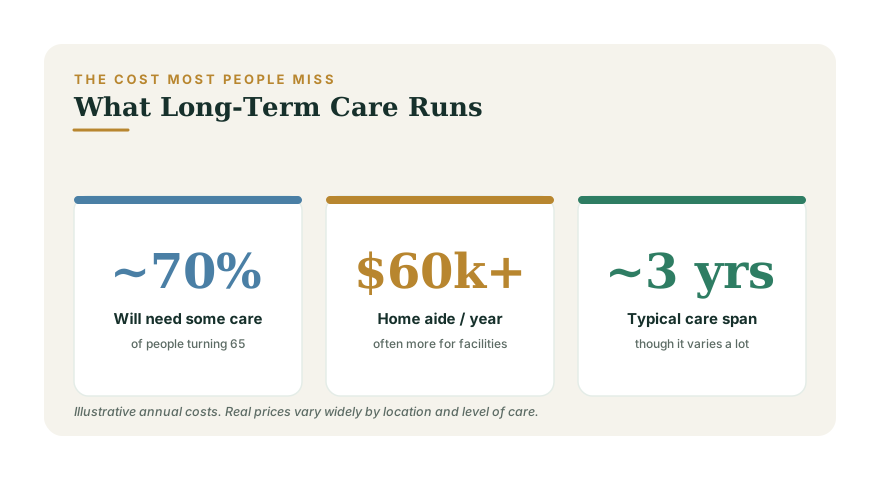
What long-term care actually costs
The numbers are sobering. Depending on where you live and the level of help, an in-home aide can run tens of thousands of dollars a year, an assisted-living facility more, and a private room in a nursing home well into six figures annually. Roughly seven in ten people turning 65 will need some long-term care in their lives, and while many spells are short, a meaningful share last several years. A multi-year stay in a facility can quietly consume a lifetime of savings, which is why this risk belongs in any serious look at healthcare costs in retirement.
How long-term care insurance works
A traditional long-term care policy pays a daily or monthly benefit once you can no longer perform a set number of daily activities, usually after a waiting period you cover yourself. Policies vary in the daily benefit, how long benefits last, and whether the benefit grows with inflation — and the inflation rider matters a lot, because care costs decades from now will dwarf today's.
The catch is that these policies are expensive, the premiums can rise over time, and you may pay for years and never file a claim. That uncertainty has made standalone long-term care insurance a harder sell than it once was.
Who should seriously consider it
Long-term care coverage tends to make the most sense for a middle band of wealth:
- Too wealthy to qualify for Medicaid, but not wealthy enough to self-fund. If a few years of care would devastate your savings, insurance transfers that risk. People with modest assets may end up relying on Medicaid; the very wealthy can simply pay.
- Those who want to protect a spouse or heirs. Coverage can keep one partner's care from impoverishing the other, or preserve an inheritance.
- People in their 50s to mid-60s. Buy too early and you pay premiums for decades; wait too long and policies become costly or impossible to get if your health declines. The mid-50s to early 60s is the common sweet spot.
The alternatives
Insurance is not the only answer, and for many it is not the best one.
- Self-funding. If you have substantial assets, you may choose to earmark a portion of your portfolio for potential care and skip premiums entirely. This is cleanest for those with real wealth, and it pairs naturally with a thoughtful retirement drawdown strategy.
- Hybrid policies. These combine long-term care coverage with life insurance or an annuity. If you never need care, your heirs still receive a death benefit, which solves the "use it or lose it" complaint of traditional policies — though hybrids are pricey and complex, and complexity often hides cost.
- Family caregiving plus partial coverage. Some families plan to provide informal care and buy a smaller policy to cover the gaps, rather than insuring the full cost.
- Medicaid as a backstop. For those with limited assets, Medicaid covers long-term care after you spend down — but it restricts where and how you receive care.
Whichever path you lean toward, the time to decide is well before you need care, not in the middle of a crisis. Health and finances both tend to be in better shape in your fifties and early sixties, which is exactly when traditional and hybrid policies are most affordable and self-funding can still be planned around. Waiting until a diagnosis usually removes the insurance options entirely and leaves only spending and Medicaid.
Where it fits in a plan
Long-term care is a genuine financial risk, not a sales gimmick, but the right response depends entirely on your wealth and your family situation. Decide deliberately rather than buying out of fear or ignoring it out of denial. This decision sits alongside the others you make to protect dependents — see Do You Actually Need Life Insurance? — and it belongs in your estate plan. Use the Estate Readiness assessment and the Retirement Planner to weigh self-funding against coverage in the context of your full picture.