A joint bank account is owned by two (or more) people, each with full and equal rights to the money. That is the whole idea and also the whole risk: either owner can deposit, withdraw, or even empty the account without the other's permission. For the right relationship a joint account is wonderfully simple; for the wrong one it is a fast way to lose money or trust. Knowing exactly how it works helps you decide whether to open one and how to set it up safely.
What "joint" actually means
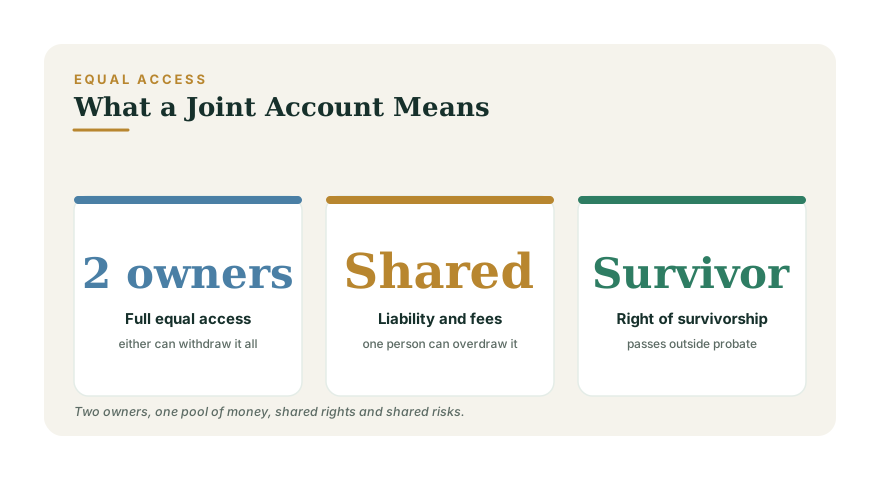
On a joint account, both names are on the title and both people are full owners — not one owner plus an authorized user. Every owner can see every transaction, move any amount, and is equally responsible for the account. Most joint accounts also carry a right of survivorship, meaning that if one owner dies, the money passes automatically to the surviving owner without going through probate. That survivorship feature is one reason joint accounts are common between spouses and between aging parents and an adult child.
The pros
- Simplicity for shared expenses. Rent, groceries, and bills come from one pool that both people fund, so there is no monthly settling-up. This is the backbone of many couples' systems — see how to budget as a couple.
- Transparency. Both people see the full picture, which can build trust and make joint goals easier to track.
- Survivorship. The surviving owner keeps immediate access to cash when they need it most, avoiding the delay of probate.
- Practical help. A joint account lets an adult child help an aging parent pay bills, or a couple manage money together seamlessly.
The cons and the liability trap
The same equal access cuts both ways. Each owner can drain the account or run up overdrafts, and the other is on the hook. There are three risks worth taking seriously:
- Shared liability. If one owner overdraws the account or bounces a payment, both owners are responsible for the resulting fees. The mechanics of those charges are in overdraft and NSF fees.
- Exposure to the other person's problems. If a co-owner is sued or owes a debt, a creditor may be able to reach the funds in the joint account — even money you deposited.
- No privacy and no unilateral lock. You cannot hide a purchase, and you generally cannot freeze the account against the other owner. In a souring relationship, one person can legally take all the money.
Who it suits — and who should think twice
Couples are the classic fit, especially after marriage when finances merge; the broader picture is in combining finances when you marry. Many couples use a hybrid: a joint account for shared bills plus separate personal accounts for individual spending, which preserves both teamwork and autonomy.
Roommates should usually avoid a true joint account. The shared-liability and full-access risks are large between people who are not building a life together. A shared bills app or a small dedicated account funded only with the month's shared costs is safer.
Aging parents and adult children often open joint accounts so the child can help manage money. It works, but it carries hidden complications: the funds become legally exposed to the child's creditors, and survivorship may unintentionally cut other heirs out of an inheritance. Before defaulting to joint ownership here, weigh the alternatives below.
Safer alternatives for many situations
A joint account is not the only way to share or delegate access:
- Authorized user or convenience account. Some banks let you add someone who can transact on the account without becoming an owner — useful for a caregiver who needs to pay a parent's bills without inheriting the balance or exposing it to their debts.
- Power of attorney. A financial power of attorney lets a trusted person manage someone's money legally without joint ownership, which is often the right tool for an aging parent. See power of attorney and healthcare directives.
- A POD beneficiary instead of survivorship. If the only reason to add a co-owner is to pass the money on at death, a payable-on-death designation does that without giving the person access while you are alive — covered in POD and TOD beneficiaries.
How to set one up
Opening a joint account is much like opening any account, except both owners provide ID, Social Security numbers, and signatures. Before you sign, agree out loud on a few things: how much each person contributes, what the account is for, and what counts as a purchase you would each flag. A five-minute conversation prevents most joint-account conflicts.
Whatever structure you choose, build it into a shared plan rather than leaving it to chance. Map your combined income, bills, and goals with the budget analyzer, and if you are merging finances around a life change, the life events hub walks through the money steps that come with it.