An overdraft fee is one of the most expensive charges in everyday banking, and it tends to land on the people who can least afford it: those running a low balance near payday. The good news is that these fees are almost entirely avoidable once you understand how they work. Most overdraft coverage is optional — you can simply turn it off — and a couple of free alerts will catch the rest.
Overdraft vs NSF: two different charges
When a payment hits your account and your balance is too low to cover it, one of two things happens:
- Overdraft fee. The bank pays the transaction anyway, pushing your balance negative, and charges you a fee for the courtesy — often around thirty to thirty-five dollars. You get your coffee, but it cost an extra thirty-five dollars.
- NSF (non-sufficient funds) fee. The bank declines or returns the transaction because of insufficient funds, and still charges you a fee. The payment does not go through, and you are charged anyway — and you may face a second late fee from the biller whose payment bounced.
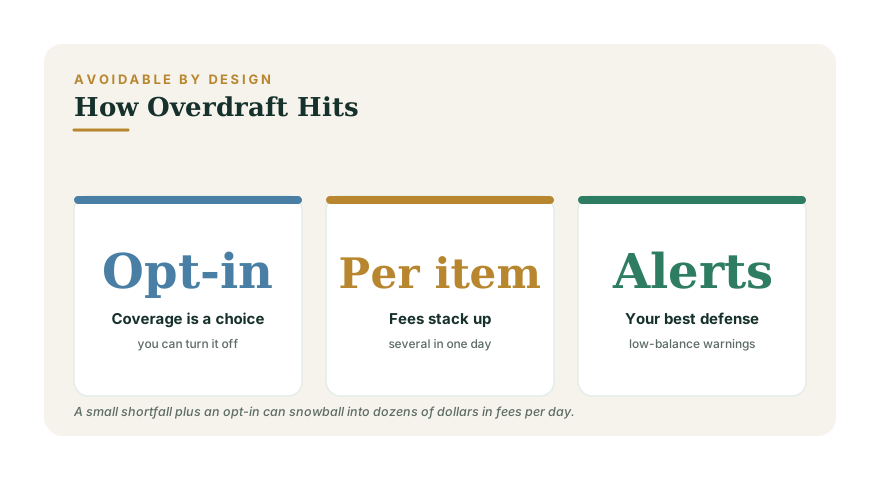
Either way you pay, which is what makes these fees feel so punishing. The deeper problem is the cascade: once your balance is negative, every additional transaction that day can trigger its own fee, turning a four-dollar shortfall into a hundred dollars in charges.
The opt-in rule almost nobody knows about
Here is the single most useful fact in this whole topic: for everyday debit-card and ATM transactions, banks cannot charge you overdraft fees unless you opted in. By default, if you have not opted in, a debit purchase that would overdraw your account is simply declined — free, no fee. Many people were nudged into opting in when they opened the account without realizing it meant agreeing to pay for overdrafts.
If you opt out (or never opted in), your debit card just gets declined when the money is not there — mildly inconvenient, but far better than a thirty-five-dollar fee for a small purchase. For most people, especially anyone living close to the edge, opting out is the right call. Note that this opt-out covers debit and ATM transactions; checks and automatic bill payments work differently and can still trigger overdraft or NSF fees, which is where alerts come in.
Why these fees hit the people who can least afford them
Overdraft fees are charged as a flat amount regardless of how small the overdraft is, so they fall hardest on people with the thinnest cushions. Someone running a low balance between paychecks can trigger several fees in a bad week — fees that are a large share of what they have, while a wealthier customer with a fat balance never pays them at all. This is part of why escaping the overdraft cycle is so tied to building even a small buffer; see how to stop living paycheck to paycheck.
Five ways to avoid them entirely
- Opt out of overdraft coverage on debit and ATM transactions so purchases are declined instead of charged. Call your bank or change the setting in the app.
- Turn on low-balance alerts. Set your app to text or email you when your balance drops below a threshold — say, a hundred dollars. This one free setting prevents most overdrafts because you see the shortfall before a payment hits.
- Link a savings account as overdraft protection. Many banks let you tie a savings account to checking so a shortfall is covered by a transfer from your own savings, usually for a small fee or none — far cheaper than a true overdraft.
- Set up an overdraft line of credit. Some banks and credit unions offer a small line of credit that covers shortfalls and charges interest instead of a flat fee. It is a backstop, not a habit, but it beats stacked overdraft charges.
- Keep a small buffer. Leaving even a hundred or two hundred dollars of padding in checking that you mentally treat as "zero" absorbs timing mismatches between deposits and payments.
Pick a bank that does not nickel-and-dime you
Increasingly, online banks and credit unions either do not charge overdraft fees at all or offer generous grace policies, and they tend to charge fewer fees overall. If your bank's fees keep biting, that is a signal to shop around — the broader menu of charges to escape is in the bank fees quietly draining your checking account, and the cost differences across institution types are in credit unions vs banks.
The bottom line: overdraft and NSF fees are a design you can opt out of, not a fact of life. Spend ten minutes turning off overdraft coverage and switching on low-balance alerts, and these charges largely disappear. To find the rest of the fees and leaks hiding in your monthly spending, run your accounts through the budget analyzer.