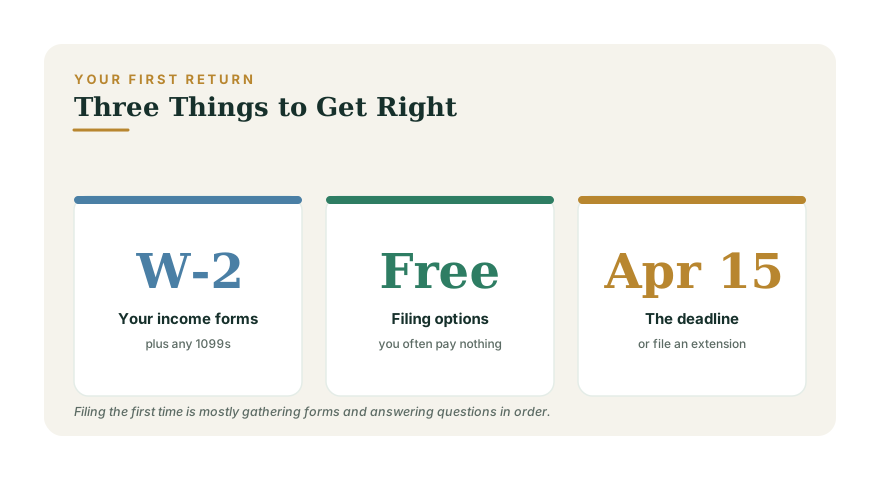
Filing a tax return for the first time can feel like a test you never studied for, but it is far simpler than it looks. For most first-time filers, the whole process is gathering a handful of forms, typing the numbers into free software, and answering plain-English questions. The software does the math. Here is how to walk through it without stress.
Do you even need to file?
If you earned more than a fairly low income threshold during the year, you generally need to file a federal return. But even if you earned less, you usually want to file: if your employer withheld any income tax from your paychecks, filing is how you get that money back as a refund. Many first-timers who worked a part-time or summer job are owed money and would simply forfeit it by not filing.
Gather your documents first
Having everything in one place before you start makes filing painless. The common documents are:
- Form W-2 — from each employer, showing your wages and the taxes already withheld. Employers must send these by late January. If you are unsure how to read it, see Understanding Your W-2 Form.
- Form 1099s — for other income: 1099-NEC for freelance or gig work, 1099-INT for bank interest, 1099-DIV or 1099-B for investments.
- 1098-T — if you paid college tuition, which can unlock education credits.
- Your Social Security number and last year's return if you have one.
Free filing options — most people should not pay
You rarely need to pay to file a simple return. The IRS offers free guided filing programs for taxpayers below an income threshold, a free direct-filing option in many states, and the Volunteer Income Tax Assistance program for in-person help. Several commercial products also offer a genuinely free tier for simple returns — though they push hard to upsell you. The trade-offs are laid out in TurboTax vs Free Alternatives.
The standard deduction does the heavy lifting
Before you are taxed, you get to subtract the standard deduction — a flat amount that lowers your taxable income, no receipts required. For the large majority of first-time filers, the standard deduction is far larger than anything they could itemize, so you simply take it and move on. You only itemize if your deductible expenses (large mortgage interest, big charitable gifts, heavy medical costs) add up to more than the standard amount, which is uncommon early on. The choice is explained in Standard vs Itemized Deductions.
Credits first-timers often qualify for
A credit reduces your tax bill dollar-for-dollar, which makes it more valuable than a deduction. A few that first-time filers commonly miss:
- Education credits — if you paid college tuition, the American Opportunity Credit or Lifetime Learning Credit can return real money. See Tax Credits vs Deductions for why credits matter more.
- Earned Income Tax Credit — for lower-income workers, a sizable refundable credit that many eligible people fail to claim.
- Saver's Credit — if you contributed to a retirement account and your income is modest.
Good filing software asks the questions that surface these automatically, which is another reason not to file on paper by hand.
Deadlines and how to avoid penalties
The federal deadline is typically April 15. If you cannot finish in time, you can file a free extension that gives you until October — but an extension to file is not an extension to pay. If you owe, you should estimate and pay by April to avoid interest and penalties. If you are getting a refund, there is no penalty for filing late, but why wait on your own money?
After you file
Choose direct deposit and you will usually see a refund within a few weeks; you can track it on the IRS website. Save a copy of your return — you will need it next year. And do a quick gut check on your withholding: if you received a very large refund, you over-withheld all year, and adjusting your W-4 puts that money in your paychecks instead. To see whether your filing setup and withholding are dialed in, run the Tax Health assessment. And before you spend the refund, read What to Do With Your Tax Refund.