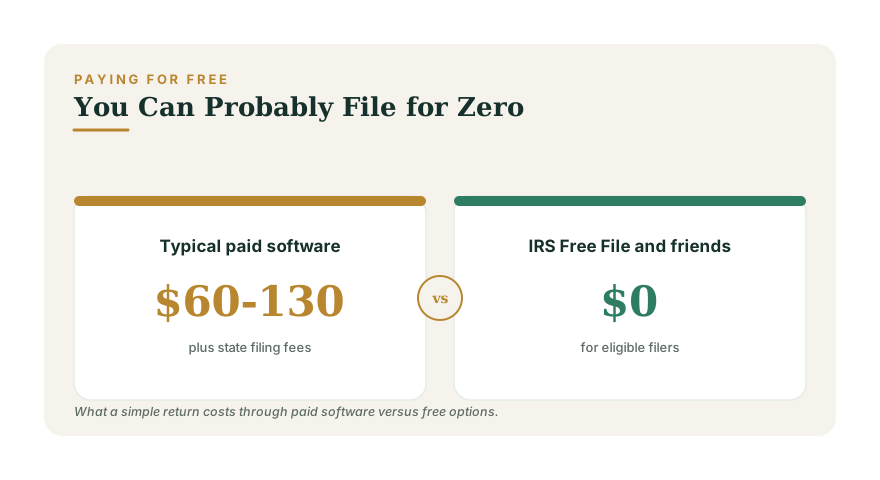
Every spring, millions of Americans pay 60 to 130 dollars or more to file a tax return they were legally entitled to file for free. This is not an accident or a matter of people being lazy. It is the predictable result of years of lobbying and clever product design meant to steer you toward a paid product and away from the free one. Once you understand how the free options work and why they stayed hidden for so long, you can almost certainly file for zero dollars and put that money back in your own pocket.
The honest truth: free was deliberately buried
The IRS struck a deal with the tax-prep industry: the companies would offer free filing to a large share of taxpayers, and in exchange the IRS would not build its own free filing tool. The companies held up their end on paper while doing everything possible to make sure you never found the free version. Some even added code so the free-file pages would not show up in search results. The "free" product you did find was usually a teaser that demanded an upgrade the moment your return got the slightest bit complicated. The result was exactly as intended: most people who qualified for free filing paid anyway.
Follow the money
The economics are simple. A tax return is a commodity; the math is the same no matter who prints the forms. So the entire business model depends on convincing you the process is scary and on upselling you at the moment you feel most trapped, mid-return with your data already entered. The classic move is to let you do all the work for "free," then announce at the finish line that your particular situation requires the deluxe tier, plus a separate fee to file your state return. Walking away means re-entering everything elsewhere, so most people just pay. The fear is the product.
The genuinely free options
- IRS Free File. A partnership offering free brand-name software to taxpayers under an income threshold that covers a large majority of filers. Crucially, you must start from the IRS website, not the company's, or you may get routed into the paid version.
- IRS Direct File. A free tool from the IRS itself that lets eligible taxpayers file directly with the government, no third party involved. Availability depends on your state and the complexity of your return, and it has been expanding.
- Free File Fillable Forms. Electronic versions of the paper forms, free to everyone regardless of income. There is no hand-holding, so it suits people comfortable doing their own math, but the price is unbeatable.
- FreeTaxUSA and similar low-cost providers. Free federal filing for most situations with a small flat fee for state, often a fraction of the big-name price even when you do pay.
- VITA. Volunteer Income Tax Assistance offers free, in-person help from trained preparers for lower-income filers, people with disabilities, and limited-English speakers.
Now the math
Consider a typical filer with a W-2, some interest, and a student loan. Through a big-name paid product, the federal return might run 60 to 90 dollars after the upsell, plus another 40 to 60 dollars for state, easily 130 dollars total. The exact same return through IRS Free File or Direct File costs zero, and through a low-cost provider it might cost only the small state fee. Over a working life of 40 returns, that is thousands of dollars spent on a commodity service you could have gotten free, money that, invested instead, would have compounded into a meaningful sum.
When paying is actually worth it
Free is the right answer for most people, but not everyone. Honesty cuts both ways here. Paid software or a professional earns its fee when your situation is genuinely complex: you own a business or rental property, you had significant stock or crypto transactions, you went through a major life change like a move between states, you have equity compensation, or you simply do not have the time or confidence and value the peace of mind. A good CPA who finds one overlooked deduction can pay for themselves. The mistake is paying premium prices for a simple return that the free tools handle perfectly.
Your before-you-pay checklist
- Before entering anything, go to IRS.gov and check your eligibility for Free File and Direct File.
- If you use Free File, start from the IRS site, never the company's own page, to avoid the paid funnel.
- For a simple W-2 return, try Direct File or Free File Fillable Forms first.
- If your income qualifies, look up a local VITA site for free in-person help.
- If you must pay, compare a low-cost provider against the big names; the return is the same.
- Reserve a CPA for genuinely complex years where their fee can save you more than it costs.
- Confirm this year's income thresholds and which states Direct File covers at IRS.gov.
The honest recommendation
Start from the assumption that your return is free to file, because for most people it is, and make the paid products prove they are necessary rather than the other way around. Check your eligibility at IRS.gov before you type a single number into any product, and never finish a return inside software that springs a surprise fee at the end. Tax tools and thresholds change yearly, so confirm the current-year options before you file.
The dollars you save by not overpaying to file are small on their own but real, and they add up when you put them to work. Funnel that saved money into your plan, see what it grows into with our tools, and keep finding the breaks you are owed in our articles.