Here is a fact that surprises most people: two retirees can experience the exact same average annual return over their retirement and yet one runs out of money while the other dies wealthy. Nothing about their average performance differs. What differs is the order in which the good and bad years arrive. This is sequence-of-returns risk, and it is the most underappreciated danger in all of retirement planning.
Why order matters when you are withdrawing
While you are saving, the order of returns barely matters — you are adding money, not removing it, so a crash early in your career is actually a gift, letting you buy cheap. Retirement flips this. Now you are withdrawing, and selling shares to fund living expenses during a downturn locks in losses permanently. Those sold shares are gone; they cannot recover when the market rebounds.
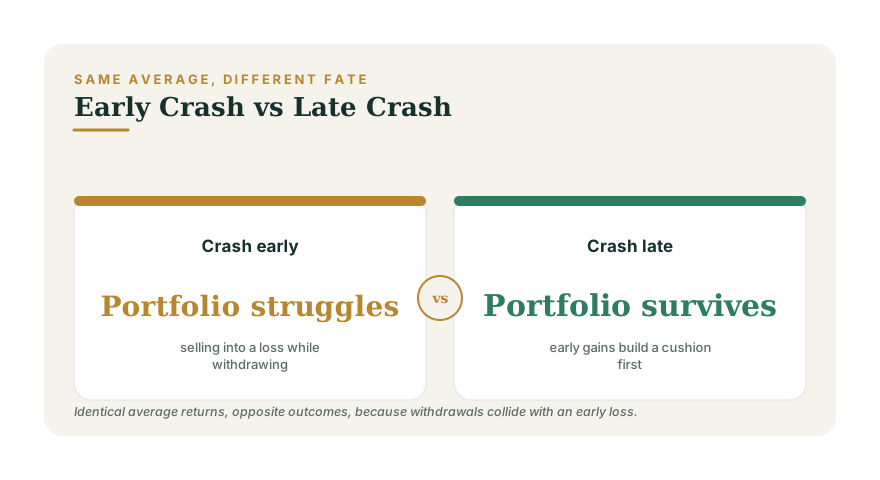
Picture two retirees who both average 7% a year. The first hits a steep crash in years one and two, while still pulling out income. The portfolio is drained of shares at low prices and never fully recovers, even though strong years follow. The second enjoys good early years, builds a cushion, and shrugs off the same crash when it arrives a decade later. Same average, opposite endings. That sensitivity to the early years is exactly why the 4% rule is built around worst-case historical sequences, not averages.
The danger zone
Sequence risk concentrates in a narrow window: roughly the five years before and the first ten years after you retire. This is when your portfolio is largest, your future contributions are ending, and your withdrawals are beginning. A major loss here, while you are pulling money out, is the scenario that does lasting damage. Get through that window without a catastrophic early drawdown, and the long tail of compounding usually takes care of the rest.
Defense one: the bond tent
One well-known defense is the bond tent. The idea is to temporarily increase your bond (and cash) allocation as you approach retirement, then slowly reduce it again once you are safely past the danger zone. Your stock allocation dips to its lowest around retirement day — when sequence risk peaks — and rises again later. It looks like a tent: low stocks at the apex of risk, higher on either side. This deliberately sacrifices some long-run growth to protect against the worst-timed crash. It is a refinement of the standard glide path discussed in Asset Allocation by Age.
Defense two: a cash buffer
A simpler, popular defense is a cash buffer: hold one to three years of expenses in cash or short-term bonds, separate from your invested portfolio. When markets fall, you spend from the buffer instead of selling stocks at a loss, giving your investments time to recover. When markets are healthy, you refill the buffer. This is the core of the bucket strategy explained in How to Turn a Nest Egg Into a Monthly Paycheck.
Defense three: flexible spending
The cheapest defense costs nothing but discipline: be willing to cut back in bad years. A retiree who trims discretionary spending — travel, big purchases — during a downturn withdraws fewer shares at depressed prices and protects the portfolio far more than rigid spending ever could. Even modest, temporary flexibility meaningfully improves the odds of a portfolio lasting.
Build the defenses before you need them
Sequence risk cannot be predicted, only prepared for, and the preparation has to happen before you retire — you cannot build a bond tent or a cash buffer in the middle of a crash. As you approach the danger zone, dial back risk, set aside a buffer, and plan for flexible spending. Model how a bad early sequence would hit your specific plan using the Retirement Planner, and check your overall readiness with the Retirement Readiness assessment.