Of all the defenses against fraud, a credit freeze is the one with the best cost-to-benefit ratio in personal finance. It is free by law, it can be turned on and off in minutes, and it blocks the most damaging kind of identity theft — a criminal opening new loans and cards in your name. If you take one action after reading about the scams sweeping 2026, make it this one.
What a credit freeze does — and does not do
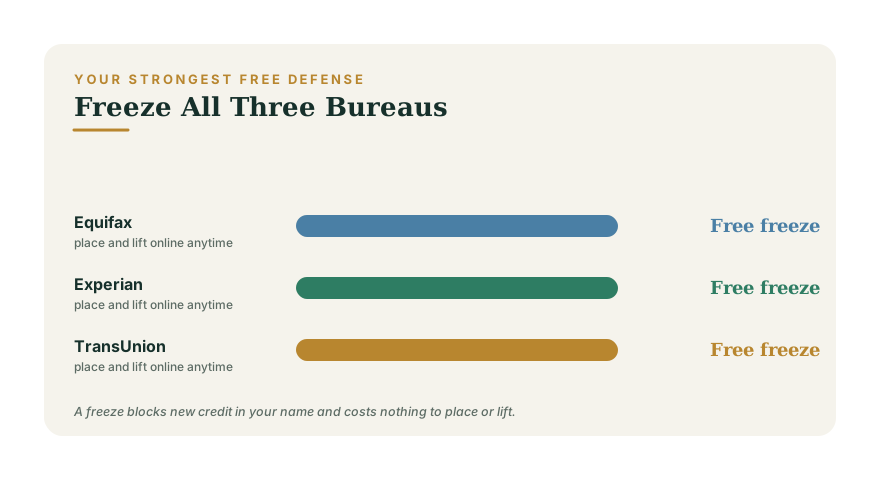
A freeze restricts access to your credit report. When a lender cannot pull your report, it will not approve a new account, so a thief with your Social Security number cannot open a card or loan in your name while the freeze is on. According to the Consumer Financial Protection Bureau, placing and lifting a freeze is free at all three nationwide bureaus.
What a freeze does not do: it does not affect your credit score, it does not stop charges on your existing cards (that is separate card fraud), and it does not block your current creditors or your own access. When you genuinely need new credit, you temporarily lift the freeze, then it snaps back on.
A freeze differs from a weaker fraud alert, which merely asks lenders to verify your identity, and from paid credit-lock products that bureaus market — the free statutory freeze is the one you want. The broader case for it is in Freeze Your Credit: A Fraud Defense.
How to freeze your credit at all three bureaus
You must freeze each bureau separately, because a lender might check any of them:
- Equifax — at equifax.com, create an account and place a security freeze.
- Experian — at experian.com, do the same.
- TransUnion — at transunion.com, the same again.
Each takes a few minutes online (or by phone). You will set up credentials or a PIN — store them safely, since you will need them to lift the freeze later. Also consider freezing the two lesser-known bureaus that specialty lenders use: Innovis and the National Consumer Telecom and Utilities Exchange (NCTUE), which some phone and utility providers check. If you have children, freeze their credit too; child identity theft often goes undetected for years.
If your identity has already been stolen
If a thief already has your information, the government provides a clear recovery path. The FTC's IdentityTheft.gov site walks you through it and generates a personalized recovery plan and an official Identity Theft Report. The core steps:
- Place a fraud alert and freeze your credit at all three bureaus immediately, if you have not already.
- Report to the FTC at IdentityTheft.gov. This creates your official Identity Theft Report, which unlocks legal rights when disputing fraudulent accounts.
- Review your credit reports for accounts you did not open. You are entitled to free reports — the process is in Checking Your Credit Report for Errors.
- Dispute and close fraudulent accounts with each company's fraud department, sending your Identity Theft Report.
- Change passwords and turn on two-factor authentication on your financial and email accounts.
- File a police report if you know the thief or a creditor requires one.
The full, detailed recovery walkthrough is in How to Recover From Identity Theft. If the theft came through a payment app or account takeover, coordinate with the steps in Zelle and P2P Payment Fraud.
Stay frozen, stay alert
Once your freezes are in place, keep them on permanently and lift them only briefly when you apply for credit. Add free transaction and login alerts on your bank and card accounts, and review your credit reports periodically for anything unfamiliar. You can watch how account changes and new inquiries would affect your profile with the Credit Score Simulator.
Ten free minutes, permanent protection
A credit freeze is the rare financial move that is free, fast, and powerful, with almost no downside. Combined with the scam awareness in Romance and AI-Romance Scams and basic account hygiene, it closes off the most damaging form of identity theft entirely. Freeze all three bureaus today, then confirm the rest of your defenses with the Financial Resilience assessment and build out your full plan at the planning hub.