One of the most effective protections against identity theft is also one of the least used, and it is completely free. A credit freeze blocks new creditors from pulling your credit report, which means a thief who has your details cannot open new accounts in your name. If you are not planning to apply for credit soon, there is little reason not to have one in place.
Despite being free by federal law since 2018, most people have never set one up. Here is what it does, how it compares to the alternatives, and exactly how to turn it on.
Freeze versus fraud alert versus lock
These three tools are often confused, but they are different:
- Credit freeze — restricts access to your credit report so new accounts cannot be opened. It is free, governed by law, and you control it at each bureau. This is the strongest option.
- Fraud alert — a flag that asks lenders to take extra steps to verify your identity before extending credit. It is free and you only need to place it with one bureau, which notifies the others, but it relies on lenders actually following through, so it is weaker than a freeze.
- Credit lock — a similar effect to a freeze but offered as a product by the bureaus, sometimes for a fee or bundled with monitoring. Locks are governed by the company's terms rather than law, so a freeze is generally the safer, free choice.
How to freeze at all three bureaus
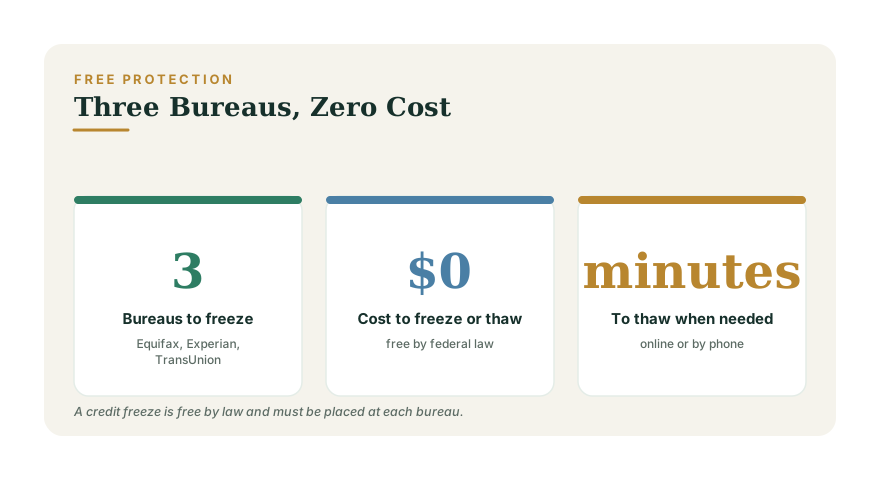
A freeze only protects you at the bureau where you place it, so you must do it at all three: Equifax, Experian, and TransUnion. To freeze:
- Go to each bureau's website directly, or call them, and request a security freeze.
- Verify your identity with personal information.
- Save the PIN or login credentials each bureau gives you. You will need these to lift the freeze later.
The whole process takes under an hour. Consider freezing your reports at the two smaller specialty bureaus as well if you want to be thorough, though the big three cover most situations.
When and how to thaw
A freeze does not stop your existing accounts from working, and it does not hurt your credit score. But because it blocks new pulls, you will need to temporarily lift it, called a thaw, whenever you apply for a loan, a new card, an apartment, or sometimes a job or utility service.
- Thawing is free and usually takes only minutes online or by phone.
- You can lift the freeze entirely or, better, lift it only at the specific bureau a lender will use, often for a set window.
- Re-freeze afterward, or set the thaw to expire automatically.
The minor inconvenience of thawing a few times a year is a small price for closing off the easiest path for an identity thief.
If you are already a victim
If you suspect your identity has been stolen, act quickly:
- Place a freeze immediately to stop further damage.
- Report it at the official government identity-theft site to get a recovery plan and an official report.
- Contact the institutions where fraud occurred to dispute charges and close compromised accounts.
- Review your credit reports for unfamiliar accounts and dispute them with the bureaus.
- Change passwords and enable two-factor authentication on financial logins.
Make it a one-time chore
Freezing your credit is a set-it-and-mostly-forget-it task. An hour now buys you durable protection that costs nothing to maintain. Put it on your list of financial housekeeping and check it off alongside the rest of your /plan.