Romance scams are among the most financially and emotionally destructive frauds there are. The FTC consistently ranks them near the top of reported losses, because the con does not attack your bank account directly — it attacks your loneliness, your trust, and your hope, and lets you hand over the money yourself. The rise of generative AI has made these schemes far more convincing and far easier to run at scale, which is why this is a 2026 problem, not a solved one.
We place this alongside insurance and protection for a reason: guarding an aging parent or a grieving relative from a romance scam is one of the most valuable forms of financial protection a family can provide, and no policy covers the loss once it happens.
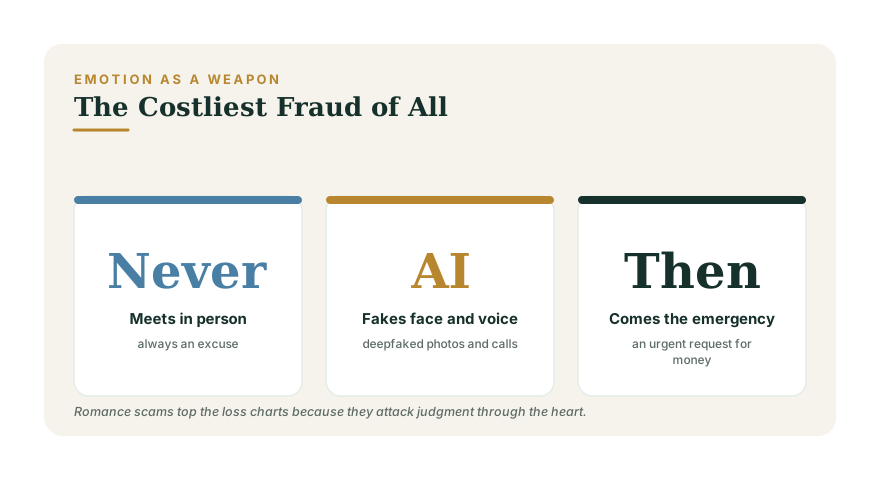
The classic romance-scam script
It usually starts on a dating app, a social platform, or even a game. The person is attractive, attentive, and moves quickly to declarations of love. They have a plausible reason they can never meet or video call — deployed overseas, working on an oil rig, a doctor abroad. For weeks or months they invest real effort in the relationship, becoming a daily presence. Then the emergency arrives: a medical crisis, a customs fee to come visit you, a business deal that just needs a bridge loan. Once you send money, there is always another emergency, until you run out or wake up.
How AI made it worse
Everything that once limited these scams — bad English, stolen photos that reverse-image searches could expose, an inability to appear live — is falling away:
- Deepfaked photos and video. AI generates original, consistent images of a person who does not exist, defeating reverse-image search, and can even produce short live-looking video clips.
- Voice cloning. A few seconds of audio lets a scammer place a phone call in a convincing voice, so "I can't video, but here's a quick call" no longer proves anything.
- Fluent, tireless chat. AI language tools write flawless, warm messages in any language around the clock, letting one operator run many "relationships" at once.
A close cousin of the AI romance scam is the grandparent scam, where a cloned voice cries "Grandma, I'm in jail, please send bail." The same voice-cloning technology, aimed at family love instead of romance.
The red flags that still hold
- You met online and they profess strong feelings unusually fast.
- They always have a reason they cannot meet in person, and video calls are refused or suspiciously brief and glitchy.
- The relationship eventually turns to money — an emergency, an investment tip, a shipment stuck in customs.
- They ask to be paid in ways that are hard to reverse: gift cards, wire transfers, crypto, or P2P apps.
- They discourage you from telling family or friends about the relationship or the money.
When the "investment tip" appears, the romance scam has merged into the crypto con described in Pig-Butchering Crypto Scams, and the untraceable payment requests map onto Zelle and P2P Payment Fraud.
Protecting an older relative
Isolated and recently widowed adults are targeted heavily, and shame keeps many victims silent. Practical steps a family can take:
- Talk about it before it happens. Frame it as "these criminals are clever, and they target everyone" rather than "don't be foolish." Removing the shame makes a parent far more likely to come to you.
- Agree on a family safe word for any emergency phone call asking for money, which defeats voice cloning instantly.
- Set up a trusted-contact and account alerts. Banks let you name a trusted contact and turn on notifications for large transfers, giving you a chance to intervene.
- Make "run it past me first" a loving habit, not surveillance. A quick call before any money moves stops most of these cold.
The wider toolkit for shielding aging relatives is in Protecting Elderly Parents From Fraud.
If it has already happened
Lead with compassion, not blame — victims already feel humiliated, and criticism only drives them back to the scammer, who is the only one still being kind to them. Stop all further payments, preserve the messages, report it to the FTC at ReportFraud.ftc.gov and the FBI's IC3, and never pay a "recovery expert" who promises to get the money back, which is a follow-up scam. Then rebuild security together using How to Recover From Identity Theft.
Love, verified
You do not have to become cynical to stay safe — you only have to insist that a real relationship can survive a video call, a delay, and a conversation with your family. Build those habits into your household, protect the relatives most at risk, and treat any request for hard-to-trace money as the emergency siren it is. Assess your family's overall protection with the Financial Resilience assessment and shore up the rest of your safety net at the planning hub.