Your credit report is the raw file your credit score is built from, and it is compiled by three large companies pulling data from many lenders. With that much information changing hands, errors are common — and an error you never catch can quietly cost you an approval or a better interest rate. The fix is free and mostly straightforward: check your reports regularly and dispute anything wrong.
Where to get your reports for free
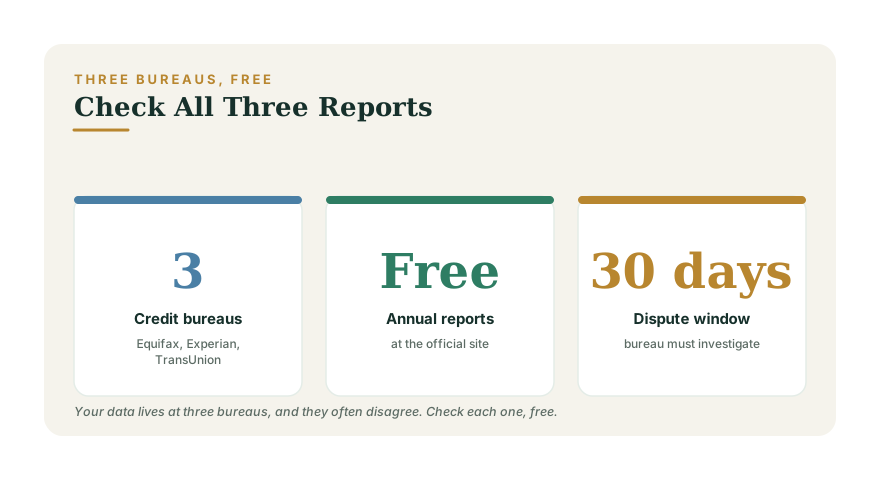
There are three major credit bureaus — Equifax, Experian, and TransUnion — and each keeps its own file on you. They do not always contain the same information, so checking only one can miss an error living on another. You are entitled to free copies through the official federally authorized source, AnnualCreditReport.com, and in recent years the bureaus have made free reports available more often than the old once-a-year cadence. Stick to the official site and avoid look-alike services that try to sell you a subscription.
A note on terms: your credit report is the underlying data; your credit score is a number calculated from it. Many banks and card issuers show your score for free, but the score does not list the line-item details where errors hide — that is what the report is for.
What to look for
Read each report carefully and check several things:
- Personal information — your name, addresses, and Social Security number. A wrong address or a mixed-up file can mean someone else's accounts are attached to you.
- Accounts you do not recognize — an unfamiliar credit card or loan can be a clerical mix-up or a sign of identity theft.
- Incorrect account status — a payment marked late that you made on time, a closed account shown as open, or a debt you paid that still shows a balance.
- Duplicate accounts — the same debt listed twice, which can inflate what you appear to owe.
- Outdated negative marks — a late payment or collection that should have aged off under the timelines in How Long Late Payments and Collections Haunt Your Credit.
- Hard inquiries you did not authorize — applications you never made, another possible fraud signal.
If anything points to identity theft, treat it seriously and consider freezing your credit — the how and why is in Freeze Your Credit: The Best Free Fraud Defense.
The dispute process, step by step
If you find an error, you have a legal right to dispute it for free, and the process is the same one any paid "credit repair" outfit would use on your behalf:
- Document it. Note exactly what is wrong and gather any proof — a bank statement showing an on-time payment, a payoff letter, a closing confirmation.
- File the dispute with the bureau. Submit it to each bureau showing the error, online, by mail, or by phone. Be specific about which item is wrong and why, and attach your evidence.
- Wait for the investigation. The bureau generally has about 30 days to investigate. It contacts the company that reported the item, which must verify or correct it.
- Review the result. The bureau sends its findings. If the item was wrong, it is corrected or removed, and you can request an updated report. If they disagree, you can add a brief statement to your file or escalate.
- Also tell the source. It often helps to dispute directly with the lender or collector that furnished the bad information, not just the bureau.
Because you can do all of this yourself for free, paying a company to "fix" your report rarely makes sense — a point worth remembering before you ever hand over money for credit help.
Make it a habit
Checking your reports a few times a year catches errors and fraud early, while they are easy to fix. Once your report is clean, the steps that actually raise your number are in How to Improve Your Credit Score, Step by Step. Run potential changes through the Credit Score Simulator, and keep your credit health visible alongside the rest of your finances with the Financial Wellness Score.