When your offer on a home is accepted, you do not hand over the full price right away. Instead you put down a smaller, good-faith deposit called earnest money, and your contract spells out a set of conditions — contingencies — that must be satisfied before the sale becomes final. Together they are the heart of how a purchase offer protects both sides, and understanding them is what keeps a deposit from turning into an expensive lesson.
What earnest money actually is
Earnest money is a deposit, usually 1% to 3% of the purchase price, that you put up when your offer is accepted to show the seller you are serious. It is not an extra fee — if the deal closes, the money is credited toward your down payment and closing costs, so it becomes part of what you were going to pay anyway. Until then it is held by a neutral third party, typically an escrow or title company, not by the seller directly. The point is simple: a buyer who has real cash on the line is far less likely to walk away on a whim, which is why a healthy deposit can make your offer more competitive.
Contingencies are your escape hatches
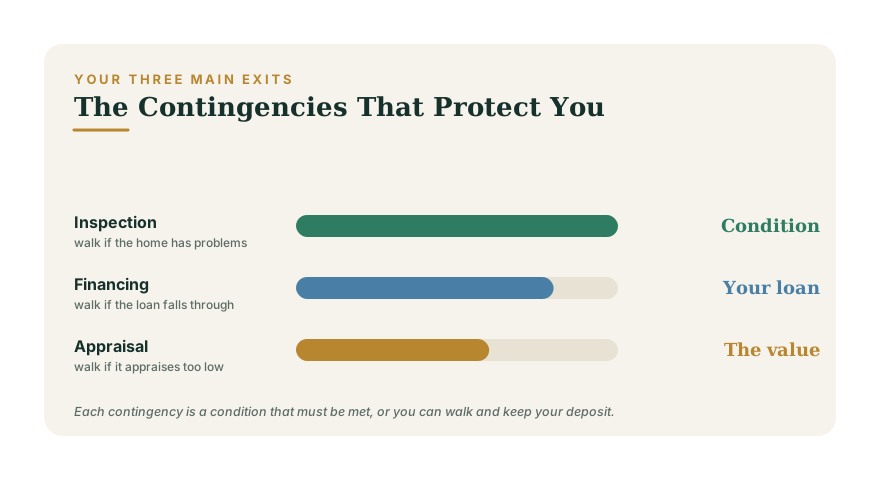
A contingency is a condition written into the contract that must be met for the sale to proceed. If the condition fails and you back out for that reason within the agreed time, you get your earnest money back. Think of each one as a labeled exit door. The three most common are inspection, financing, and appraisal.
The inspection contingency
An inspection contingency gives you a window — often a week or so — to hire a professional to examine the home and report on its condition. If the inspection turns up serious problems, you generally have three choices: ask the seller to repair them, ask for a price reduction or credit, or walk away and reclaim your deposit. This is one of the most valuable protections a buyer has, and waiving it to win a competitive offer is a real gamble. The mechanics of the inspection itself are covered in Home Inspection and Appraisal: What to Expect.
The financing contingency
A financing (or mortgage) contingency protects you if your loan falls through. Even with a preapproval, a lender can decline final approval — your income changes, the property has issues, or rates move. With this contingency in place, a denied loan lets you exit and keep your deposit. The stronger your preapproval going in, the lower the odds you ever need it; see How to Get a Mortgage Preapproval for how to firm that up before you make offers.
The appraisal contingency
Your lender will order an independent appraisal to confirm the home is worth what you agreed to pay, because the loan is secured by the property. If the appraisal comes in below your offer price, the lender will only finance the lower value, leaving a gap. An appraisal contingency lets you renegotiate, cover the difference in cash, or walk away with your deposit intact. In hot markets, buyers sometimes waive or limit this protection to compete — a strategy with real risk that we cover in How to Win a Bidding War Without Overpaying.
When you actually lose your deposit
Contingencies are generous, but they are not unlimited. You can lose earnest money when you:
- Back out for a reason that is not covered by a contingency in your contract.
- Miss a contingency deadline — exit dates are firm, and once a window closes, that protection is gone.
- Get cold feet and simply walk away after all contingencies have been removed.
- Fail to perform your obligations, such as not securing financing you agreed to pursue in good faith.
In short, the deposit is at risk mainly when you break the contract for reasons it does not let you break it for. Read every deadline carefully and calendar it.
How to protect your deposit
Keep the contingencies you can reasonably keep, especially inspection and financing, even in a competitive market. Never let a contingency deadline pass without acting — if you need more time, request an extension in writing before the date. Always send your earnest money to a neutral escrow or title company, never to the seller, and get a receipt. And read the contract itself; the protections only work if they are actually written in.
Earnest money and contingencies are the part of the contract that decides whether a deal that goes sideways costs you a few hours or a few thousand dollars. Before you start writing offers, walk through the whole sequence in the First-Time Homebuyer Roadmap, and gauge whether your finances are ready for the process with the Mortgage Readiness assessment.