The Earned Income Tax Credit, or EITC, is one of the largest anti-poverty programs in the country and one of the most generous tax breaks available to working households. It is fully refundable, which means it can produce a refund far larger than any tax you actually paid. For a family with children, it can be worth thousands of dollars — yet a surprising share of eligible people never claim it.
What makes the EITC different
Most tax breaks reward you for spending or saving in a particular way. The EITC simply rewards work. You must have earned income — wages, salary, or self-employment income — to qualify; income from investments or benefits alone does not count, and too much investment income disqualifies you entirely. Because it is refundable, a worker whose tax bill is already zero can still receive the full credit as a check. The difference between refundable and nonrefundable credits is explained in Tax Credits vs Deductions.
How the amount is built
The EITC is shaped like a hill. As your earned income rises from zero, the credit grows; it plateaus at a maximum over a range of income; then it gradually phases out as income climbs further. Two factors set the size and shape of that hill:
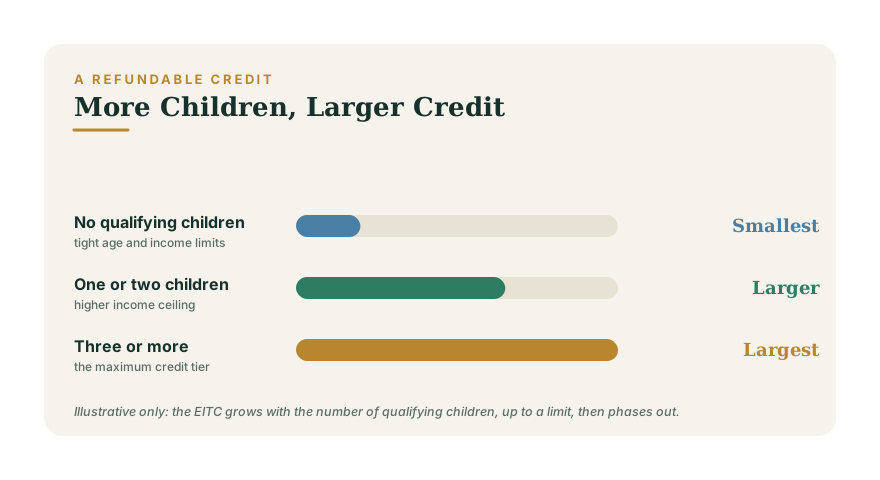
- Number of qualifying children. The credit is largest for families with three or more qualifying children, smaller with one or two, and smallest for workers with none.
- Your income and filing status. Married couples filing jointly get higher income ceilings than single filers, and every dollar of earned income within the phase-in range increases the credit.
A qualifying child for the EITC follows rules similar to those for other family credits — relationship, age, residency, and a valid Social Security number. The details overlap heavily with The Rules for Claiming Dependents.
The rules for workers without children
You do not need children to qualify, but the version of the credit for childless workers is smaller and comes with extra conditions. There are age limits — you generally must be within a certain age range — and you must have lived in the U.S. for more than half the year. The income ceiling is much lower than for families. Many single workers assume the EITC is only for parents and skip it; that assumption costs them a credit they could have claimed.
Why so many eligible people miss it
Studies consistently find that a meaningful fraction of people who qualify for the EITC never claim it. The reasons are predictable:
- They don't file at all. People whose income is low enough that filing is not required often skip it — and you cannot receive a refundable credit you never claim on a return.
- Their situation changed. A new baby, a job loss, reduced hours, or a divorce can make someone newly eligible in a year they assume nothing changed.
- They don't know it exists. The EITC is invisible unless someone or some software prompts you to check.
If your income was modest last year, it is worth checking even if you think you earn too little to bother filing. Filing is the only way to collect.
Watch the timing of your refund
Refunds that include the EITC are, by law, held until a set point early in the filing season to give the IRS time to guard against fraud. That means an EITC refund may arrive a little later than other refunds, so plan around it rather than counting on the money in the first weeks of the year. What to do with the money when it lands is covered in What to Do With Your Tax Refund.
Stacking the EITC with other credits
The EITC is not exclusive — many of the same families also qualify for the Child Tax Credit and, if they manage to set aside any retirement savings, the Saver's Credit. Stacked together, these can transform a small tax bill into a substantial refund.
Make sure you are not leaving it behind
Because the EITC is so easy to overlook, a quick check is worth your time every year your income is modest. Use the tax strategies tool to see how your earned income and family size shape the credit, and run the Tax Health assessment to confirm you are claiming the credits you are owed.