Claiming someone as a dependent is the gateway to a long list of tax benefits — the Child Tax Credit, the child and dependent care credit, education breaks, and a more favorable filing status. But you cannot simply claim anyone you help support. The IRS has precise tests, and getting them right protects you from a denied credit or, worse, a return that conflicts with someone else's.
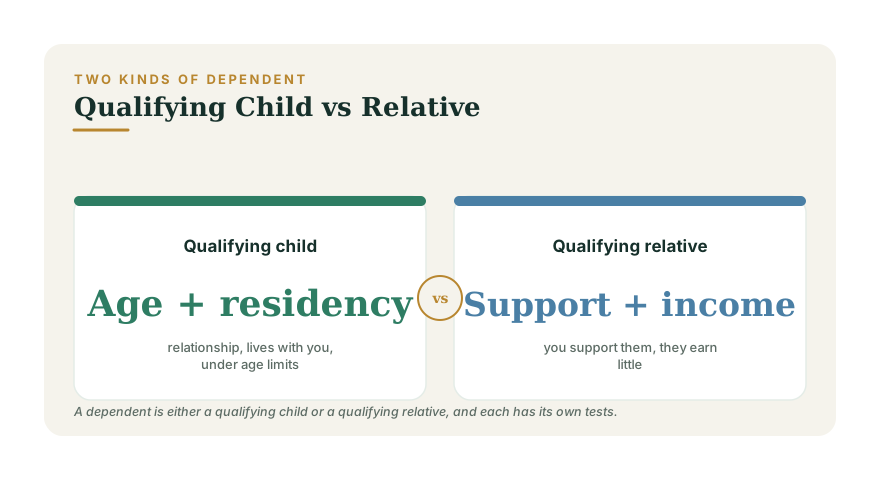
Two categories of dependent
Every dependent falls into one of two buckets: a qualifying child or a qualifying relative. The names are a little misleading — a "qualifying relative" does not always have to be related to you, and a "qualifying child" can include a sibling or grandchild. What matters is which set of tests the person passes.
The qualifying child tests
To be your qualifying child, a person must satisfy several tests at once:
- Relationship. Your child, stepchild, foster child, sibling, half-sibling, or a descendant of any of these.
- Age. Generally under 19 at year-end, or under 24 if a full-time student, with no age limit if permanently and totally disabled.
- Residency. The child must have lived with you for more than half the year, with specific exceptions for temporary absences like school.
- Support. The child cannot have provided more than half of their own support.
- Joint return. The child generally cannot file a joint return with a spouse except to claim a refund.
Pass all of these and the child opens the door to the most valuable family credits, including the Child Tax Credit.
The qualifying relative tests
If someone is not your qualifying child, they may still be a qualifying relative. This is how you might claim a dependent parent, an adult child who no longer meets the age test, or even a non-relative who lived with you all year. The key tests are different:
- Gross income. The person's income must be below a relatively low annual limit, which the IRS adjusts each year.
- Support. You must provide more than half of their total support for the year.
- Relationship or residency. They must either be related to you in a listed way, or have lived with you as a member of your household for the entire year.
- Not a qualifying child. They cannot be the qualifying child of you or anyone else.
The support and residency tests in practice
The two tests that trip people up most are support and residency. Support means more than just money — it includes housing, food, medical care, and education, and you total the cost of everything the person received and ask who paid for most of it. Residency is about where the person actually lived, counting nights, with sensible exceptions for college, hospital stays, and military service. Keeping a rough record during the year saves a scramble at filing time.
Divorced and separated parents
When parents do not live together, only one of them can claim a child as a dependent in a given year. The default rule favors the custodial parent — the one the child lived with for the greater number of nights. However, the custodial parent can release the claim to the other parent by signing a specific IRS form, which is common in divorce agreements that alternate the dependent year by year.
One nuance trips many divorced parents: certain benefits, like the child and dependent care credit and head-of-household filing status, generally stay with the custodial parent even when the dependency claim is released. Only the credits tied directly to claiming the dependent move to the other parent. Sorting out your status is covered in Tax Filing Status Explained, and the care credit specifics are in The Child and Dependent Care Credit.
When two people claim the same person
If two returns claim the same dependent, the IRS applies tiebreaker rules — and the second return to be filed is usually rejected, forcing a paper filing and a delay. The most reliable defense is a clear agreement up front about who claims whom each year, especially in blended families and shared-custody arrangements.
Get the foundation right first
Because so many credits flow from dependency, it is worth confirming each person you support truly qualifies before you file. Run your family situation through the tax strategies tool to see which credits your dependents unlock, and use the Tax Health assessment to check that nothing valuable is slipping through the cracks.