Not long ago, holding crypto in a retirement account was a fringe, complicated maneuver. Now it is increasingly ordinary: spot Bitcoin and Ether ETFs can be bought in many IRAs and some 401(k) brokerage windows, and specialized "crypto IRA" custodians let you hold coins directly inside a tax-advantaged wrapper. The question has shifted from can you to should you. The honest answer is: maybe, in a small dose, if you go in clear-eyed about the risks.
The genuine appeal: tax-sheltered growth
The strongest argument for crypto in a retirement account is the tax treatment. In a taxable account, every crypto sale is a taxable event that generates record-keeping and capital gains — now more visible under the new Form 1099-DA. Inside a traditional IRA, gains grow tax-deferred; inside a Roth IRA, qualified growth comes out entirely tax-free. For a highly volatile asset you might trade or that could appreciate a lot, sheltering the gains — especially in a Roth — is a real advantage. Contribution limits and rules are set by the IRS and adjusted over time.
The case against: it is speculative and volatile
A retirement account is money you are counting on for your later years, and crypto is among the most volatile assets an ordinary investor can buy. It has repeatedly fallen 70% or more in a single downturn. A drop like that in your last decade before retirement, with no time to recover, can be genuinely damaging. Crypto also has no earnings, dividends, or cash flow to anchor a valuation — its price rests largely on what the next buyer will pay. The sobering long-run perspective is laid out in why the crypto and NFT math rarely works. None of this means zero is wrong; for many savers, zero crypto is a perfectly sound retirement plan.
Position sizing is the whole game
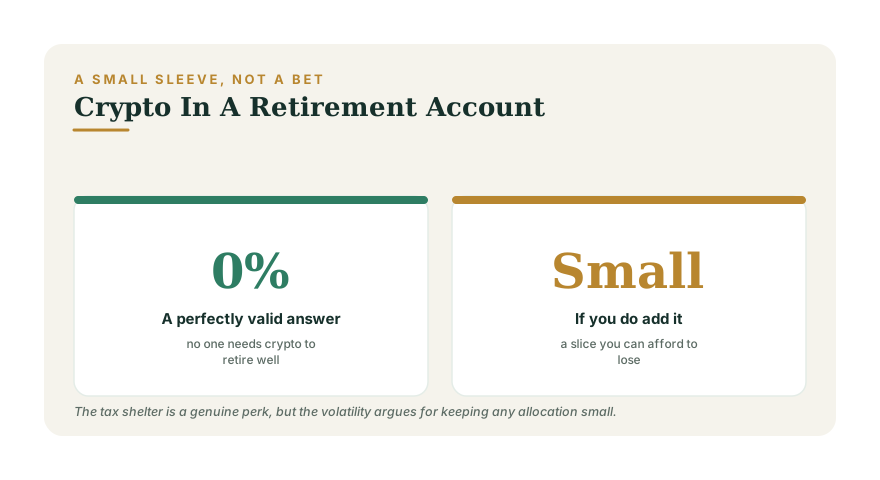
If you do include crypto, the amount matters far more than the choice to include it. A common guardrail among cautious planners is to cap speculative holdings at a low single-digit percentage of your portfolio — a slice small enough that a total loss would sting but not derail your retirement. The point of an allocation this size is that it can meaningfully help if crypto soars, yet cannot sink your plan if it collapses. How much risk belongs in your portfolio depends heavily on your age and timeline, the subject of asset allocation by age. Model how a small sleeve behaves alongside stocks and bonds in our Model Portfolios.
How to actually hold it, and the pitfalls
There are two main routes, each with trade-offs — the same fork covered in spot crypto ETFs vs holding coins directly:
- A spot crypto ETF in a mainstream IRA. The simplest path. You buy the fund in your existing IRA brokerage, get the tax shelter, and avoid crypto custody entirely. You pay the fund's annual expense ratio.
- A specialized crypto IRA custodian. Lets you hold coins directly in the account, but these providers often charge higher setup, custody, and trading fees, and vary in quality. Read the fee schedule carefully and vet the custodian.
Watch for two traps: high fees that quietly erode returns over decades, and the temptation to over-trade a volatile asset inside an account meant for the long haul.
A sensible framework
- Build the foundation first. Capture your full employer 401(k) match, fund an emergency reserve, and own a diversified core of low-cost index funds before any crypto.
- Prefer a Roth for the upside. If you believe crypto could appreciate substantially and you can hold for years, tax-free Roth growth is the most attractive wrapper.
- Keep it small and leave it alone. Size it as money you can afford to lose entirely, then avoid the urge to trade around it.
- Rebalance if it grows. A surging small allocation can quietly become a large one; trim it back to your target so a single asset does not dominate your retirement.
The takeaway
Crypto in a retirement account can make sense as a small, deliberate sleeve — the tax shelter is a genuine perk, and a Roth is the most compelling home for speculative upside. But it is optional, not necessary, and its volatility argues for keeping any allocation small and leaving your core retirement savings in diversified, low-cost investments. Decide your number first, favor a simple ETF unless you have a strong reason for direct custody, and never bet the retirement you are counting on. Check your risk appetite with the Investor Profile, see whether you are on track with the Retirement Readiness assessment, and run the long-term numbers at the planning hub.