Covered-call ETFs have become some of the most heavily marketed funds around, promising monthly distributions with yields that can look extraordinary next to a plain index fund. The income is not a mirage — these funds really do pay it. But the headline yield hides a fundamental tradeoff, and understanding that tradeoff is the difference between using these funds sensibly and being disappointed by them.
What a covered call actually is
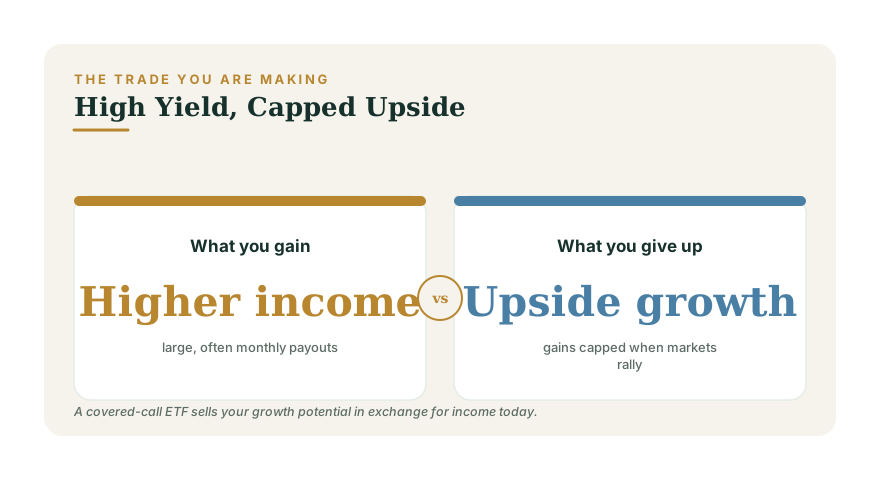
A covered-call strategy means owning a stock (or an index) and simultaneously selling a call option on it. The call gives someone else the right to buy your shares at a set price, and in exchange they pay you a premium up front. That premium is the income. The catch is baked into the structure: if the stock rises above the set price, the buyer exercises, and you miss out on the gains beyond that point. You have sold your upside for cash today. The SEC explains options and their risks on its investor education pages, and our own primer covers them in Options Trading Basics and Risks. A covered-call ETF simply runs this strategy for you across a whole index, packaging the premiums into a distribution.
Where the big yield comes from
The advertised yield is largely the option premiums the fund collects, paid out to you. In calm or choppy markets, this can produce a steady, attractive income stream. But that yield is not the same thing as your total return, and this is where investors get misled. A fund can pay a high distribution while its share price slowly declines, meaning part of what you receive is effectively your own capital handed back. The distinction between yield and what you actually earn is the whole point of Total Return vs Yield.
The catch: capped upside
The core cost is capped participation in rallies. When the market surges, a covered-call ETF captures only a limited slice of the gain because it keeps selling away the upside. Over a long bull market, this can cause the fund to badly lag a simple index fund on total return, even though it paid you handsomely along the way. You are trading long-term growth for present income — a reasonable trade for some investors, a poor one for others. This resembles the high-yield dividend trap, where a big payout distracts from weak or negative total return.
How they behave in different markets
Think through the scenarios:
- Flat or sideways markets. This is where covered-call ETFs shine. You collect premiums while the underlying goes nowhere, and the income is a real bonus.
- Rising markets. You participate only partially. The more the market climbs, the more you leave on the table versus a plain index fund.
- Falling markets. The premiums cushion the drop a little, but they do not protect you from a serious decline. You still own the underlying and still lose money, just slightly less.
So these funds do not reduce risk much on the downside; their real edge is in flat markets, and their real cost is in strong ones.
Taxes and fees
Covered-call ETFs tend to carry higher expense ratios than plain index funds because running the options strategy costs more — and as with any fund, fees compound against you. The tax treatment of the distributions can be complex, mixing ordinary income, capital gains, and sometimes return of capital, which can make them awkward to hold in a taxable account. If you use one, a tax-advantaged account often simplifies things.
Who should consider them
Covered-call ETFs can make sense for an investor who genuinely prioritizes current income over long-term growth — for example, a retiree who values a steady monthly check and is comfortable capping upside. They are a poor fit for a young investor trying to maximize long-run wealth, because the capped upside works directly against compounding over decades. Do not be seduced by the yield number alone; judge these funds by total return and understand exactly what you are giving up. Compare the tradeoff for your situation with the Opportunity Cost calculator and the Model Portfolios tool, then confirm your income-versus-growth priorities with the Investor Profile assessment and the planning hub.