When people picture "buying a home," they usually picture a detached house on its own lot. In practice you will choose among at least three common forms of ownership — a condominium, a townhouse, or a single-family home — and the differences go well beyond looks. They change what you actually own, who fixes the roof, how much you pay in monthly dues, how easily you can finance the purchase, and how the property tends to appreciate.
What you actually own
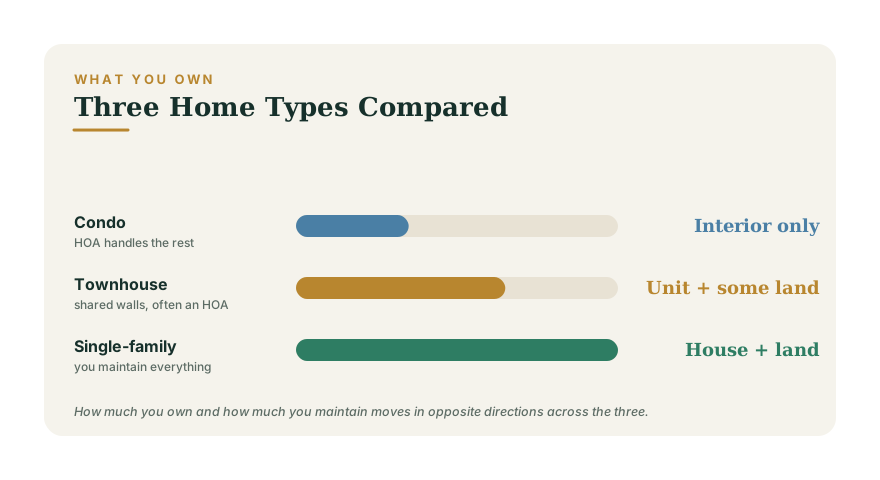
A condominium is ownership of the interior space of a unit — essentially "the paint inward." The building, the roof, the grounds, and shared structures are owned collectively and managed by a homeowners association. A townhouse is usually a fee-simple home: you own the structure and often a small slice of land beneath and around it, but you share one or two walls with neighbors and frequently belong to an HOA that handles common areas. A single-family home is a standalone structure on its own lot — you own the house, the land, and everything that goes wrong with both.
That ownership distinction is the root of every other difference on this list. The more you own outright, the more freedom and the more responsibility you carry.
HOA dues and what they cover
Condos almost always carry monthly HOA dues, and they can be substantial because they fund the maintenance, insurance, and reserves for the entire building. Townhouse HOAs tend to be lighter, often covering landscaping, shared roads, and exterior elements. Many single-family homes have no HOA at all, though planned communities increasingly do. Before buying anything with an association, read the budget and reserve study and understand what the dues buy — a thin reserve fund can lead to a painful special assessment later. The mechanics are covered in Understanding HOA Fees.
Maintenance: who picks up the wrench
With a condo, the association handles the roof, siding, and grounds; you handle your interior. That is a real lifestyle benefit if you travel or simply do not want to own a ladder. A townhouse splits the work — exterior elements may be shared, but you are usually responsible for your own systems. A single-family home puts every repair, from the water heater to the roof to the lawn, squarely on you. None of these is "free": the condo just bundles the cost into predictable dues, while the single-family owner pays as things break. Budget for it either way — see The True Cost of Homeownership.
Financing differences
Condos are the trickiest to finance. Lenders evaluate not just you but the entire project: owner-occupancy ratios, the percentage of dues that are delinquent, pending litigation, and reserve health. A condo in a "non-warrantable" building can be hard to finance with a conventional loan, which narrows your future buyer pool too. Townhouses that are fee-simple usually finance like ordinary houses. Single-family homes are the most straightforward of all. If you are shopping, get your financing lined up early with a mortgage preapproval and ask your lender specifically about condo approval rules.
Appreciation and resale
Historically, land appreciates and buildings depreciate, which is why single-family homes — where you own the land — have often shown the strongest long-run appreciation. Condos can lag, especially in markets with lots of new construction competing against your unit, and their value is tied to the health of the association. Townhouses tend to land in between. None of this is a law of nature; location does most of the heavy lifting. But all else equal, owning land is a structural advantage.
Matching the type to your life
- Choose a condo if you value low-maintenance living, want amenities, or are buying in a dense urban core where it is the realistic entry point — just vet the association carefully.
- Choose a townhouse if you want more space and a bit of land without the full maintenance load of a detached house, often at a lower price point.
- Choose a single-family home if you want maximum control, privacy, and land — and you accept that every repair is yours.
There is no universally correct answer; the right type depends on your budget, your stage of life, and how much maintenance you want to own. If a condo or co-op is on your list, compare it with the share-based ownership model in Buying a Co-op. When you are ready to test the numbers, run your scenario through the Home Affordability Calculator and gauge your readiness with the Mortgage Readiness assessment.