From the sidewalk, a co-op apartment and a condo can look identical. Financially and legally they are very different animals. When you buy a condo, you receive a deed to a piece of real property. When you buy into a cooperative, you do not buy real estate at all — you buy shares in a corporation that owns the entire building, and those shares come with a proprietary lease giving you the right to live in a specific unit. Understanding that one distinction explains almost everything else about co-ops.
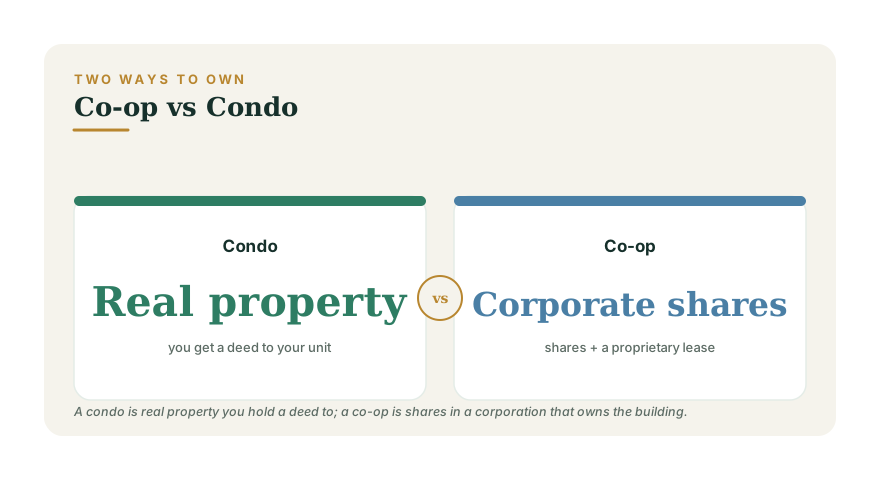
Shares and a lease, not a deed
Because you own shares rather than the unit itself, your monthly payment is called maintenance rather than HOA dues, and it typically bundles your share of the building's mortgage, property taxes, staff, and upkeep into one figure. A useful side effect: a portion of your maintenance — the part covering interest on the building's underlying mortgage and your share of property taxes — may be tax-deductible, something a condo owner pays separately. The co-op corporation, not you, holds the master mortgage and the deed to the land.
Board approval: the big hurdle
The defining feature of co-op life is the board. To buy, you must be approved by the cooperative's board of directors, which usually means submitting a detailed financial package — tax returns, bank statements, references — and sitting for an interview. Boards often impose strict requirements: a high down payment (sometimes 20% to 50%), strong post-closing liquidity, and limits on how much of the purchase can be financed. Boards can also restrict subletting, which makes co-ops a poor fit for investors. This scrutiny is why co-op buyers should be financially buttoned-up before they apply; the groundwork in the first-time homebuyer roadmap applies doubly here.
Financing limits
You do not get a traditional mortgage on a co-op because there is no real property to secure the loan. Instead you get a share loan, secured by your shares and your lease. Not every lender offers them, and the building must allow financing at the level you need — some co-ops cap the percentage of the price that can be borrowed, and a few prestigious buildings require all-cash purchases. The building's own financial health matters to your lender too, much as it does with a condo. Line up a lender experienced with co-ops early, and confirm the building's financing rules before you fall in love with a unit.
Flip taxes and transfer fees
Many co-ops charge a flip tax when you sell — a transfer fee paid to the corporation, often a percentage of the sale price or the profit, or a flat per-share amount. It funds the building's reserves, but it is money out of your pocket at exit, so factor it into your expected return. Ask for the exact flip-tax formula in writing before you buy; it directly affects how much you walk away with.
Why co-ops often cost less
For a comparable apartment in the same neighborhood, a co-op frequently carries a lower sticker price than a condo. The reasons are bundled into everything above: the board approval process and subletting limits shrink the buyer pool, financing is more restrictive, flip taxes add a cost at sale, and you own shares rather than deeded real estate. Less flexibility and a narrower market translate into a lower price. For a buyer who plans to actually live there for years and can clear the board, that discount can be a genuine value. For someone who wants flexibility to rent it out or sell quickly, the condo model — explained in Condos vs Townhouses vs Single-Family Homes — is usually the better fit.
Is a co-op right for you?
A co-op can be a smart buy if you are financially solid, intend to stay put, and want to live in a building the model is common in. It is a poor fit if you need easy financing, want to rent the unit out, or value the ability to sell fast. Either way, read the building's financials and bylaws as carefully as you would read your own loan — the maintenance figure works much like the dues described in Understanding HOA Fees. Before you commit, pressure-test the monthly numbers with the Home Affordability Calculator and check where you stand using the Mortgage Readiness assessment.