Every robo-advisor now calls itself "AI-powered." The pitch in 2026 is seductive: a smart algorithm builds you a personalized portfolio, rebalances it automatically, harvests tax losses, and charges roughly a quarter of what a human advisor does. For a lot of investors that is a genuinely good deal. But it helps to separate what the technology actually does from what the branding implies, because the answer changes whether it is worth it for you.
The honest summary up front: most "AI" robo-advisors are still, at their core, rules-based portfolio managers that put your money into low-cost index funds and keep the allocation on track. That is not a criticism — it is often exactly what a beginner needs — but you are mostly paying a small fee for automation and discipline, not for a genius stock-picker living inside a data center.
What the "AI" actually does
Under the hood, a modern robo does a handful of well-understood things: it asks you a risk questionnaire, maps you to a model portfolio of index funds, automatically rebalances when your allocation drifts, and — in taxable accounts — sells losers to bank a tax deduction while buying similar funds to stay invested. The newer AI layer typically adds smoother onboarding, a chatbot that answers account questions, and marketing personalization. Useful, but this is not the same as an algorithm that reliably beats the market. Decades of evidence, summarized by research houses like Morningstar, show that low-cost, broadly diversified index exposure beats the large majority of active strategies over time.
The fee math that actually matters
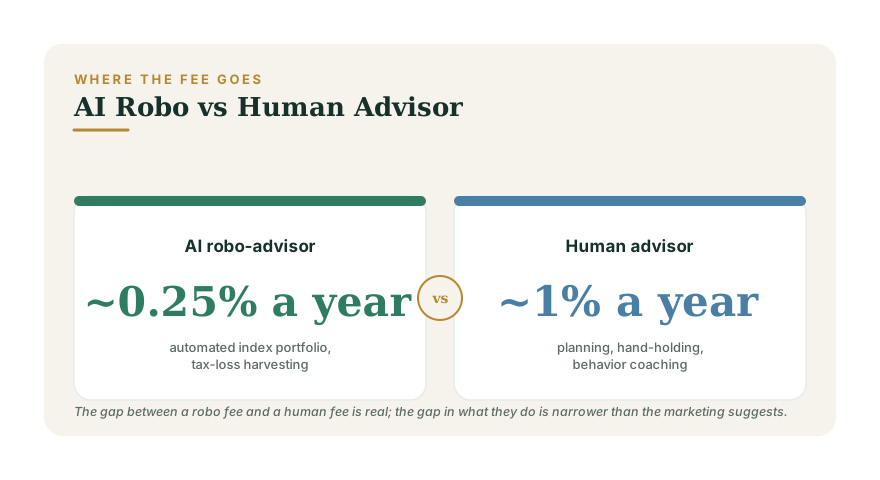
A typical robo charges around 0.25% of assets a year, versus roughly 1% for a traditional human advisor. On a $100,000 portfolio that is $250 versus $1,000 annually — and because fees compound against you, the gap widens enormously over decades. This is the same corrosive math laid out in How Expense Ratios Destroy Wealth. Just watch the total: some robos layer their management fee on top of fund expense ratios, and a few push you into pricier proprietary funds, so read what you are actually paying. You can pressure-test the drag with the Opportunity Cost Calculator.
Where robos genuinely shine
- Beginners with a clean situation. A single income, a 401(k) and an IRA, and a goal decades away — a robo removes every excuse not to start.
- Automatic discipline. The algorithm rebalances and keeps you invested through scary markets, which is where most DIY investors sabotage themselves.
- Tax-loss harvesting in taxable accounts. Done automatically, it can quietly add value — the mechanics are in Tax-Loss Harvesting for Beginners.
Where they fall short
A robo does not know that you are about to buy a house, support an aging parent, exercise stock options, or navigate a divorce. It optimizes a portfolio; it does not do financial planning. It also will not talk you off the ledge in a crash the way a trusted human can — and that behavior coaching is often the most valuable thing a good advisor provides. If your life has real complexity, the trade-offs are weighed carefully in Robo-Advisors vs Human Advisors. And if you are tempted to ask a general chatbot for portfolio picks instead, read what AI chatbots get right and dangerously wrong first.
How to decide
- Simple situation, want it automated? A low-cost robo is very likely worth the 0.25%.
- Confident and cost-obsessed? A plain three-fund index portfolio you rebalance yourself costs even less — see The Three-Fund Portfolio.
- Complex life, big decisions, or you panic in downturns? The value of a human, ideally a flat-fee fiduciary, can outweigh the higher cost.
The bottom line for 2026
An AI robo-advisor in 2026 is a good, cheap way to run a sensible index portfolio on autopilot — just do not pay up expecting market-beating intelligence you are not getting. Match the tool to your complexity: automate the simple stuff, and buy human advice only where it earns its fee. To see what a sensible allocation looks like for your age and goals, try the Model Portfolios tool and the Portfolio Builder, then confirm your risk fit with the Investor Profile assessment. Map the whole plan at the planning hub.