To buy a stock, a bond, or an index fund, you need a place to hold it — and that place is a brokerage account. The concept sounds technical, but a brokerage account is simply a financial account that lets you buy and sell investments. Once you understand the few flavors it comes in, opening one is about as hard as opening a bank account.
It's a container, not an investment
The most useful thing to understand up front: a brokerage account is a container, not an investment itself. The account holds your investments the way a wallet holds cash. Opening the account does nothing on its own — you then deposit money and use it to buy funds or stocks. Confusing the container with what goes inside it is the most common beginner mix-up.
Cash account vs margin account
When you open an account, you may be asked to choose between cash and margin:
- A cash account lets you invest only the money you have actually deposited. Simple, safe, and the right choice for nearly every beginner.
- A margin account lets you borrow money from the broker to buy more investments than your cash covers. That borrowing amplifies both gains and losses, charges interest, and can force you to sell at the worst possible time if your investments drop. It is a tool for experienced investors and a fast way for newcomers to get hurt.
The guidance is straightforward: choose a cash account. You can almost always upgrade later if you ever have a genuine reason, and most long-term investors never need margin at all.
Taxable brokerage vs retirement accounts
Here is a distinction that matters far more than cash-vs-margin. The same broker offers different account types, and they are taxed very differently:
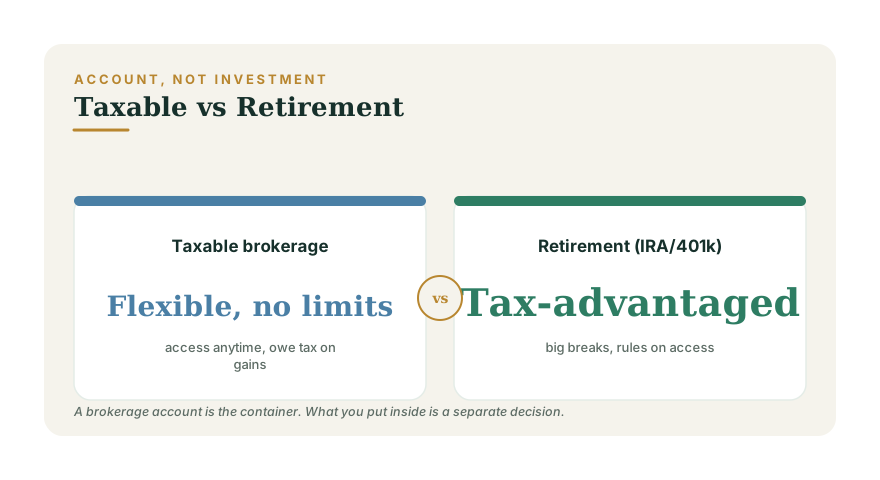
- A taxable (standard) brokerage account has no contribution limits and no rules about when you can withdraw — total flexibility. The trade-off is that you owe taxes on dividends and on gains when you sell. It is the right home for money you may need before retirement, or for investing beyond what tax-advantaged accounts allow.
- Retirement accounts like an IRA or a 401(k) are also brokerage accounts under the hood, but wrapped in major tax advantages. In exchange for those breaks, they have annual contribution limits and rules about withdrawing before retirement age.
For most people, the order is clear: capture any employer 401(k) match first, then fund an IRA, then return to the 401(k), and only after those are maxed turn to a taxable brokerage account. The Roth-versus-traditional decision inside a retirement account deserves its own attention — see Roth vs traditional IRA. For the full sequence of where each dollar should go, how to start investing lays it out step by step.
How to open one, step by step
The actual process takes about fifteen minutes online:
- Pick a broker. Choose a large, reputable, low-cost provider. Look for $0 commissions on stocks and funds, no account fees, and access to broad low-cost index funds.
- Choose the account type. Decide between a taxable account and a retirement account (often an IRA) based on the priority order above.
- Provide your details. You will need a government ID, your Social Security number, and basic employment and financial information — standard identity verification.
- Select cash (not margin). Keep it simple.
- Fund the account. Link your bank and transfer money in. Consider setting up automatic monthly transfers so investing becomes a habit, not a decision.
What to buy first
Funding the account is not the finish line — uninvested cash sitting in a brokerage account is not invested. The classic, sensible first purchase for a beginner is a single broad, low-cost index fund — a total US stock market fund or an all-in-one fund that holds stocks and bonds together. One fund can give you instant diversification across thousands of companies. As you grow more comfortable, you can build toward a simple multi-fund mix. If index funds are new to you, the beginner's guide to index funds explains why they are the default choice for most investors.
Get going
A brokerage account is just the doorway; what builds wealth is funding it consistently and buying broad, low-cost funds inside it. Open the account, automate your contributions, and start with a simple diversified fund. To map out where to invest first and how much, use the portfolio builder or take the Investor Profile assessment to find an allocation that fits you.