A lot of what people believe about credit is folklore — carry a small balance to "build credit," never check your own score, close cards you do not use. Some of that is harmless, some of it is actively wrong, and almost none of it tells you what truly moves the needle. So let us rank the things that actually damage a credit score, from the most harmful down to the merely annoying.
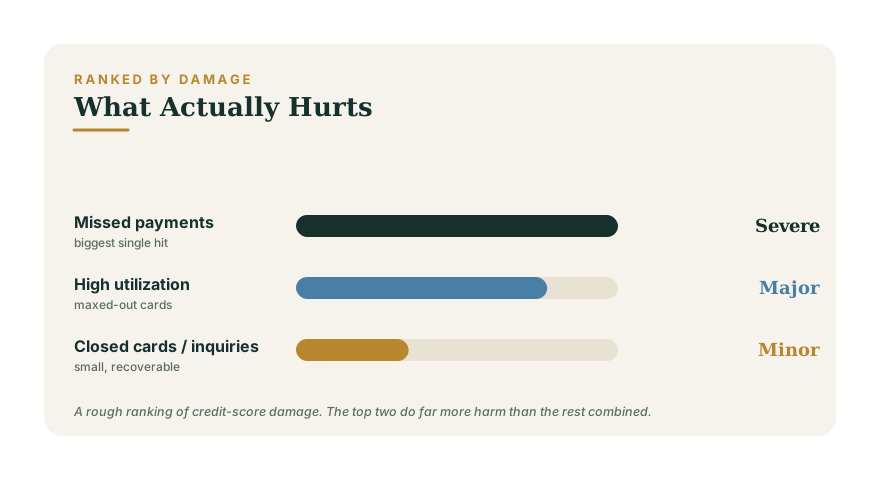
1. Missed and late payments (the biggest hit)
Payment history is the largest factor in your score, so nothing else does as much damage as a missed payment. A single payment reported 30 days late can drop a strong score by a large margin, and later stages — 60, 90 days — hurt more. The damage also lingers: a late payment can stay on your report for up to seven years, though its sting fades over time. The fix is preventive: autopay for at least the minimum on every account, so a forgetful month never becomes a black mark. If you have already slipped, the recovery roadmap is in How to Improve Your Credit Score, Step by Step.
2. High credit utilization
The second-heaviest damage comes from using too much of your available credit. Running cards near their limits — high utilization — signals stress and can pull your score down sharply, even if you pay in full each month. The good news mirrors the bad: because utilization updates roughly monthly, paying balances down reverses the damage quickly. Aim to keep reported balances well under 30% of each card's limit, and ideally under 10%.
3. Collections and other derogatory marks
When an unpaid debt is sold to a collection agency, a collection account appears on your report and does serious harm. Charge-offs, repossessions, foreclosures, and bankruptcies are in the same severe category. These are the marks that take the longest to age off — how long, and what you can do about them, is covered in How Long Late Payments and Collections Haunt Your Credit.
4. Closing old credit cards
This one surprises people, because closing an unused card feels responsible. But it can hurt in two ways: it shortens your average account age, and it erases that card's credit limit, which pushes your overall utilization up. Unless a card carries an annual fee you cannot justify, keeping it open and lightly used usually helps more than closing it.
5. Too many hard inquiries in a short window
Each credit application triggers a hard inquiry that shaves a few points and stays on your report for about two years (it stops affecting your score sooner). One or two is trivial. The problem is clustering many applications together — opening several cards to chase signup bonuses, for instance, a temptation we examine in How Credit Scores Are Calculated. Rate-shopping for a single loan within a short window is usually treated as one inquiry, so comparing mortgage or auto quotes will not pile up.
What does NOT hurt your score
Several feared actions are myths:
- Checking your own credit is a soft inquiry and never hurts. Monitor as often as you like.
- Carrying a balance to "build credit" does nothing but cost you interest — paying in full builds credit just as well. The myth is dissected in Why Banks Want You to Carry a Balance.
- Income, bank balances, and debit-card use are not part of your credit score at all.
The honest summary
If you protect against just the top two — never miss a payment, keep utilization low — you have neutralized the overwhelming majority of what could hurt your score. The rest are smaller, recoverable dings. To see how a specific change might play out before you make it, run it through the Credit Score Simulator, and use the Financial Wellness Score to keep your credit habits aligned with the rest of your money.