A credit score can feel like a black box that decides whether you get an apartment, a car loan, or a decent mortgage rate. It is not magic, though. A score is built from a handful of measurable factors, and once you know what they are, improving your number becomes a list of concrete actions rather than a mystery.
The encouraging part: some of these factors respond within a single billing cycle, so a focused effort can show results in a month or two, not years.
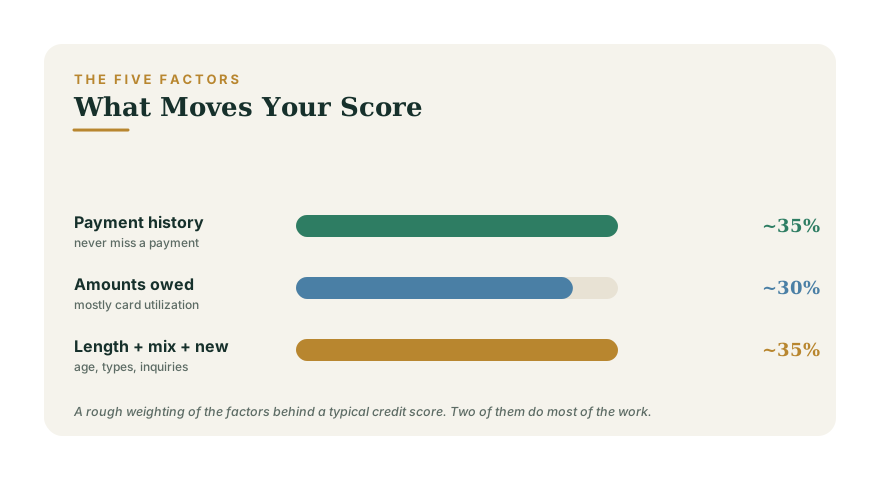
The five factors, briefly
Most scoring models weigh roughly the same five things: payment history (about 35%), amounts owed (about 30%, dominated by how much of your credit limits you are using), length of credit history (about 15%), new credit and inquiries (about 10%), and credit mix (about 10%). The exact math is laid out in How Credit Scores Are Calculated. The point for now is that payment history and utilization together are roughly two-thirds of your score — so that is where the effort goes.
Step 1: Never miss a payment
One late payment can knock a good score down sharply and lingers on your report for years. The single most powerful habit is simply paying on time, every time. The reliable way to guarantee this is automation: set autopay on every account for at least the minimum due, so a busy month never turns into a missed payment. Then pay the full statement balance manually or with a second autopay rule to avoid interest. If you have ever been late, getting current and staying current is the fastest way to start the recovery.
Step 2: Lower your utilization
Credit utilization is the share of your available credit you are using — your card balances divided by your limits. Lower is better; keeping reported utilization under about 30%, and ideally under 10%, helps most. Unlike payment history, this one moves fast: utilization is recalculated whenever balances are reported, usually monthly, so paying a card down can lift your score within a cycle. Three levers: pay balances down, pay before the statement closes (so a lower balance gets reported), and avoid maxing any single card even if your overall usage is low. You can model the effect with the Utilization Optimizer.
Step 3: Keep old accounts open
The age of your accounts helps your score, and closing your oldest card can quietly hurt in two ways: it shortens your average account age and it removes that card's limit, which raises your overall utilization. Unless a card charges an annual fee you cannot justify, keeping old accounts open — and putting a small recurring charge on them so the issuer does not close them for inactivity — protects two factors at once.
Step 4: Limit new inquiries
Each time you apply for credit, the lender runs a hard inquiry, which can ding your score a few points and signals risk if you do it repeatedly. Space out applications, and avoid opening cards you do not need just to chase a bonus — a habit we pick apart in The Things That Actually Hurt Your Credit Score. Checking your own score is a soft inquiry and never hurts, so monitor freely.
Step 5: Fix the errors you did not cause
Sometimes the fastest gain is removing something that should not be there. Credit reports contain mistakes more often than people assume — an account that is not yours, a payment marked late that was on time, a debt that was paid but still shows a balance. Pull your reports and dispute anything wrong, as described in How to Check Your Credit Report for Errors.
A simple 90-day plan
- Days 1–7: Pull all three reports, dispute any errors, and set autopay on every account so you never miss a payment again.
- Days 8–30: Pay your card balances down and pay before each statement closes, targeting under 10% utilization on every card.
- Days 31–90: Hold the line — no new applications, no closing old cards, every payment on time. Let the lower balances and clean history report for two or three cycles.
Most people who follow this see meaningful movement within one to three months, because the two heaviest factors — payments and utilization — both update quickly. Slower factors like account age simply improve on their own as time passes.
Where to go next
Improving credit is a steady habit, not a one-time fix. Use the Credit Score Simulator to see how specific moves might affect your number, and fold your credit work into the bigger picture with the Financial Wellness Score so it sits alongside your savings, debt, and goals.