If you drive for income, your mileage deduction is often worth more than every other expense combined — and it is also the deduction most likely to fall apart under scrutiny, because so many people guess at it instead of tracking it. Good records are not bureaucracy; they are money you get to keep. Here is how the two car methods work, what the IRS actually wants to see, and a system simple enough that you will keep using it.
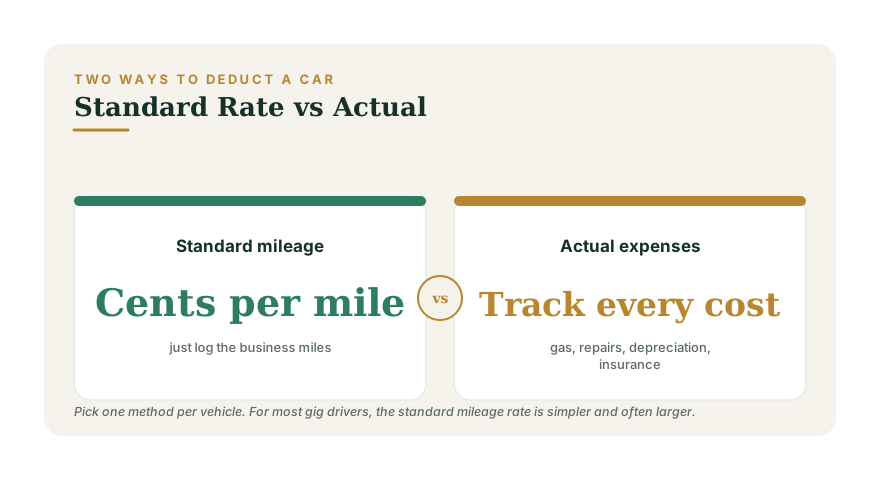
Standard mileage rate vs actual expenses
The IRS lets you deduct car costs one of two ways, and you choose per vehicle:
- Standard mileage rate. You multiply your business miles by a set per-mile rate that the IRS publishes each year. That rate is meant to cover gas, wear, insurance, and depreciation all at once. You do not save gas receipts — you just need an accurate count of business miles.
- Actual expenses. You track every real cost of operating the car — fuel, maintenance, insurance, registration, depreciation — and deduct the business-use percentage of the total. This can win for expensive vehicles or heavy repair years, but it requires far more recordkeeping.
For most rideshare and delivery drivers in ordinary cars, the standard mileage rate is both simpler and frequently the larger deduction. One important catch: if you want the freedom to switch methods later, you generally must use the standard rate in the first year you put the car in service. When in doubt, start with standard.
What records the IRS actually wants
A deduction you cannot document is a deduction you can lose. For mileage, the agency expects a contemporaneous log — records kept at or near the time you drove, not reconstructed months later. Each trip entry should capture the date, the business purpose, and the miles driven, and you should be able to show your total annual miles (so the business portion can be calculated). A photo of your odometer on January 1 and December 31 is a smart anchor.
A few rules trip people up. Your commute is personal, not business — but as a gig worker, business miles often start when you go on-app and accept work and end when you go off. Miles between deliveries count; the drive from home before your first ping usually does not. Mixing in personal errands while logged in muddies the log, so be honest about which miles were truly for work.
Don't forget the non-car expenses
Mileage gets the attention, but the same discipline applies to everything else you deduct: phone bills, supplies, platform fees, parking and tolls (deductible on top of the mileage rate), and any gear. Keep a digital copy of every receipt and a one-line note of what it was for. The catalog of what qualifies is in Self-Employed Tax Deductions, and how these expenses fit into your overall bill is covered in The Gig Worker's Tax Guide.
Apps and a simple system
The easiest way to keep a clean log is to let software do it. Several mileage-tracking apps run quietly in the background, detect drives automatically, and let you swipe each one as business or personal. At year end they export a tidy, IRS-shaped summary. If you would rather not use an app, a basic spreadsheet or even a notebook in the glovebox works — the method matters less than the habit of logging every trip as it happens.
For non-mileage spending, the simplest system is a single business checking account and a single card used only for work. When every business dollar flows through one place, your "expense tracking" is mostly just reading a statement at month end. Run business and personal money through the same account and you create hours of sorting and real audit risk.
Make it a monthly five-minute habit
The reason people overpay is not that the rules are hard — it is that they wait until April and then estimate. Block five minutes at the end of each month to confirm your mileage log exported cleanly and your expense receipts are filed. That small habit turns a stressful tax season into a quick reconciliation and protects every dollar of deduction you have earned. Avoiding the classic slip-ups here is half the battle — see Common Tax Filing Mistakes. When you are ready to estimate the impact on your bill, the Self-Employed Hub ties your income, mileage, and expenses together.