Tax mistakes feel like they should come from some obscure corner of the code. In reality, the errors that cost people money or trigger IRS letters are almost always the same short list, repeated by millions of filers every year. The encouraging part: because they are so predictable, every one of them is preventable with a little attention.
Choosing the wrong filing status
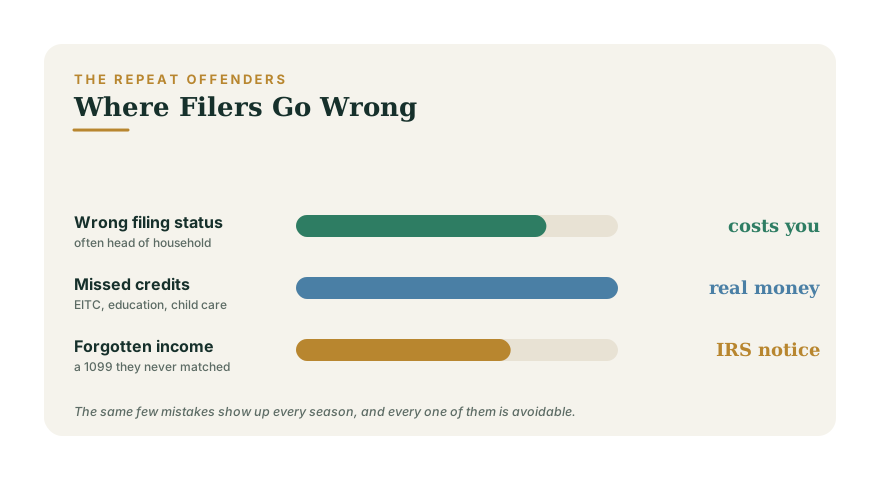
Your filing status sets your standard deduction and your brackets, so getting it wrong can cost real money. The most-missed one is head of household: unmarried people who pay more than half the cost of a home for a qualifying dependent often qualify for a bigger standard deduction and friendlier brackets than plain "single," yet many never claim it. Married couples, meanwhile, sometimes file separately out of habit when filing jointly would have served them better. Pause and confirm the status that actually fits your situation before anything else.
Leaving credits on the table
Deductions reduce the income you are taxed on; credits reduce your tax bill dollar for dollar, which makes them more valuable — and routinely missed. Commonly overlooked ones include the Earned Income Tax Credit (for moderate-income workers), education credits for tuition, the Child and Dependent Care Credit, the Saver's Credit for retirement contributions, and the Child Tax Credit. Some are even refundable, meaning they can pay you beyond zeroing out your tax. Software prompts for many of these, but only if you answer the questions honestly and completely. Do not confuse credits with the deductions people commonly miss — you want both.
Math errors and typos
Simple arithmetic and transcription mistakes are still among the most common reasons returns get flagged. A transposed Social Security number, a misspelled name that does not match the IRS's records, a wrong bank account number for your refund, or a number keyed into the wrong line can delay processing or bounce your refund. Filing electronically with reputable software catches most math errors automatically — one of the strongest reasons to e-file rather than mail a paper return. Double-check every name, number, and account digit before submitting.
Forgetting income
The IRS receives copies of your W-2s and 1099s directly from the payers. So when you forget to report a freelance 1099, a brokerage's dividend statement, interest from a savings account, or income from a side gig, the agency's computers notice the mismatch and send a notice — often with interest and penalties attached. This trips up people with multiple jobs or a side hustle. The fix is a simple checklist: gather every income document before you start, and reconcile your return against all of them. If a form arrives late, wait for it rather than guessing.
Taking the wrong deduction path
Every filer chooses between the standard deduction and itemizing. The mistake is autopilot in either direction — itemizing out of habit when the standard deduction is now larger, or taking the standard when mortgage interest, state taxes, and charitable gifts would have added up to more. Run it both ways, or let software compare, and take whichever is bigger. The trade-off is broken down in Standard vs Itemized Deductions.
Missing the deadline
The filing deadline is usually mid-April. Two things people get wrong here. First, an extension to file is not an extension to pay — if you owe, you still must estimate and pay by the original deadline to avoid penalties and interest; the extension only buys time to submit the paperwork. Second, if you are owed a refund, there is generally no penalty for filing late, but you only have a limited window to claim that refund before it is forfeited to the Treasury. Either way, filing on time, or filing an extension and paying your estimate, keeps you clean.
Withholding that sets you up to fail
A bonus mistake that compounds the others: poorly set withholding. If your W-4 is off, you arrive at filing season already facing a surprise bill or having loaned the government money interest-free all year. Fixing it once removes a recurring source of April stress.
Avoiding all of them
The throughline is preparation, not expertise: gather every document, confirm your status, let software compare deductions and surface credits, reconcile against all your income, and file (or extend and pay) on time. Before you file, a quick Tax Health check can flag gaps, and the Tax Strategies tool helps you spot credits and moves you might otherwise miss.