Few tax topics have generated as much confusion in recent years as the Form 1099-K. Payment apps, online marketplaces, and gig platforms send it, the dollar threshold for issuing it has been changing, and headlines have left millions of casual sellers and side-hustlers unsure whether they suddenly owe new taxes. The short answer: the form is changing, but what you actually owe is not.
What a 1099-K actually is
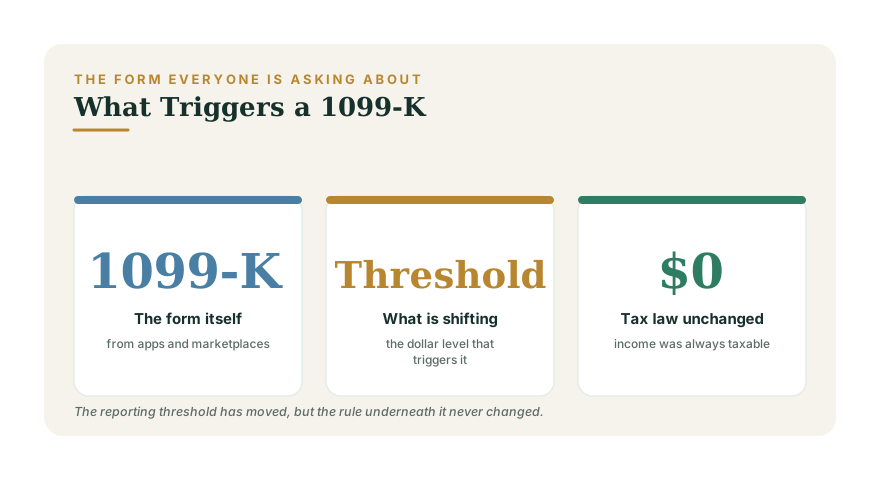
A 1099-K is an information return. Third-party payment networks — think card processors, payment apps, and online marketplaces — use it to report the gross amount of payments they processed for you during the year. A copy goes to you and a copy goes to the IRS. It is not a bill, and it does not by itself mean you owe tax. It simply tells the IRS how much money flowed to you through that platform, so the agency can match it against what you report. For a broader tour of these forms, see Understanding 1099 Forms.
What actually changed
For years, platforms only had to issue a 1099-K when you crossed a high bar — more than 200 transactions and over 20,000 dollars in a year. Legislation lowered that dramatically toward a 600-dollar threshold with no transaction minimum, which would have swept in huge numbers of casual users. Because of the disruption that would cause, the IRS phased the change in gradually, using transition thresholds over several years rather than dropping straight to 600 dollars. The practical effect: far more people are receiving a 1099-K than ever did before, many for the first time, and many for small amounts. Check the current-year threshold on the IRS site, because the exact figure has been a moving target.
The rule underneath never moved
Here is the point that gets lost in the noise. Lowering the threshold did not create a new tax or make anything taxable that was not taxable before. Business and gig income has always been reportable, form or no form. What changed is visibility: the IRS now receives paperwork on transactions it previously never saw. If you were already reporting your income correctly, a new 1099-K changes nothing about your bottom line. If you were not, the form simply makes the gap harder to ignore. The full picture of gig taxation sits in The Gig Economy Tax Guide.
The personal-payments trap
The biggest source of panic is a 1099-K that includes money that is not income at all. Splitting a dinner bill, getting repaid by a roommate, receiving a gift, or selling used personal items at a loss can all flow through the same apps. Those are not taxable income, but a poorly categorized payment can land on your 1099-K anyway. Two defenses:
- Tag payments correctly. On apps that distinguish "personal" from "goods and services," use the personal setting for reimbursements and gifts so they are excluded.
- Keep records for personal-item sales. Selling your old couch for less than you paid is not taxable; keep enough proof to show it was a loss if a form reports the gross amount.
If a 1099-K overstates your taxable income, the IRS provides ways to report the correct amount and back out the non-taxable portion on your return rather than simply ignoring the form.
What to do when one arrives
Do not panic and do not throw it away. Reconcile the 1099-K against your own records, separate genuine business income from personal transfers and loss sales, and report your actual income accurately. If the form is wrong, contact the issuer for a correction and document your position. Sellers and creators should already be tracking this year-round, as described in Taxes for Content Creators and Online Sellers.
Bottom line
The threshold change means more forms, not more tax, for people who were already honest. Keep clean records, tag personal payments correctly, and reconcile every form you get. Run your numbers with the Self-Employed Hub, and check for weak spots with the Tax Health assessment before you file. When you are ready to organize the whole thing, start at the planning hub.