Parents and relatives of a person with a disability often want to leave them extra money for a more comfortable life. It feels like the most loving thing to do. Yet a direct inheritance — a lump sum in a will, or a beneficiary designation naming them — can do real harm, because it can push them over the strict asset limits that qualify them for the very benefits they depend on. A special needs trust (also called a supplemental needs trust) is the tool designed to prevent exactly this.
The benefits trap
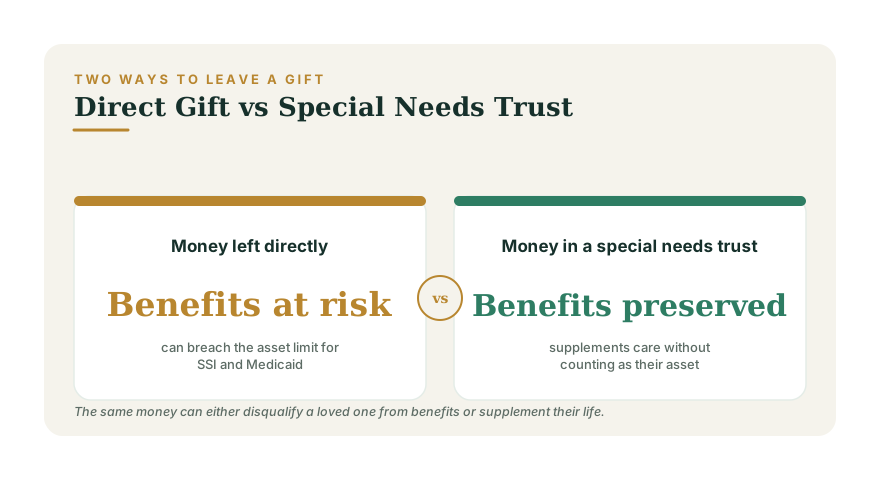
Key programs for people with disabilities are means-tested: eligibility depends on owning very little. Supplemental Security Income (SSI) and Medicaid, for example, generally cap countable assets at a low threshold. The Social Security Administration explains SSI's resource limits and how they work at ssa.gov. If a well-meaning relative leaves your disabled child a modest inheritance outright, that money is now the child's countable asset — and can suspend or end their SSI and, critically, their Medicaid coverage until it is spent down. Medicaid is often the more important loss, because it funds care and services that private money cannot easily replace. The gift meant to help ends up costing far more than it provides.
How a special needs trust fixes it
A special needs trust holds assets for the benefit of the person with a disability without those assets counting as theirs. Because a trustee — not the beneficiary — controls the money and decides how to spend it, the funds do not breach the asset limit. The trust then pays for things that supplement rather than replace public benefits: therapies, education, travel, technology, a caregiver's expenses, hobbies, and comforts that improve quality of life. The word "supplement" is the whole point. Distributions are meant to enhance the beneficiary's life on top of the food and shelter that benefits already cover, and a good trustee manages spending so it never disqualifies the beneficiary.
Two main types
- Third-party special needs trust. This is funded with someone else's money — typically a parent's or grandparent's — for the benefit of the person with a disability. It is the standard estate-planning vehicle: you create it, name it as the beneficiary of your will, life insurance, or retirement accounts, and any remaining funds can pass to other heirs when the beneficiary dies. Critically, it generally has no Medicaid payback requirement.
- First-party (self-settled) special needs trust. This holds the disabled person's own money — for instance, a legal settlement or an inheritance they already received. It preserves benefits too, but it usually must include a Medicaid payback provision: when the beneficiary dies, the state is reimbursed from what remains for the benefits it provided.
For families planning ahead, the third-party trust is almost always the vehicle to use, because you can route your gift through it from the start rather than leaving money directly and scrambling to fix it later.
Fund it the right way
Creating the trust is only half the job; you have to direct assets into it. That means naming the trust — never the individual — as the beneficiary of life insurance, retirement accounts, and any bequest meant for them. This is where good intentions unravel: a grandparent who names the disabled grandchild directly on a policy can undo the entire plan, because beneficiary designations override your will. Coordinate with every relative who might leave your loved one money so they route it to the trust too.
Choosing a trustee
The trustee will make sensitive spending decisions for decades, often long after you are gone, and must understand benefit rules well enough not to accidentally disqualify the beneficiary. Many families name a trusted relative alongside a professional trustee, or use a pooled trust run by a nonprofit for smaller amounts. Weigh the tradeoffs carefully — the guidance in Naming a Trustee applies with extra force here, because a misstep can cost benefits, not just money.
Get this one professionally drafted
A special needs trust is not a document to improvise. The exact language must satisfy federal and state rules, and small drafting errors can defeat the entire purpose. Work with an attorney who specializes in special needs or elder law. To see how this piece fits the rest of your plan and where your assets would flow, use the Net Worth Tracker and run the Estate Readiness assessment, then map the full plan at the planning hub.