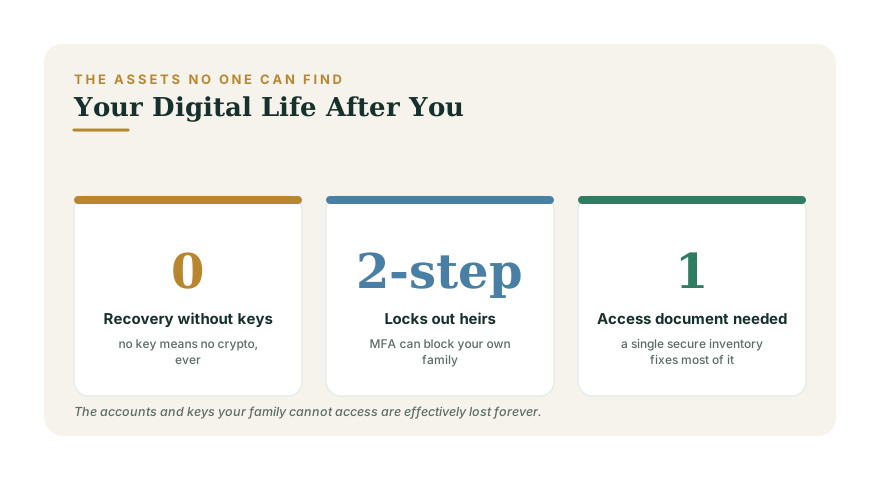
Traditional estate planning was built for a world of paper deeds, bank passbooks, and stock certificates in a drawer. Today a growing share of your life and your wealth lives behind logins: email, photos, bank and brokerage portals, subscriptions, business tools, and increasingly cryptocurrency. A will can pass on a bank account, but it cannot hand your executor a password, and it certainly cannot recover a crypto key that only you knew. If your family cannot get in, those assets are effectively gone.
This is the part of estate planning most people never do, and it is quietly one of the most consequential. Missing paperwork can be replaced; a lost private key cannot.
What counts as a digital asset
Digital assets fall into a few buckets, and they are not treated the same way. Some hold real financial value: cryptocurrency, online brokerage and bank accounts, payment-app balances, domain names, and monetized channels or online businesses. Others hold sentimental or practical value: email, cloud photo libraries, and social accounts. Still others are just access points you control but do not own outright, like streaming subscriptions. The plan for each differs, but the first step is the same for all of them: someone needs to know they exist and how to reach them.
Why passwords are the hard part
The obstacle is rarely legal ownership; it is access. Modern security is designed to keep everyone out except you, which means it also keeps out your grieving family. Two-factor authentication that texts a code to your phone becomes a locked door when your phone is deactivated. Password managers protect everything behind one master password that, if unknown, protects it from your heirs too. The fix is a secure, current digital inventory: a list of important accounts and how to access them, stored where your executor can find it but a thief cannot. A reputable password manager with a designated emergency-access contact handles this elegantly, and it belongs alongside your other papers — see How to Organize Important Documents.
Crypto is different, and unforgiving
Cryptocurrency deserves its own warning. If it is held in self-custody — a hardware wallet or a seed phrase you control — then whoever holds the private key or recovery phrase holds the coins, full stop. There is no customer-service line, no password reset, no court order that can recover it. Untold sums have been lost forever because the only person who knew the seed phrase died without recording it. If you own crypto, you must document where it is held and how to access it, in a way that is secure but genuinely findable. Coins held on a regulated exchange are somewhat easier, since the exchange has a death-of-account-holder process, but even those require your family to know the account exists.
Legal access: the letter of the law
You cannot simply put passwords in your will, because a will becomes a public document through probate. Instead, most states have adopted a law (often called RUFADAA) that lets you authorize a fiduciary — your executor or agent — to access your digital accounts, and lets major platforms honor tools like Google's Inactive Account Manager or a legacy contact. Two things make this work: granting that authority in your will, trust, or power of attorney, and using each platform's built-in legacy settings. Do both. The written authority tells providers your executor is allowed in; the platform tools make it practical.
A simple, safe plan
- Inventory. List your valuable and important accounts, wallets, and domains. Do not write raw passwords on paper that anyone could stumble on.
- Secure the keys. Use a password manager with emergency access, and record crypto seed phrases in a method you trust — a sealed document with your attorney, or a bank safe-deposit box your executor can reach.
- Authorize a person. Name a digital executor and grant fiduciary access to digital assets in your estate documents.
- Use platform tools. Set legacy contacts and inactive-account managers on the services that offer them.
- Keep it current. Review yearly; accounts, phones, and keys change often.
Fold it into the whole plan
Digital estate planning is not a separate project; it is the modern chapter of the same plan that covers your will, beneficiaries, and directives — start with Estate Planning Basics Everyone Needs. Take stock of what these assets are worth alongside everything else using the Net Worth Tracker, then confirm your documents actually cover digital access with the Estate Readiness check. When you are ready to build or update the full plan, start at the planning hub.