Big-ticket purchases — a refrigerator, a couch, a laptop, a TV — are where a single decision can swing your budget by hundreds or thousands of dollars. They are also where retailers concentrate their best tricks: urgency, financing offers, and add-ons designed to lift the total at the register. The good news is that big purchases reward patience more than almost anything else, because their prices move in predictable ways.
Time the price cycle
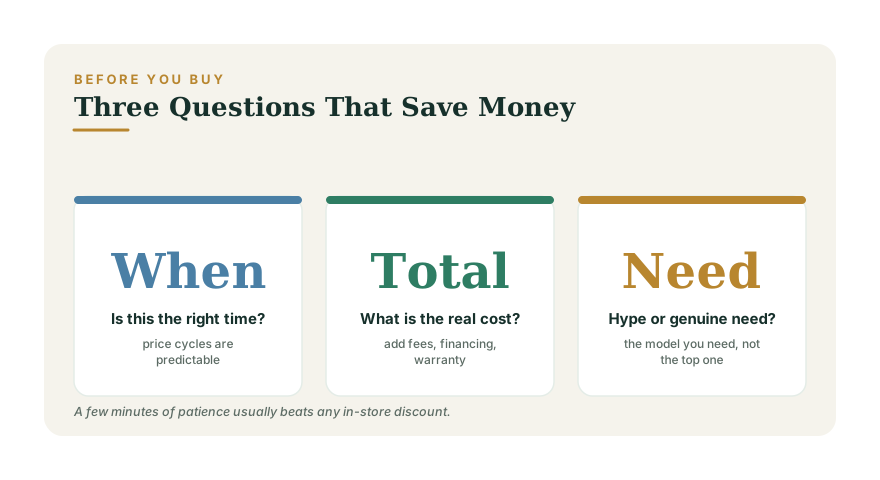
Almost every category of big-ticket item has a rhythm. Prices fall predictably around certain windows, and knowing them is worth more than any single coupon:
- Electronics drop around major sale events and when a new model is announced, which pushes last year's model down sharply.
- Appliances tend to discount when new lines arrive, often in the fall, and around holiday weekends.
- Furniture sees clearance as showrooms rotate styles, frequently in winter and midsummer.
- Seasonal items — grills, patio sets, winter gear — are cheapest at the end of their season, when stores want them gone.
If a purchase is not urgent, simply waiting for the right window is often the single biggest discount available. The hardest part is resisting the in-store urgency that is engineered to make you buy today; if that pull is strong for you, see How to Stop Impulse Spending.
Track prices instead of trusting the sale sign
A "sale" price means nothing without context. The number that matters is what the item normally sells for, and whether today's price is genuinely low against its own history. Price-tracking tools and browser extensions let you watch an item's price over time and see whether a "40% off" tag is a real low or a markup-then-markdown. Check the price history before you celebrate a deal — many sale prices are simply the regular price wearing a sticker. The broader question of whether those shopping tools help or quietly cost you is covered in Cashback Apps and Coupon Tools: Worth It?.
Read the warranty and financing offers carefully
At the register, two add-ons appear on almost every big purchase, and both deserve a hard look:
- Extended warranties are highly profitable for the seller, which is a clue about who they favor. Many products already carry a manufacturer warranty, and some credit cards extend it automatically. For most reliable, moderately priced items, self-insuring — keeping the warranty's cost in your own pocket — comes out ahead. The logic is in Self-Insuring: When Skipping Insurance Is the Smart Move.
- Financing offers like "0% for 18 months" can be genuinely useful — or a trap. The danger is deferred interest: if you miss the payoff deadline by even a day, interest can be charged retroactively on the entire original balance. If you use one, automate payments to clear the balance well before the deadline.
Judge by total cost, not hype
The marketing around big purchases pushes you toward the newest, top-of-the-line model with features you may never use. Two habits cut through it. First, buy the model you actually need, not the flagship — last year's version or the mid-tier option is frequently 80 percent of the experience at half the price. Second, add up the true total: delivery, installation, accessories, financing cost, and warranty all belong in the number you compare. A "cheaper" item with expensive add-ons can easily cost more than the higher sticker price next to it. For purchases you can postpone, a quick comparison of buying now versus waiting often makes the decision obvious — the Buy Now vs Wait calculator is built for exactly that.
Bring it back to the plan
A big purchase made deliberately — at the right time, at a price you verified, with the add-ons declined and the total understood — routinely costs far less than the same item bought on impulse. Fold large purchases into your budget as planned expenses rather than surprises, and pressure-test the timing with the Budget Analyzer before you commit.