Almost everyone has felt it: the small jolt of buying something you did not plan to buy, followed an hour later by a quiet "why did I do that?" Impulse spending is not a sign that you are bad with money. It is the predictable result of a brain wired for short-term reward meeting an industry engineered to trigger it. The good news is that because the pattern is predictable, it is also interruptible — and the fix is far less about willpower than most people assume.
Know your triggers
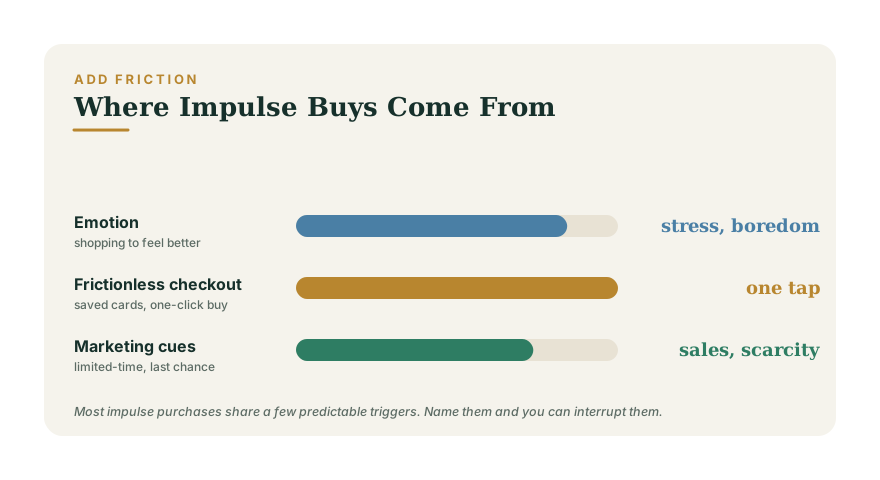
Impulse buys rarely come out of nowhere. They tend to ride on top of a feeling or a cue. The most common triggers are emotional — stress, boredom, loneliness, or even celebration, where shopping becomes a way to change how you feel. Others are environmental: a marketing email, a "limited time" banner, an influencer's recommendation, or simply walking past a store. And many are structural, built into how easy buying has become.
For a week, try a tiny experiment: each time you feel the pull to buy something unplanned, note one word for what you were feeling and where you were. You will almost certainly see a pattern. You cannot disarm a trigger you have not named, and naming it is often enough to take some of its power away.
The 24-hour rule
The single most effective tactic is also the simplest: wait. For any non-essential purchase over a threshold you set — say $50 — impose a 24-hour cooling-off period. For larger amounts, stretch it to 30 days. Put the item on a list instead of in a cart.
This works because impulse spending runs on a wave of emotion that crests and then falls. The desire that feels urgent right now is usually gone by tomorrow. What you are really buying with the wait is the chance for your slower, more rational self to weigh in. A surprising share of "must-haves" never get bought once the wave passes — and the ones you still want after a month are usually the purchases worth making.
Friction beats willpower
Modern shopping is engineered to remove every speed bump between wanting and owning: saved cards, one-click checkout, autofill, buy-now-pay-later. Each removed step makes impulse buying easier. The countermove is to deliberately add friction back:
- Delete saved payment cards from your phone, browser, and favorite stores so every purchase requires you to dig out the card.
- Unsubscribe from retailer marketing emails and turn off shopping-app notifications. You cannot be tempted by a sale you never see — this is the same logic behind a subscription creep audit.
- Unfollow accounts that exist mainly to make you want things.
- For online stores, log out so the convenience of a logged-in cart disappears.
None of these requires you to be stronger. They simply make the easy path slightly harder, which is often all it takes to break the autopilot.
Replace the habit, don't just resist it
Here is the part most advice skips. If impulse spending is meeting a real need — soothing stress, relieving boredom, marking a win — then white-knuckling your way out of it rarely lasts. The urge does not disappear; it just gets suppressed until you are tired, and then it wins. A habit is far easier to replace than to erase.
So ask what the spending is actually doing for you, and find a cheaper substitute that does the same job. If you shop when stressed, queue up a walk, a call to a friend, or ten minutes of something absorbing. If you shop when bored, keep a list of free things you actually enjoy. If buying gives you a sense of progress or reward, redirect that craving toward watching a savings goal climb — moving money into a labeled account can deliver a surprisingly similar hit. Understanding why the pull is so strong in the first place is the subject of the psychology of saving, and the same forces that make spending feel good can be turned around to make saving feel good.
Give every dollar a plan
Impulse spending thrives in a vacuum. When you have no plan for your money, every purchase feels equally justifiable. A simple budget changes that by giving your money a job before you are tempted — and, crucially, a guilt-free "fun money" line so you can spend on small wants without derailing anything. A budget is not a cage; it is permission to spend the planned amount freely while protecting everything else. The mechanics are in how to fight lifestyle creep.
Put it into practice
Stopping impulse spending is not one heroic act of restraint; it is a handful of small design choices. Name your triggers, wait 24 hours, strip out the friction that makes buying effortless, and replace the habit rather than fighting it. To see how much your unplanned spending adds up to — and where to redirect it — run your numbers through the Budget Analyzer and watch what happens when those impulses turn into progress instead.