Cashback apps and coupon browser extensions make a tempting promise: free money and automatic discounts on purchases you were going to make anyway. Some of that is real. But "free" tools are rarely free, and understanding how they actually make money tells you exactly where the catch is — and whether they are worth installing.
How these tools make money
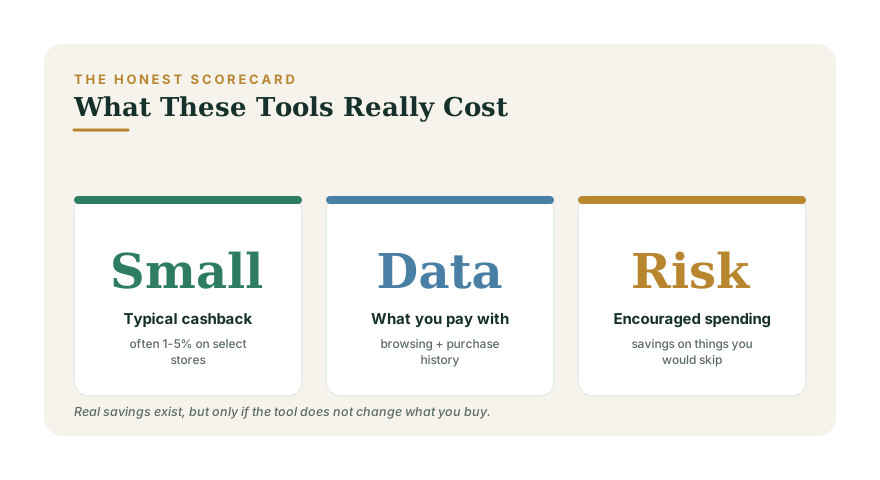
Almost all of them run on affiliate commissions. When you click through a cashback app or coupon extension to a store and buy something, the retailer pays the tool a commission for sending you. The tool keeps part of that commission and hands you the rest as "cashback." That is the entire model: they get paid for steering your purchases, and they share a slice with you to keep you using them. It is not charity, and it is not the store being generous — it is a marketing fee being split.
This matters because it reveals the tool's real incentive: not to help you spend less, but to help you spend, ideally more often and at the stores that pay the highest commissions. The discount is real, but so is the nudge.
Real savings versus encouraged overspending
Here is the honest split. The savings are genuine when the tool simply rewards a purchase you were already going to make at full price. If you needed printer ink, were buying it anyway, and a coupon extension surfaces a working code or a few percent back, that is money you would not otherwise have had. Used that way — passively, on planned purchases — these tools are a small but real win.
The savings turn negative when the tool changes your behavior:
- Buying things you would have skipped. A "20% off" alert or a "you have $14 in cashback" notification is designed to trigger a purchase. Saving 20 percent on something you did not need is spending 80 percent you did not need to spend.
- Switching to pricier stores. Cashback can lure you to a retailer whose base price is higher than where you would normally shop, wiping out the reward.
- Delaying and chasing. Hunting for the perfect code or hitting a cashback minimum can pull you into more browsing — and more buying — than you intended.
The tools are profitable precisely because, across millions of users, they generate more spending than they save. That does not mean you personally cannot come out ahead — but you only do if you stay strictly on the "rewarding planned purchases" side of the line. The same discipline that defeats impulse spending is what makes these tools safe to use.
The privacy trade-off nobody mentions
The cashback is not the only thing you receive — and your data is part of what you pay. To function, many coupon extensions and cashback apps need broad permissions: the ability to see the pages you visit, your shopping carts, and your purchase history. That browsing and buying data is valuable, and for some tools it is a second revenue stream, sold or used for ad targeting. Before installing one, it is worth reading what permissions it requests and what its privacy policy says it does with your activity. A few percent back can be a poor trade for a detailed log of everywhere you shop.
How to use them without getting used
- ✅ Treat them as a passive bonus on purchases you already decided to make.
- ✅ Turn off promotional notifications so the app cannot prompt purchases.
- ✅ Compare the base price elsewhere before letting cashback decide the store.
- ❌ Do not let a discount alert create a need that was not there.
- ❌ Do not grant permissions or chase rewards you would not pay for in data.
While you are auditing what is on your phone and browser, it is a good moment to check for the recurring charges that quietly pile up too — see The Subscription Creep Audit. And for the purchases where real money is at stake, the bigger savings come from timing and total cost, not coupons: Smart Strategies for Big-Ticket Shopping covers that ground.
The verdict
Cashback and coupon tools are worth it only for the disciplined shopper who uses them passively, ignores their prompts, and is comfortable with the data they collect. For everyone else, the "savings" tend to be the bait on a hook that lifts spending. The most reliable way to keep more of your money is still a plan that decides what you buy before any app gets a vote — build and check yours with the Budget Analyzer.