Buy Now, Pay Later, or BNPL, has spread to nearly every online checkout. The pitch is appealing: split a purchase into four interest-free payments over a few weeks, with a quick approval and no apparent downside. Used in one specific way, it genuinely is harmless. Used the way it is designed to be used, it can quietly reshape how much you spend and leave you juggling payments you have lost track of.
How BNPL actually works
The most common form splits your purchase into four equal payments: one at checkout and three more every two weeks. If you pay on schedule, the provider charges you no interest. So how do they make money? Two ways. First, merchants pay the BNPL company a fee for each sale — often more than a credit card charges — because offering installments measurably increases how much shoppers buy. Second, the provider collects late fees and, on longer plans, interest when customers miss payments. The "free" version exists because it reliably leads to more spending and, for a slice of users, to fees.
The soft-credit and late-fee mechanics
A few details determine whether BNPL stays harmless:
- Approval is fast and light. Short-term plans typically use a soft credit check or none at all, so getting approved is easy — and being approved tells you nothing about whether you can actually afford it.
- Late fees stack up. Miss a payment and you are charged a fee; on some plans, missing it converts the balance to an interest-bearing loan. A "free" $200 purchase can quietly grow.
- Payments auto-draft. Installments pull from your debit card or bank account automatically. If the money is not there, you can trigger overdraft fees from your bank on top of the BNPL late fee — a double hit.
- Credit reporting is uneven. Many short-term BNPL plans are not reported to credit bureaus, so on-time payments may not build your credit — but missed ones can still be sent to collections.
The real risk: stacking
The single biggest danger with BNPL is not any one purchase — it is stacking several plans at once. Because each approval is quick and each payment looks small, it is easy to open a plan at one store, another at the next, and a third somewhere else, until you are managing five overlapping payment schedules from different providers with different due dates. No single plan feels like debt, but together they can claim a large and confusing share of your next few paychecks. Unlike a credit card, there is no single statement showing the whole picture, which is exactly what makes it easy to lose track. If splitting a purchase is the only way you can afford it, that is the clearest sign you cannot actually afford it yet.
When BNPL is harmless — and when it is not
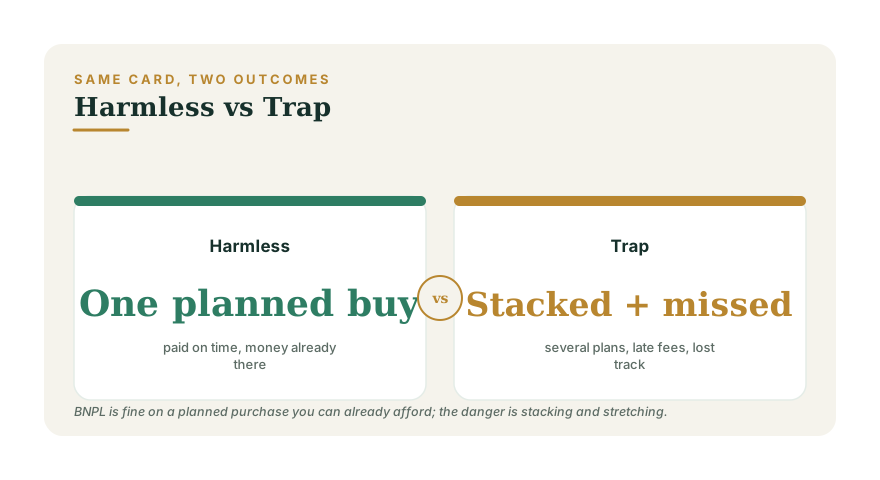
BNPL is genuinely fine in a narrow set of conditions: the purchase is something you planned and budgeted for, the money to cover all the installments is already in your account, you are using a single plan rather than several, and you set the payments to autopay from a funded account. In that case, splitting an affordable purchase into interest-free chunks costs you nothing and the merchant absorbs the fee.
It becomes a trap when it does the opposite of budgeting — when it lets you buy something you could not otherwise afford by making the price feel smaller. "Only four payments of $50" is a framing trick; the thing still costs $200 you may not have. This is the same psychology behind store cards and retail financing, and the same impulse-spending pressure covered in How to Stop Impulse Spending. For larger purchases, the disciplined route is to plan and time them rather than split them — see Smart Strategies for Big-Ticket Shopping.
The bottom line
BNPL is a tool, not a villain — but it is engineered to increase spending, and its convenience is exactly what makes it risky. The test is simple: if the money for every installment is already sitting in your account and you are using one plan you can track, it is harmless. If you are reaching for it because the full price is out of reach, it is debt wearing a friendlier outfit. Before your next big purchase, run it through the Budget Analyzer and make sure it fits your plan whether or not anyone offers to split it.