For millions of immigrants, sending money to family back home is one of the most meaningful things a US paycheck makes possible. It also happens to be an area riddled with quiet costs and a few misunderstood tax rules. The good news is that once you know where the money leaks and which IRS rules actually apply, you can send more for less and avoid unpleasant surprises.
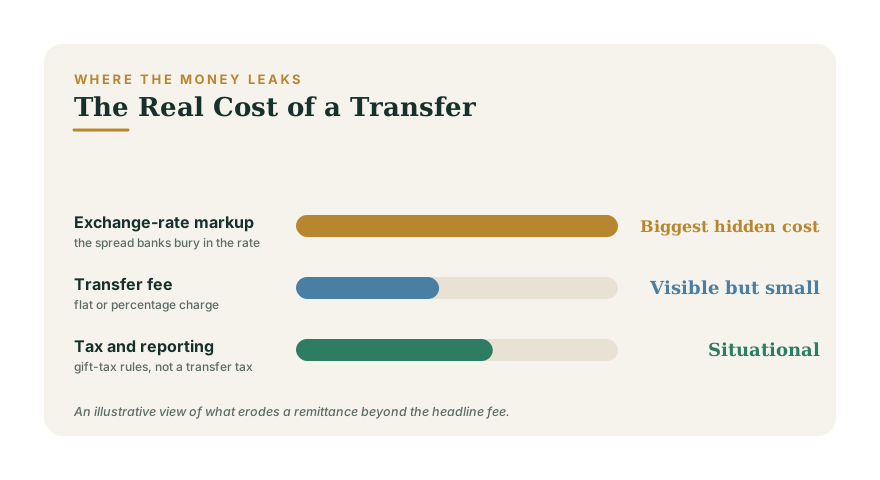
The hidden cost is the exchange rate, not the fee
Most people compare transfer services by their advertised fee, which is exactly the number those services want you to focus on. The larger cost is usually buried in the exchange rate — the gap between the true mid-market rate and the worse rate you actually get. A "zero-fee" transfer with a poor rate can cost far more than a service that charges a visible fee but converts near the real rate. Before every large transfer, look up the mid-market rate and compare it to the rate you are being offered; the difference, multiplied by the amount, is your true cost. Specialist online transfer services often beat traditional banks on this spread by a wide margin.
Timing and the amount you send
Because you are converting dollars to rupees, the exchange rate on the day matters. You cannot reliably time currency markets, but for large, non-urgent transfers it is worth avoiding obviously bad moments and, if your family's need is not immediate, splitting a very large sum can occasionally smooth out rate swings. More important than timing is consolidation: fewer, larger transfers usually cost less in total fees than many small ones. Where the money lands also matters — funds sent as your own savings typically go to your NRE account, while money for family goes directly to their resident account. The account distinction is covered in NRE vs NRO Accounts.
The tax rule people get wrong
Here is the reassuring part: there is no US tax simply for wiring money abroad. Sending your own after-tax dollars to your own account, or to family, is not a taxable event by itself. What can apply is the gift tax — but even that rarely results in tax owed. Under IRS rules you can give any individual up to the annual gift-tax exclusion each year with no filing at all, and gifts above that amount usually require only a gift-tax return that draws down your large lifetime exemption rather than creating an immediate bill (IRS, Gift Tax FAQs). The full mechanics, including how the annual and lifetime numbers work, are in Gift Tax Rules, Explained.
When gifts to family need reporting
A few situations do trigger paperwork, and missing them is costly:
- Large gifts to any one person in a year. Cross the annual exclusion and you generally file Form 709 (the gift-tax return). You usually owe nothing — it just tracks against your lifetime exemption.
- Gifts to a non-citizen spouse. These have their own, higher annual limit that the IRS adjusts periodically; the rules differ from gifts to a US-citizen spouse.
- Money you receive from abroad. If you are the one receiving a large gift or inheritance from a foreign person, you may need to report it to the IRS on Form 3520 — the receiver, not the sender, files this.
None of these are transfer taxes. They are information rules, and staying inside the annual exclusion sidesteps most of them entirely.
Send smart, document everything
Sending money home is not about avoiding a phantom remittance tax — that does not exist. It is about beating the exchange-rate spread, consolidating transfers, and keeping simple records so that if you ever cross a gift threshold, filing the return is trivial. Keep proof of the source of funds and the purpose of large transfers, especially into an NRO account where you may later want to repatriate. Weigh how supporting family fits your own goals with the Budget Analyzer, model a possible move home with the Return-to-India Planner, and map the full picture at the planning hub. If you are early in your US journey, the Immigrant Financial Readiness check helps prioritize.