The gift tax has a fearsome reputation that almost never matches reality. People hear "gift tax" and assume that handing a relative a few thousand dollars triggers a tax bill, or that the lucky recipient owes money. Neither is true for the overwhelming majority of gifts. The rules are designed so that ordinary generosity is completely tax-free, and even sizable gifts usually require only a form, not a payment.
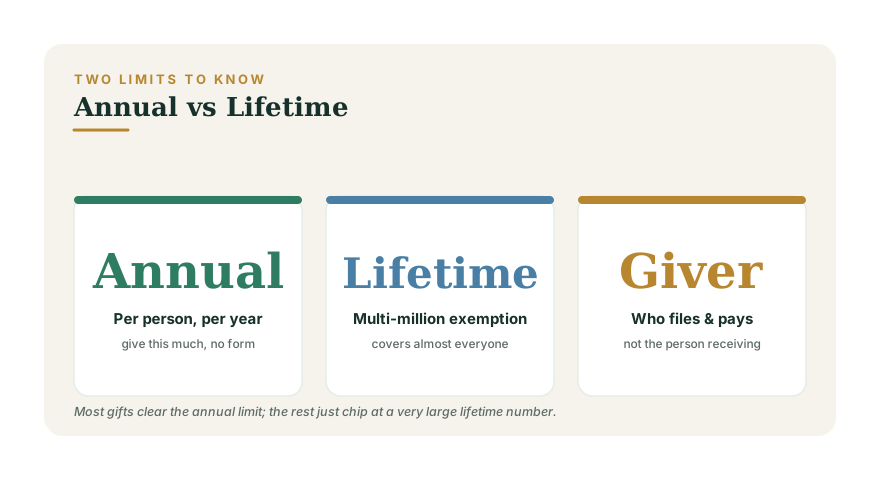
The key is understanding two separate limits — an annual one and a lifetime one — and which one a given gift touches.
The annual exclusion: your everyday free pass
Each year you can give a certain amount to any number of people without any tax consequence and without filing anything. This is the annual exclusion, and it resets every January. The amount is per recipient, so you can give the same sum to a child, a sibling, and a friend in the same year and stay completely clear.
Two underused wrinkles make this even more generous:
- Spouses can combine. A married couple can "split" gifts, effectively doubling what they can give each recipient before any limit is reached.
- Some gifts do not count at all. Money you pay directly to a school for tuition or directly to a provider for someone's medical bills is unlimited and excluded entirely — it must go straight to the institution, not to the person.
The lifetime exemption: the big cushion behind it
What happens if you give one person more than the annual exclusion in a single year? You still almost certainly owe nothing. The excess simply counts against your lifetime exemption — a multi-million-dollar amount that also covers what you can pass on at death. In other words, a large gift does not generate a tax bill; it nibbles a small bite out of a very large lifetime allowance that most households will never exhaust.
Because that exemption is so high, actually paying gift tax is rare and is essentially limited to people moving very large fortunes. For typical families, the lifetime exemption functions as a backstop that quietly absorbs the occasional big gift.
When Form 709 is required
Here is the part people get wrong: exceeding the annual exclusion for one person triggers a filing requirement, not a tax. You file IRS Form 709, the gift tax return, to report the gift and tell the IRS how much of your lifetime exemption you have used. You attach it to nothing you pay — it is a record-keeping form in the vast majority of cases.
You generally need to file Form 709 when you:
- Give more than the annual exclusion to any single person in a year.
- Split gifts with your spouse (even if each of you stays under the limit individually).
- Make certain future-interest gifts that do not qualify for the annual exclusion.
Filing it is mostly about keeping the lifetime tally accurate so the math works out cleanly for your estate later. This connects directly to estate planning everyone needs, since lifetime gifts and estate transfers draw on the same exemption.
Common misconceptions, corrected
- "The person receiving the gift owes tax." ❌ Almost never. The giver is responsible for any gift tax and any filing. Recipients generally owe nothing and report nothing.
- "Going over the annual limit means I owe tax." ❌ It usually just means you file a form and use a sliver of your lifetime exemption.
- "Paying a grandchild's tuition counts as a gift." ❌ Not if you pay the school directly. Same for medical bills paid straight to the provider.
- "Gifts are tax-deductible for me." ❌ Gifts to individuals are not deductible — that is charitable giving, a different rule. See credits vs deductions for what actually lowers your tax.
Smart, simple ways to use the rules
For most families the practical takeaways are pleasant ones. You can help a child with a down payment, fund a grandchild's 529 college account, or support a sibling — and as long as you stay within the annual exclusion per person (or are comfortable filing a simple form when you exceed it), there is no tax to fear. Pay tuition and medical costs directly when you can, since those bypass the limits entirely.
If you are moving larger sums or thinking about how gifts fit a long-term plan, fold them into your wider strategy at the planning hub and review your readiness with the Estate Readiness assessment. The headline, though, is reassuring: gift tax is a problem very few people will ever actually have.