Every few years a shiny new fund appears promising to capture the future: artificial intelligence, clean energy, cybersecurity, robotics, whatever is in the headlines. Sector funds (energy, tech, healthcare) and thematic funds (a specific trend) are easy to sell because they tell a great story. The story is usually better than the investment. Here is why these funds so often disappoint, and why a broad index quietly does the job better.
What these funds are
A sector fund concentrates on one slice of the economy — say, technology or financials. A thematic fund goes narrower still, targeting a specific trend that may cut across sectors, like artificial intelligence or the energy transition. Both abandon the core principle of broad diversification on purpose: they want to be concentrated, because concentration is what gives them the dramatic returns the brochure advertises. It is also what creates the risk the brochure downplays.
Concentration risk cuts both ways
When you put money into a single sector or theme, you are making a bet that one part of the market will beat everything else. When you are right, the payoff can be spectacular. When you are wrong, the losses are just as concentrated. A diversified index fund holding hundreds or thousands of companies absorbs the failure of any single industry; a sector fund offers nowhere to hide. Highly focused funds also tend to be far more volatile, which makes them psychologically punishing to hold and easy to dump at the worst time. Concentration without an edge is just amplified risk — a classic trait covered in How to Spot a Bad Investment.
The performance-chasing trap
Here is the uncomfortable pattern. Thematic funds tend to launch after a theme has already become exciting — which usually means after prices have already run up. Investors pile in near the top, attracted by the recent gains they just missed, and then ride the theme back down when reality fails to match the hype. Study after study finds that investor returns in narrow, volatile funds lag the funds' own published returns, because people buy high (after a hot streak) and sell low (after the inevitable cooldown). The very excitement that sells these funds is what makes investors behave badly inside them.
There is a deeper problem: identifying a real trend is not the same as profiting from it. You can be completely right that AI or clean energy will transform the world and still lose money, because the obvious winners may be priced for perfection, the eventual champions may be private or not yet founded, and the fund you bought may own the wrong companies. The market has usually priced in the story long before it reaches a fund's name.
You probably already own these companies
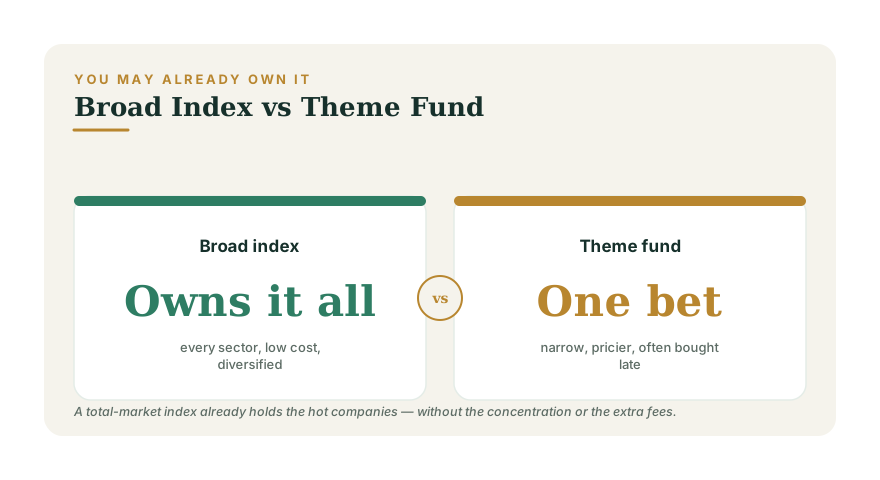
This is the point that quietly deflates most sector and thematic pitches: a broad total-market index fund already holds the hot companies. The biggest technology, AI, and energy firms are among the largest holdings in any S&P 500 or total-market fund. When those companies thrive, your plain index fund captures the gains automatically — without a concentrated bet, without a premium fee, and without you having to time the theme. Buying a separate tech or AI fund on top of your index often just doubles down on stocks you already own, adding risk and cost rather than new opportunity. If the goal is simply broad exposure to growth, the beginner's guide to index funds describes the simpler, cheaper path.
The costs you don't see in the story
Narrow funds usually carry higher expense ratios than broad index funds, and the trendier the theme, the bigger the premium. They also tend to trade more, generating taxes and transaction costs. Over decades, that extra drag compounds against you. This is a relative of the issue raised in factor investing: the more you slice the market into specialized products, the more you pay for the privilege of underperforming a simple index.
When a small position is defensible
Sector and thematic funds are not categorically forbidden. If you have strong conviction, understand you might be wrong, and limit the bet to a small "satellite" slice of an already-diversified portfolio — money you could lose without derailing your plan — it can be a reasonable way to scratch the itch. The danger is letting these funds become the core, or chasing a fresh theme every year. Keep the foundation broad and boring; keep the bets small and rare.
The bottom line
Sector and thematic funds sell a thrilling story, but they concentrate risk, invite performance chasing, cost more, and frequently duplicate companies your index already owns. For nearly everyone, a broad, low-cost index fund captures tomorrow's winners without the drama. Before you act on a hot theme, sanity-check it against your overall plan in the Portfolio Builder and your goals at the planning hub.