People who retire early run into a wall the traditional retirement system never expected: most of their savings sits in 401(k)s and traditional IRAs that normally cannot be tapped before age 59-and-a-half without a 10% early-withdrawal penalty. If you retire at 45, how do you live for nearly 15 years without raiding accounts you are penalized for touching? The Roth conversion ladder is the most popular answer.
The problem it solves
Traditional retirement accounts are built around a single number: 59-and-a-half. Withdraw before it and you generally owe income tax plus a 10% penalty. For someone retiring in their 40s or early 50s, that penalty would erode a huge chunk of their portfolio if they paid it for a decade. The ladder is a way to access that money early, penalty-free, by routing it through a Roth IRA. The broader case for conversions is in The Roth Conversion Strategy Guide.
How the ladder works
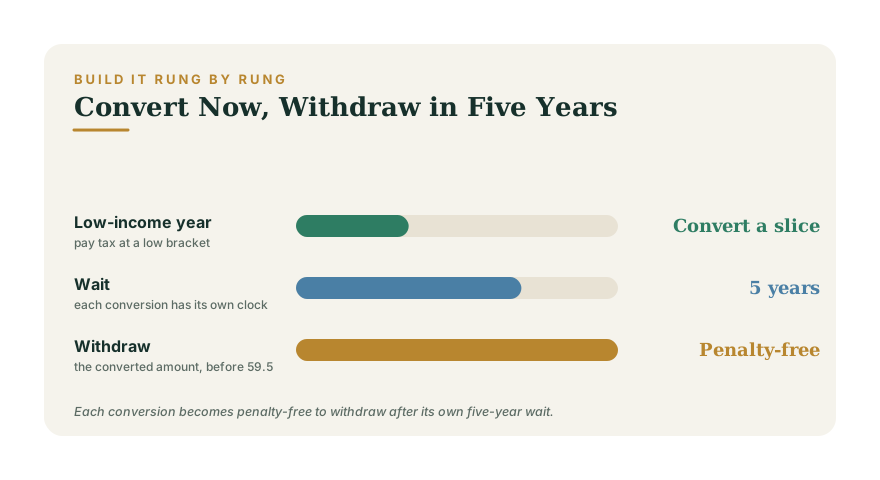
The mechanics rest on one key tax rule: money you convert from a traditional IRA to a Roth IRA can be withdrawn — just the converted principal, not the growth — without penalty once five years have passed since that conversion. The strategy strings these conversions together:
- Year 1: convert a chunk from your traditional IRA to your Roth IRA. You pay ordinary income tax on the converted amount this year.
- Years 2 through 5: keep converting a chunk each year, and live off cash savings or a taxable brokerage account in the meantime.
- Year 6: the first conversion has now seasoned five years, so you withdraw it penalty-free. Each subsequent year, the next rung becomes available.
You are building a ladder where each rung — each year's conversion — becomes accessible five years after you place it. Set up steadily, it produces a penalty-free income stream years before 59-and-a-half.
The low-income window is the whole point
Conversions are taxed as ordinary income, so the magic is doing them in your low-income years — exactly what early retirement provides. While working, every converted dollar might be taxed at a high marginal rate. After you stop working, you may have little or no earned income, so you can convert a meaningful amount and have it taxed in the lowest brackets, sometimes paying very little. Filling up the bottom tax brackets with cheap conversions each year is the engine that makes the ladder so efficient. The same logic powers many early-retirement plans in The FIRE Movement, Explained.
The details that trip people up
- Every conversion has its own clock. The five-year wait runs separately for each year's conversion, which is why you must start the ladder about five years before you need the money.
- The bridge years need funding. Before the first rung matures, you must live on something else — usually cash, taxable brokerage holdings, or already-contributed Roth principal (which is always withdrawable).
- Watch the tax bill. Converting too much in one year can push you into higher brackets or affect health-insurance subsidies. The art is converting just enough to stay tax-efficient.
- This five-year rule is distinct from the separate five-year rule on Roth earnings; the ladder concerns converted principal.
Where it fits in a full plan
The conversion ladder is rarely the only income source — it usually works alongside a taxable brokerage account and a cash buffer, which is why withdrawal sequencing across account types matters so much; see How to Turn a Nest Egg Into a Monthly Paycheck. Because the tax math is sensitive and personal, it pays to model conversion amounts year by year. The Roth Conversion Calculator lets you test how much to convert and what it costs in tax, so your ladder fills the low brackets without spilling into high ones.