Older adults lose billions of dollars to fraud every year, and the losses per victim tend to be the largest of any age group. It is tempting to assume this is about being naive or out of touch, but that misreads the problem. Seniors are targeted for cold, practical reasons, and the most effective protections are systems and conversations — not lectures. If you have an aging parent, a little structure now can prevent a devastating loss later.
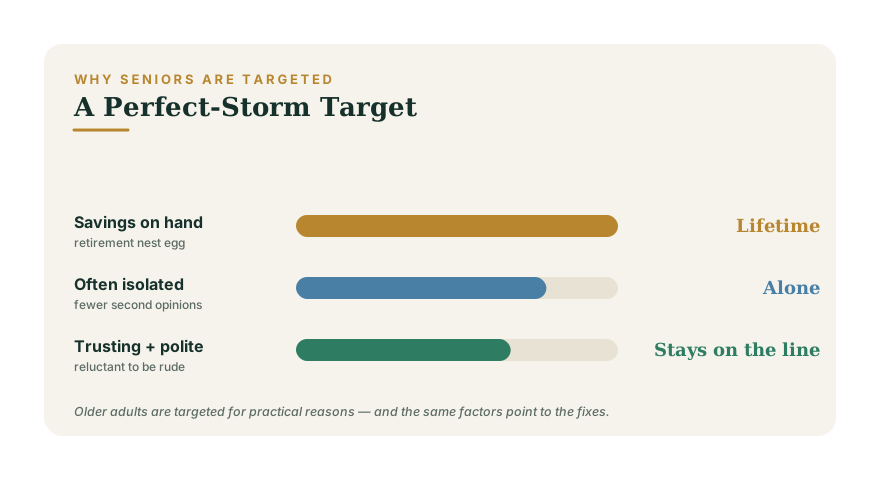
Why seniors are targeted
Scammers are rational about who they pursue. Older adults often have a lifetime of savings, a home, and good credit — a large, accessible pool of money. Many live alone, so there is no one in the next room to say "that sounds like a scam." A generation raised to be polite is reluctant to hang up on a caller or refuse a request. And isolation, grief after losing a spouse, or the early stages of cognitive decline can all blunt the instinct that something is wrong. None of these is a character flaw; together they make a perfect-storm target.
The warning signs of elder fraud
Financial exploitation rarely announces itself. Watch for changes rather than single events:
- Unusual or large withdrawals, new wire transfers, or sudden interest in gift cards or cryptocurrency.
- New "friends," advisors, or romantic interests who appear quickly and take an interest in finances.
- Secrecy, defensiveness, or confusion about recent transactions.
- Unpaid bills despite having the money, or a stack of sweepstakes and "you've won" mail.
- A flood of calls from unknown numbers, or mention of a problem they were told to "keep quiet."
Exploitation also frequently comes from someone close — a relative, caregiver, or new acquaintance — not just an anonymous caller, so look both outward and inward.
Safeguards that actually work
The goal is to add protective friction without stripping a parent of independence. A few high-leverage moves:
- Trusted contact on accounts. Banks and brokerages let an account holder name a "trusted contact" the firm can reach if it suspects something is wrong. This does not give the contact control — just a heads-up channel. It is one of the simplest, most effective tools, and it is free.
- Transaction alerts and shared visibility. Turn on text or email alerts for withdrawals and large charges. Some families set up read-only access so an adult child can spot anomalies early.
- Freeze credit. A frozen credit file blocks new accounts in your parent's name. Walk through it together using Freeze Your Credit: The Single Best Fraud Defense.
- A "pause and call me" rule. Agree as a family that any unexpected request for money — a grandchild in trouble, a tax bill, a prize fee — gets a call to you before any payment. This single habit defeats most of the scams in The Most Common Financial Scams.
Get the legal paperwork in place early
A durable power of attorney lets a trusted person step in to manage finances if a parent becomes unable to — which both protects against exploitation and avoids a crisis if cognition declines. It must be set up while your parent is still fully capable, so do not wait. The mechanics are in Power of Attorney and Healthcare Directives.
Have the conversation the right way
How you raise this matters as much as what you say. Lead with respect, not control: nobody wants to feel managed or doubted. Frame safeguards as protecting their money and independence, share a story about a friend who was nearly scammed rather than implying they would fall for it, and offer to set up the tools together. A practical script is in How to Talk to Parents About Their Finances. Start small, revisit it over time, and use the Financial Resilience Assessment as a neutral, shared checklist so it feels like teamwork rather than a takeover.