Your salary is only part of what a job pays you. The benefits package — retirement match, health insurance, and tax-advantaged accounts — can be worth thousands of dollars a year, and the decisions you make in your first few weeks tend to stick. Here is how to handle the ones that matter most without needing a finance degree.
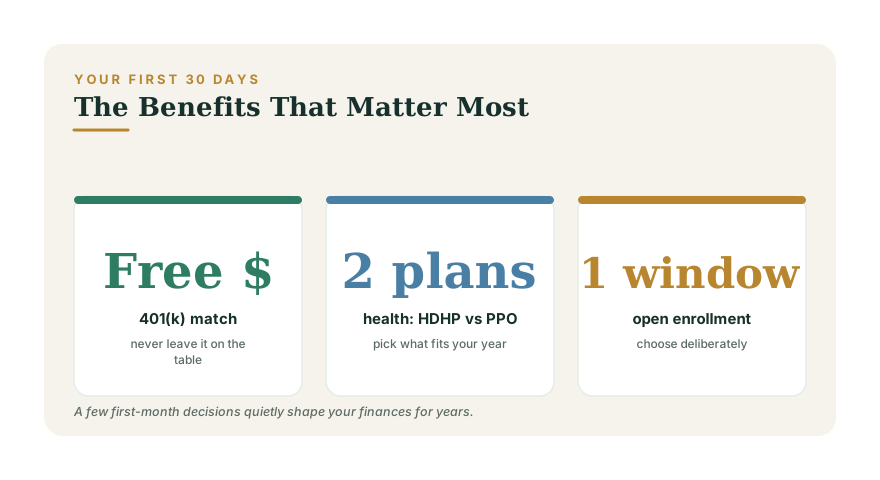
The 401(k) match: free money, so take it
A 401(k) is a retirement account offered through your employer. Many employers match part of what you contribute — for example, 50 cents on each dollar up to 6% of your salary. That match is an immediate, guaranteed return on your money that no investment can reliably beat.
The single highest-value move in your first month is to contribute at least enough to capture the full match. Skipping it is leaving part of your pay on the table. Where the match fits in the bigger order of operations is covered in How to Start Investing.
Health insurance: HDHP vs PPO
You will usually choose between plan types. The two common ones:
- A PPO (or similar) has higher monthly premiums but lower costs when you actually use care — handy if you expect regular doctor visits.
- An HDHP (high-deductible health plan) has lower premiums but you pay more out of pocket before coverage kicks in — often a good fit if you are young and healthy, and it unlocks the HSA below.
There is no universally "best" plan; it depends on how much care you expect to use. The trade-offs are laid out in HDHP vs PPO: Choosing a Health Plan That Fits.
The HSA: the quiet superpower
If you pick an HDHP, you can open a Health Savings Account. It is the only account with a triple tax advantage: money goes in tax-free, grows tax-free, and comes out tax-free for medical costs. Unused money rolls over year to year and can even be invested, making it a stealth retirement account. The details are in The HSA: The Most Powerful Tax-Advantaged Account You're Ignoring. (Do not confuse it with an FSA, which is "use it or lose it.")
The benefits people overlook
Two more are worth a glance during enrollment. Disability insurance protects your income if you cannot work — your ability to earn is your biggest asset early in your career. Some employers also offer basic life insurance, an FSA, commuter benefits, or tuition help. None take long to review, and a few are genuinely valuable.
Your first-month checklist
- Enroll in the 401(k) and contribute at least enough to get the full match.
- Choose a health plan based on the care you realistically expect this year.
- If you picked an HDHP, open and start funding the HSA.
- Note your open-enrollment window — outside it, changes usually wait a year.
Spend an afternoon on these once, and the value compounds quietly for years. Fold the numbers into your wider plan at /plan.