"Build seven income streams" is one of the most repeated pieces of internet money advice, and one of the most misunderstood. The appeal is obvious: if one source of money dries up, the others keep you afloat. But the version sold online — quit your job, collect passive income while you sleep — bears little resemblance to how extra income actually works for most people. The real value of multiple streams is quieter and more durable than the pitch.
Active vs passive income, honestly
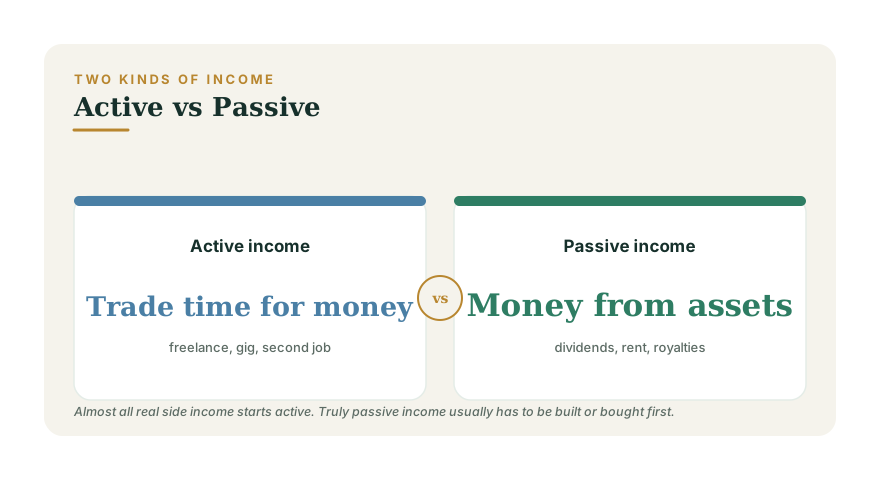
Active income is money you earn by trading your time and effort: your day job, freelancing, a gig, a second job, consulting on the side. It stops when you stop. Passive income is money produced by an asset you already own — dividends from investments, rent from property, royalties from something you created once. It keeps coming whether you work that week or not.
Here is the part the gurus skip: almost all passive income has to be funded or built first, and most "passive" streams are quietly active. Rental property comes with tenants, repairs, and management. A "passive" online store needs constant attention. The cleanest passive income — dividends and interest from a diversified portfolio — only flows once you have accumulated the capital, which you build with active income and time. For most people, the honest path is to earn actively, then convert savings into genuinely passive assets.
What realistic side income actually looks like
Forget the screenshots of $40,000 months. Realistic extra income for someone with a full-time job and a normal life usually means a few hundred to a couple thousand dollars a month, earned actively, at least at first. Common, durable options:
- Skills you already have — freelancing, tutoring, consulting, or contract work in your existing profession. Highest hourly rate, lowest startup cost.
- Gig and service work — driving, delivery, pet care, handyman work. Flexible and reliable, but capped by your hours.
- Selling something — a craft, a digital product, photography, a small online store. Slow to start, but some of it can become semi-passive.
- Renting an asset — a spare room, a parking spot, equipment. Uses something you already own.
Notice that none of these are passive. That is fine. The goal of a side stream early on is to generate cash you can deploy — toward debt, an emergency fund, or investments — not to replace your salary overnight.
Why diversifying income reduces risk
The strongest argument for multiple streams is not getting rich — it is not getting wiped out. If your entire income comes from one employer, a layoff takes 100% of your cash flow at once. A second stream, even a small one, softens that blow and buys you time. It is the income-side version of not putting all your eggs in one basket, the same logic behind a diversified index fund portfolio and a fully funded emergency fund.
There is a second benefit: a side stream that earns even modestly gives you leverage. It is far easier to ask for a raise or walk away from a bad job when you are not financially dependent on a single paycheck.
Avoiding the shiny-object trap
The biggest danger is not laziness — it is distraction. Chasing a new "opportunity" every few months means you never get good enough at any one thing to earn real money from it. Worse, many advertised income streams are products designed to extract money from you: paid courses on dropshipping, "done for you" rental schemes, multi-level marketing. The reliable tell is that the person making money is selling you the dream, not living it.
A few guardrails:
- Pick one stream and give it a real trial — six months, not six weeks — before judging it.
- Be suspicious of anything requiring a large upfront payment to "unlock" income.
- Value your time honestly. A side hustle that nets $8 an hour after expenses may be worth less than picking up overtime or sharpening the skills that grow your main salary.
- Watch for lifestyle creep. Extra income only helps if it goes to goals, not to upgrading your spending — see how to fight lifestyle creep.
Your highest-return income stream is usually your career
It is easy to spend nights chasing a $300 side hustle while ignoring the lever that moves ten times as much money: your primary income. For most people, raising your salary by negotiating, building rare skills, or changing jobs strategically dwarfs anything a side gig can produce, because it compounds over a whole career. Side income is a useful supplement and a real safety net — but it is rarely the main event.
Where the extra money should go
Extra income only builds wealth if it has somewhere productive to land. Run new cash through the same priority list everyone should follow — covered in The Financial Order of Operations — and most of it will flow toward debt payoff, your emergency fund, and investing. To see how much faster a few hundred dollars a month gets you to your goals, model it in the Lifetime Wealth Simulator, then sanity-check your whole plan at the planning hub.