Managing money well does not mean obsessing over it constantly. In fact, checking your accounts every day tends to make people anxious without making them richer. The far better approach is a single, scheduled monthly money review — thirty focused minutes where you look at everything, make a few adjustments, and then put money out of your mind until next month.
The power of a recurring review is that it catches problems while they are small and cheap to fix. A subscription you forgot, a category running hot, a bill that crept up — caught in month one, they cost you little; ignored for a year, they add up to real money. Here is a simple checklist you can run every month.
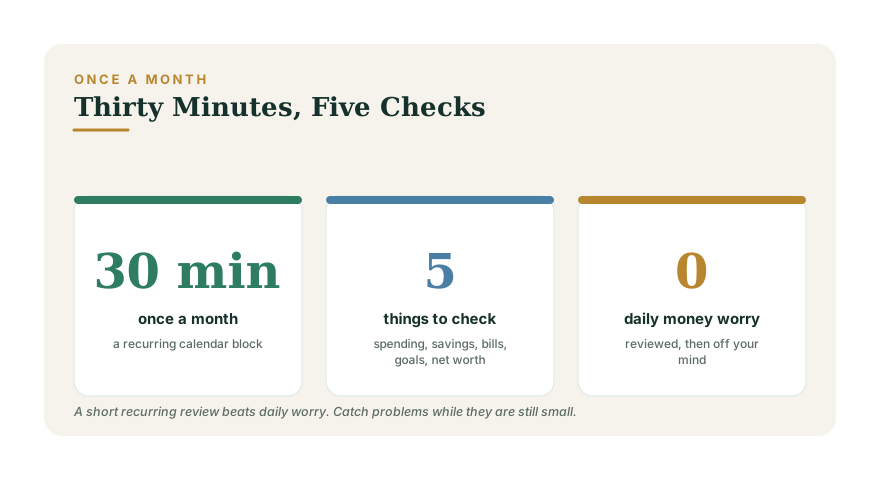
First, make it recurring
Before the checklist, the habit. Put a recurring 30-minute block on your calendar — the same day each month works well, like the first Sunday or right after payday. Treat it like any other appointment. The whole system depends on this one thing: the review has to actually happen on a schedule, not "whenever you get around to it." Make it pleasant — coffee, a comfortable chair — so you do not dread it.
Check 1: Review last month's spending
Open your tracker or banking app and scan the past month's spending by category. You are looking for two things: any surprises, and any category that ran well over plan. You are not judging every purchase — you are finding the one or two areas that are out of line and deciding whether to adjust this month. If you are not tracking yet, start with How to Track Your Spending (Without Hating It); the review is far faster when the data is already there.
Check 2: Calculate your savings rate
Your savings rate — the share of your take-home pay you saved and invested this month — is the single most important personal-finance number, more telling than your income. Add up what went to savings, retirement, and extra debt payoff, and divide by your take-home pay. Even a rough figure is useful. The goal is simply to watch the trend over time and nudge it upward. If it dropped this month, the spending review usually tells you why.
Check 3: Look ahead at upcoming bills
Spending reviews look backward; this step looks forward. Scan the next 30 to 60 days for anything large or irregular: an annual insurance premium, a quarterly tax payment, a subscription renewal, a tuition bill, a trip. The point is to never be ambushed by a known expense. If something big is coming, make sure the cash will be there — this is exactly what sinking funds are for, including seasonal costs like the holidays.
Check 4: Measure progress toward your goals
Pull up each savings goal and see how it moved. Is the emergency fund growing? Is the down-payment bucket on pace? Seeing "Emergency Fund: $4,200 / $9,000" tick upward is one of the most reliable sources of motivation in personal finance, because progress you can see is progress you keep making. If a goal stalled, decide on one concrete change for the coming month rather than letting it drift.
Check 5: Update your net worth
Once a month, record your total net worth — everything you own minus everything you owe. This is the master scoreboard: it captures every goal at once, because debt shrinking and savings growing both push it the same direction. Month-to-month wiggles do not matter; the long-term climb is what you are watching. Tracking this single number over time is one of the most clarifying habits in money, as covered in How (and Why) to Track Your Net Worth.
Finish with one decision and a method that fits
End each review by choosing just one thing to do differently next month — cancel a subscription, raise an automatic transfer, adjust a category cap. One change you actually make beats five you merely intend. If the review keeps surfacing the same problem, it may be a sign your budgeting structure does not fit you; revisit The Best Budgeting Methods, Compared and switch approaches.
Thirty minutes a month is a tiny investment for the calm of knowing exactly where you stand. To make the review even faster, keep your numbers in one place: the Net Worth Tracker for the scoreboard and the Annual Financial Checkup for a deeper once-a-year version of this same habit.