You cannot manage money you never look at. Tracking your spending is the single habit that turns vague money anxiety into a clear picture you can act on. The problem is that most people quit within a month, because the way they were told to track is tedious. The trick is not more discipline — it is choosing a method light enough that you keep doing it.
Tracking does not mean accounting for every penny forever. It means seeing where your money actually goes, so the gap between what you assume and what is true stops costing you.
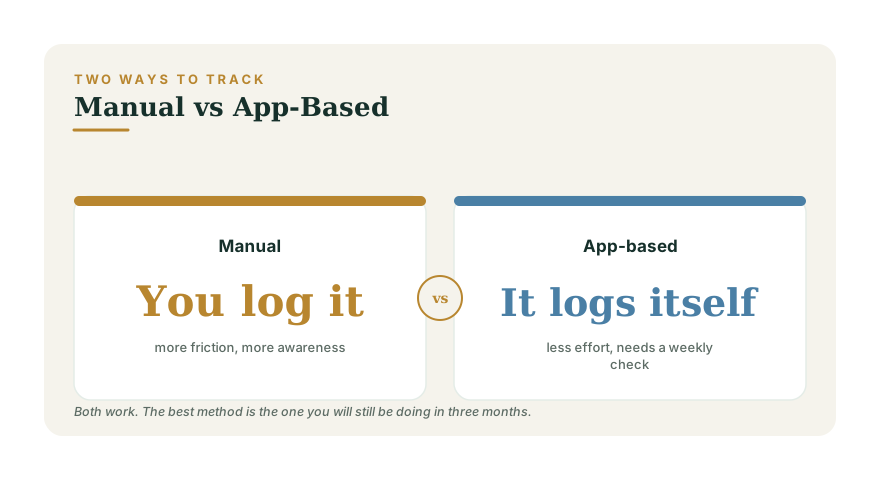
Manual vs app-based tracking
Manual tracking means you write down what you spend — in a notebook, a spreadsheet, or a notes app — usually right after each purchase. It has more friction, but that friction is the point: pausing to log a $14 lunch makes you notice it. People who track manually often spend less simply because the act of recording creates awareness. The downside is that it is easy to forget, and a missed week leaves a hole.
App-based tracking connects to your accounts and categorizes transactions automatically. It is far less effort and nothing slips through, which makes it more sustainable for most people. The trade-off is that automatic logging can become invisible — money flows past without you noticing — so it only works if you actually open the app and look. A common, sensible hybrid: let an app capture everything, but review it yourself once a week.
The weekly review: ten minutes that does the real work
Tracking without reviewing is just data collection. The habit that actually changes behavior is a short weekly review. Once a week, sit down for ten minutes and look at every transaction from the past seven days. Ask three questions: Was each purchase worth it? Are any categories running hot? Is anything here a surprise?
A week is the right rhythm because it is recent enough to remember and frequent enough to course-correct before a bad month is locked in. The weekly review catches the subscription you forgot, the "small" purchases that quietly added up, and the bill that was higher than expected — while you can still do something about it. A deeper monthly version of this lives in The 30-Minute Monthly Money Review.
Categorize without obsessing
The fastest way to quit tracking is to build forty hyper-specific categories and then agonize over whether a hardware-store trip is "home" or "maintenance." Resist this. You need just enough categories to spot patterns, not a forensic ledger.
A workable starter set is fewer than ten buckets: housing, groceries, dining out, transportation, utilities and bills, shopping, fun, and savings. That is enough to answer the questions that matter — am I spending more on takeout than I think? is shopping creeping up? — without turning tracking into a part-time job. When a purchase could fit two categories, pick one and move on; consistency matters more than precision. You can always split a bucket later if it gets too crowded to read.
Turn data into decisions
The whole point of tracking is the decision at the end, not the spreadsheet itself. Once you can see a month or two of real numbers, look for the one or two categories that are out of line with what you want — those are your levers. The goal is not to feel guilty about every category; it is to find the few that are quietly eating your savings rate and adjust just those.
This is where tracking connects to a plan. Your real spending numbers are the raw material for a budget — instead of guessing what you spend on groceries, you know. Feed those numbers into How to Build a Budget That Actually Works, and pick a structure that fits how your brain works in The Best Budgeting Methods, Compared. Tracking shows you reality; the budget is the plan you build on top of it.
Make it stick
- Lower the friction. Whatever method you pick, make logging or reviewing take less than a minute to start. A widget on your phone, a pinned spreadsheet tab, a recurring calendar reminder.
- Attach it to something you already do. Do your weekly review with your Sunday coffee, or right after you pay rent. New habits stick when they ride on old ones.
- Forgive the gaps. Miss a few days? Do not scrap the whole month — just pick back up. Tracking 90% of the time beats tracking perfectly for two weeks and then quitting.
Start this week: pick manual or app-based, choose your handful of categories, and book a recurring ten-minute review. To see how today's spending choices shape your long-term picture, run a few scenarios through the Budget Analyzer and check where you stand with the Financial Wellness Score.