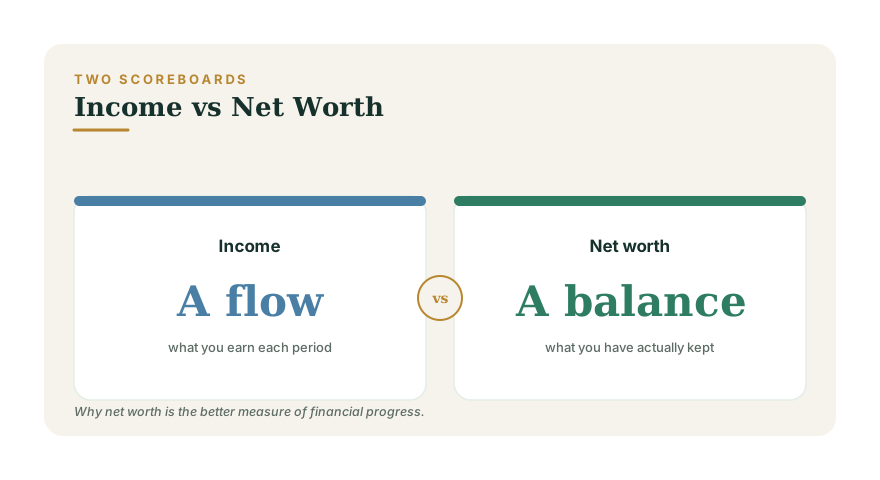
A high income feels like winning, but income is a flow that arrives and disappears. Two people earning the same salary can be in completely different financial shape depending on what they do with it. The number that captures the difference is net worth: everything you own minus everything you owe. It is the master scoreboard, and tracking it changes how you make decisions.
The good news is that net worth is simple arithmetic. You do not need software or a financial advisor to compute it. You need an honest list and a few minutes each month.
What to add up
Net worth is assets minus liabilities. On the asset side, count things with real, sellable value:
- Cash and equivalents — checking, savings, money market, and certificates of deposit.
- Investments — brokerage accounts, retirement accounts like 401(k)s and IRAs, and any HSA balance.
- Real estate — your home and any rental property, valued at a realistic market price, not what you hope it is worth.
- Other meaningful assets — a paid-off car, a business stake, or anything you could actually sell for a known amount.
On the liability side, list what you owe: mortgage balance, auto loans, student loans, credit-card balances, and any personal or medical debt. Subtract total liabilities from total assets and you have your number.
What to leave out
Be conservative. Skip items that are hard to value or that you will never sell: furniture, clothing, electronics, and most household goods. Including them inflates the figure with money you can never spend. A car is a judgment call; many people exclude it because it depreciates and they need to keep it. The goal is an honest, repeatable measure, not the highest possible total.
Why it beats tracking income
Income only measures the raw material. Net worth measures what you did with it. When you track net worth, lifestyle inflation becomes visible: a raise that vanishes into bigger spending shows up as flat net worth despite higher pay. Debt paydown becomes motivating because shrinking liabilities lifts the number just as much as growing assets. And market dips feel less scary when you watch the long-term trend climb rather than fixating on any single month.
How often to check
Monthly is ideal for the first year or two because the habit builds awareness and you catch problems early. After that, quarterly is plenty. Checking daily is counterproductive; you will react to market noise instead of behavior you control. Record the figure on the same day each period so the comparison is clean.
- A simple spreadsheet with one row per month is enough; columns for total assets, total liabilities, and the difference.
- Watch the trend line, not the absolute number. Steady upward movement is the win.
- Expect down months. Markets fall, and big purchases create temporary dips. The direction over years is what matters.
Turning the number into action
Once you track net worth, it becomes the input to bigger questions: Are you on pace for retirement? Can you afford a home? How far are you from financial independence? The single figure ties together budgeting, investing, and debt paydown into one feedback loop. Start your scoreboard this month, then use it to drive the plan at /assessments and /plan.