Turning 65 comes with one of the most confusing decisions of your financial life, and the system does almost nothing to make it clear. Medicare is not a single plan you simply sign up for. It is a set of parts, some run by the government and some by private insurers, with enrollment deadlines that carry permanent penalties if you miss them. Getting the basics straight before your birthday is worth real money and a lot of avoided stress.
The four parts, plainly
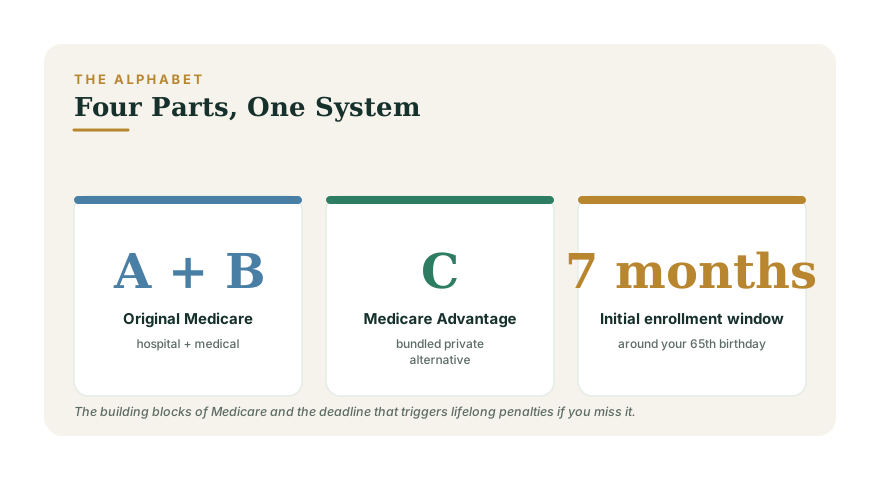
Medicare is built from four lettered pieces:
- Part A (hospital insurance) covers inpatient hospital stays, skilled nursing, and some home health care. For most people it is premium-free because you paid for it through payroll taxes during your working years.
- Part B (medical insurance) covers doctor visits, outpatient care, lab work, and preventive services. It carries a monthly premium that the government adjusts yearly.
- Part C (Medicare Advantage) is a private alternative that bundles A and B, usually D, and often extras like dental or vision into one plan.
- Part D (prescription drugs) covers medications and is offered through private plans, also for a monthly premium.
Parts A and B together are called Original Medicare. From there, you choose one of two broad paths to fill the gaps.
Medigap vs Medicare Advantage
Original Medicare alone leaves you exposed to deductibles, copays, and no out-of-pocket maximum. You close that exposure one of two ways, and you generally cannot combine them:
- Medigap (Medisupplement): you keep Original Medicare and buy a standardized supplement policy that pays many of the costs Medicare leaves behind. You also typically add a standalone Part D drug plan. This path offers wide doctor choice and predictable costs but higher premiums.
- Medicare Advantage (Part C): a private plan replaces Original Medicare with its own network and rules, often with low or zero premiums and bundled extras, but with network restrictions and out-of-pocket costs that depend on how much care you use.
Neither is universally better. Medigap tends to suit people who want freedom and predictability and will pay for it; Advantage tends to suit people who want low upfront cost and are comfortable staying in network. Critically, switching from Advantage back to Medigap later can require medical underwriting, so the first choice matters more than people realize.
Enrollment windows and late penalties
This is where the real money is. Your Initial Enrollment Period is a roughly seven-month window: the three months before the month you turn 65, that month, and the three months after. Miss it without qualifying coverage and two penalties can follow:
- The Part B late-enrollment penalty adds a permanent surcharge to your premium for roughly each year you delayed, and it lasts as long as you have Part B.
- The Part D late-enrollment penalty works similarly and also sticks for life.
There is an important exception: if you are still working at 65 and covered by a current employer's group health plan, you can usually delay Part B without penalty and enroll later through a Special Enrollment Period. But coverage from a former employer (retiree or COBRA) generally does not count for this purpose, which trips up a lot of recent retirees. When in doubt, confirm before you delay.
The IRMAA surcharge for higher incomes
If your income is above certain thresholds, you pay more for Parts B and D through a surcharge called IRMAA (Income-Related Monthly Adjustment Amount). It is based on your tax return from about two years earlier, so a one-time spike, a large Roth conversion, a big capital gain, or a home sale can push you into a higher bracket and raise your premiums for a year. This two-year lookback is a key reason to plan large income events with retirement in mind.
What Medicare does not cover
Plenty of people assume Medicare covers everything once they enroll. It does not. Routine dental, vision, and hearing care are largely excluded from Original Medicare, though many Advantage plans add limited versions. Most significantly, Medicare does not cover long-term custodial care, the day-to-day help with daily living that a nursing home or in-home aide provides. That single gap is one of the biggest financial risks in retirement and needs its own plan.
Medicare is a foundation, not a complete shield, and the choices you make at 65 echo for years. Fold realistic premium and coverage costs into your retirement numbers using our plan, and pair this with our deeper look at planning for healthcare costs in retirement.