For millions of households, a manufactured home is the most affordable route to owning a place of their own. Built in a factory and transported to a site, these homes cost far less per square foot than site-built houses. But the affordability comes with financial trade-offs that the sticker price hides — how the home is titled, how it is financed, whether it gains or loses value, and whether you own or merely rent the land under it. Get those right and a manufactured home can be a sound choice; get them wrong and it can trap you.
A note on terms
"Mobile home" technically refers to factory-built homes made before 1976; newer units built to federal HUD standards are manufactured homes. The words are often used interchangeably in everyday speech, but the distinction matters because older units can be much harder to finance and insure. Either way, the financial questions below are the same.
Chattel vs real-property financing
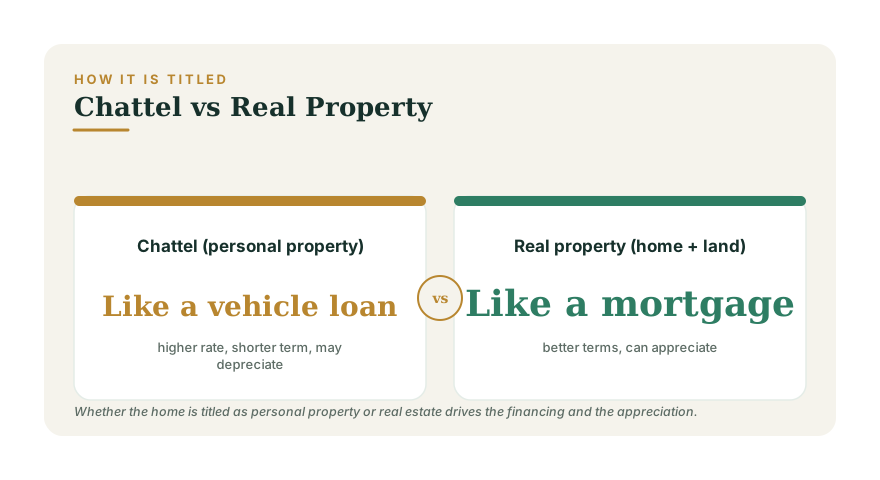
The single biggest financial fork is how the home is titled. If the home sits on land you do not own (or is not permanently affixed), it is usually titled as chattel — personal property, like a car. A chattel loan is easier to qualify for but comes with a higher interest rate and a shorter term than a mortgage, which raises the lifetime cost considerably. If instead the home is permanently affixed to land you own, it can often be titled as real property and financed with a conventional mortgage at better rates and longer terms. Where possible, owning the land and titling the home as real property is the stronger financial position.
Depreciation vs appreciation
Site-built homes typically appreciate largely because they sit on land, which is scarce. A manufactured home on rented land behaves more like a vehicle — the structure itself can depreciate over time, especially older units. By contrast, a manufactured home on land you own tends to hold or gain value, because the land underneath does the appreciating. This is the core reason the land question matters so much: it often determines whether your home is a depreciating asset or an appreciating one. The same land-value logic runs through Buying Land to Build On.
Land-lease parks: the rent you do not escape
Many manufactured homes sit in land-lease communities (parks), where you own the home but pay monthly lot rent for the ground beneath it. That rent is a permanent cost that, unlike a mortgage, never ends and tends to rise over time. It also exposes you to the park owner's decisions — rent increases, rule changes, or a sale of the land out from under the community. Owning a depreciating structure while paying perpetual, rising lot rent is the scenario where the math turns against buyers most often. If you go this route, read the lease terms carefully and weigh whether buying truly beats renting; the framework in Rent vs Buy: The Real Math is directly relevant.
Other costs to budget
- Insurance — manufactured homes often need a specialized policy, and older units can be costlier to insure.
- Transport and setup — delivering and installing the home, plus site prep and utility hookups, can add meaningfully to the price.
- Property taxes — how the home is taxed depends on whether it is titled as real or personal property in your state.
- Upkeep — like any home, it needs maintenance; budget for it as in The True Cost of Homeownership.
When it makes financial sense
A manufactured home tends to make the most sense when you own the land it sits on, can title it as real property, and finance it with a mortgage rather than a chattel loan. In that configuration it can be a genuinely affordable, appreciating home. It makes the least sense when you are buying an older unit, financing it with a high-rate chattel loan, and paying perpetual lot rent in a park — that combination can leave you worse off than renting. The deciding variables are the land and the loan, not the home itself. Before committing, compare your scenario honestly with renting using the Buy vs Rent Calculator, and check your overall footing with the Financial Wellness Score.