Health insurance has a reputation for being deliberately confusing, but the core machinery is simpler than the jargon suggests. There are really only a handful of moving parts, and once you see how they connect, you can read any plan and predict roughly what a year will cost you.
The key idea is that you and the insurer split the bill, and the split changes as the year goes on. Early in the year you pay most of the cost; later, after you have spent enough, the plan picks up everything. Let us walk through the pieces in the order they actually matter.
The premium: what you pay just to be covered
The premium is the monthly fee you pay to have the plan at all, whether or not you ever see a doctor. If you get insurance through work, your share is usually pulled straight from your paycheck before taxes. The premium is the one cost you pay every single month, so a "cheap" plan with a low premium is not automatically cheaper overall — it often just moves the cost to the parts below.
The deductible: the amount you pay before the plan helps
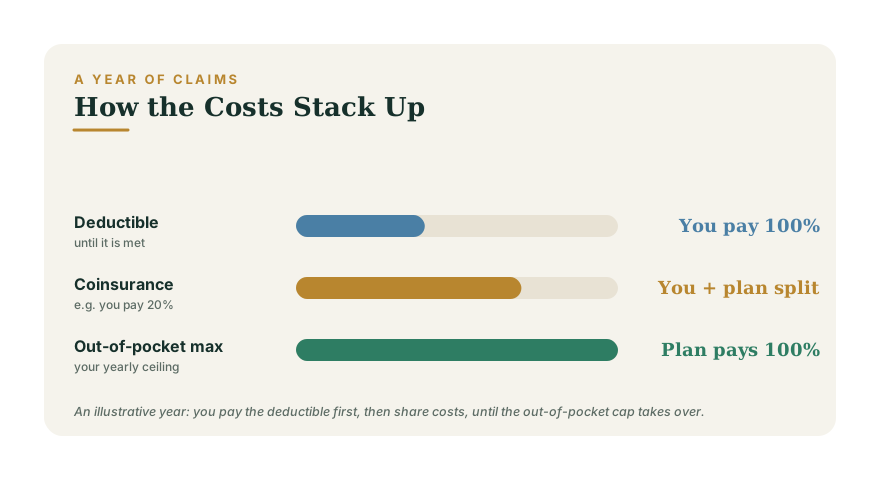
The deductible is the amount you must pay out of your own pocket each year before the insurer starts paying its share of most services. If your deductible is $2,000, you pay the first $2,000 of covered care yourself. Until you hit it, you are effectively paying full (negotiated) price for most things. This is why a fresh injury in January feels so expensive — you have not met your deductible yet.
Copays and coinsurance: how you split the bill after the deductible
Once the deductible is met, you and the plan share costs. A copay is a flat fee for a specific service — say $30 for a doctor visit. Coinsurance is a percentage you pay of the bill — for example, you pay 20% and the plan pays 80%. These two cost-sharing mechanisms are the part people mix up most, so they get their own deep dive in Deductibles, Copays, and Coinsurance, Untangled.
The out-of-pocket maximum: your safety ceiling
The out-of-pocket maximum is the most you can be made to pay in a year for covered, in-network care. It bundles together your deductible, copays, and coinsurance (but not your premiums). Once your spending hits that ceiling, the plan pays 100% of covered costs for the rest of the year. This is the single most important number on the plan, because it caps your worst-case loss — it is the line that turns a catastrophic illness from financial ruin into a known, survivable expense.
In-network vs out-of-network
Insurers negotiate discounted prices with a network of doctors, hospitals, and labs. Stay in-network and your deductible, coinsurance, and out-of-pocket max all work as designed. Go out-of-network and you may face a separate, much higher deductible, a worse split, or no coverage at all — and the provider can sometimes bill you the difference. The practical habit: before any non-emergency care, confirm the provider and the facility are in-network.
How a full year of claims flows
Picture a plan with a $2,000 deductible, 20% coinsurance, and a $6,000 out-of-pocket max:
- January: you have a $3,000 procedure. You pay the first $2,000 (the deductible), then 20% of the remaining $1,000, which is $200. Total so far: $2,200.
- Spring: more care arrives. You keep paying 20% coinsurance on each bill, and that running total climbs toward the ceiling.
- Once you have paid $6,000 total across the deductible and coinsurance, you hit the out-of-pocket max. Every covered, in-network dollar after that is on the plan — you pay nothing more for the year.
That is the whole arc: full price, then a split, then a hard ceiling. Notice that the deductible and out-of-pocket max reset every year, usually in January, so a procedure straddling year-end can mean paying two deductibles. It also means timing matters: if you have already met your deductible and you know you need a non-urgent procedure, getting it done before the calendar resets can save you from starting the cycle over.
One more wrinkle worth knowing: not everything counts toward the deductible the same way. Many plans cover preventive care — annual physicals, certain screenings, vaccinations — at no cost to you, even before the deductible is met. That is by design, because catching problems early is cheaper for everyone. So do not skip the free checkup thinking you cannot afford it; it usually costs nothing and keeps small issues from becoming the kind of claim that blows through your whole deductible.
Picking the plan that fits your year
The right plan depends on how much care you expect. A low-premium, high-deductible plan rewards a healthy year and can pair with a tax-advantaged Health Savings Account; a higher-premium plan with a lower deductible can win in a year of heavy care. The trade-off is laid out in HDHP vs PPO: Choosing a Health Plan That Fits.
Health coverage is the foundation of a financial plan because it caps the one expense that can otherwise be unlimited. Once you understand how the pieces fit, you can compare plans on total expected cost instead of premium alone. Run your overall picture through the Financial Wellness Score to see where insurance fits among your other priorities.