An initial public offering — an IPO — is the moment a private company first sells shares to the public. The headlines make them sound like a chance to get in on the ground floor of the next great company. For most ordinary investors, though, the deal is structured so that the easiest money is already gone before they can buy a single share.
How IPO allocation actually works
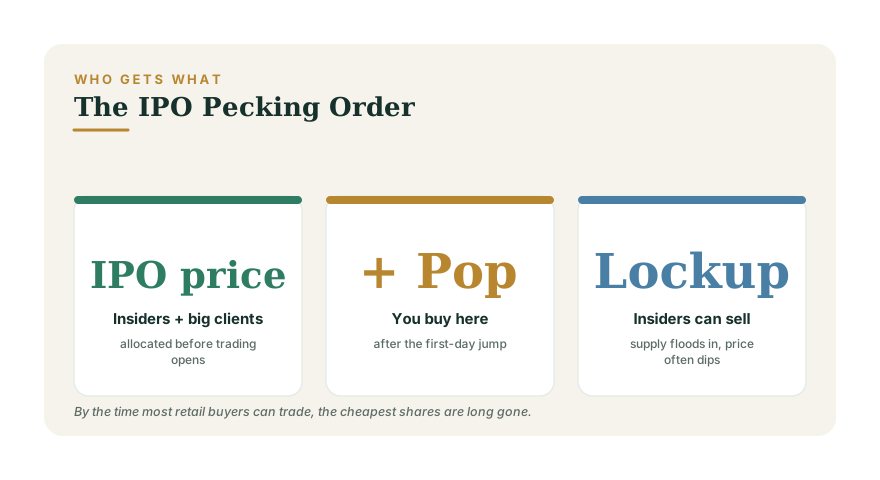
Before a stock starts trading, the company and its investment banks set an offering price and decide who gets to buy at that price. Those allocated shares overwhelmingly go to large institutional investors, the bank's best clients, and company insiders. Ordinary retail investors are rarely offered shares at the IPO price; when they are, it is usually a tiny allocation in a deal nobody else wanted.
This matters because the IPO price is often the cheapest entry point. The people who receive shares at that level have a structural head start over everyone who has to buy later in the open market.
The first-day pop you cannot capture
You have seen the stories: a stock "soars 70% on its first day." That pop is real, but it is the gain captured by those who bought at the offering price and sold into the excitement. Retail investors, by contrast, can usually only buy once the stock starts trading publicly — which is to say, after the pop has already happened.
So the eye-catching first-day return is precisely the return most retail buyers never get. They buy at the inflated, post-pop price, paying a premium driven by hype and limited early supply. Buying into a frenzy at the highest price of the day is rarely a recipe for good long-term returns — the same dynamic that traps buyers of any hot story, as How to Spot a Bad Investment describes.
Lockup expirations: when the selling starts
IPOs come with a lockup period, typically around 90 to 180 days, during which insiders and early investors are barred from selling their shares. When that lockup expires, a large new supply of shares can suddenly hit the market as employees and early backers cash out.
Basic supply and demand takes over: more sellers, the same or fewer buyers, and the price frequently sags around the expiration date. Retail investors who bought at the post-pop high can find themselves holding a stock that drifts lower right as the people who got in early are heading for the exits. Knowing when a lockup expires is one of the most overlooked pieces of IPO timing.
The data on long-run IPO performance
Step back from any single hot deal and the broader record is sobering. Decades of academic research have found that, on average, newly public companies tend to underperform the overall market over the years following their IPO. There are spectacular exceptions, of course — but exceptions are not a strategy, and you cannot reliably pick them in advance.
Several forces work against the IPO buyer:
- Timing favors the seller. Companies tend to go public when conditions are hot and valuations are rich — good for insiders cashing out, less good for new buyers.
- Hype inflates the entry price. Marketing and media attention push the early price above what the fundamentals justify.
- The story is unproven. A newly public company has a short public track record, so you are buying narrative more than demonstrated results.
A calmer way to own new companies
You do not have to chase IPOs to participate in their growth. A broad market index fund automatically holds successful newly public companies once they are large enough to matter — without the lockup drama or the first-day premium. That is the quiet advantage explained in The Beginner's Guide to Index Funds: you get the winners as part of the whole market, at a sensible price, without trying to outguess the insiders.
If a specific IPO still tempts you, treat it as speculation with money you can afford to lose, and run it through a clear-eyed checklist first. The Opportunity Cost calculator can show what that same money might do in a low-cost index fund instead — and the comparison is usually more persuasive than any IPO prospectus.