Penny stocks — shares trading for just a few dollars or even pennies — are marketed as a chance to turn a small bet into a fortune. The appeal is obvious: if a 50-cent stock goes to $5, you have made ten times your money. What goes unsaid is that the same features making that dream possible also make these stocks a favorite vehicle for outright fraud.
What makes penny stocks so risky
Penny stocks usually trade on the fringes of the market — companies that are tiny, unprofitable, or barely operating, with little of the financial disclosure that larger public companies must provide. Two structural problems make them treacherous even before any scam enters the picture.
Illiquidity. Very few people are buying and selling, so getting out can be hard. You might own shares on paper that you cannot actually sell at the quoted price, because there is no one on the other side. When bad news hits, the lack of buyers means the price can collapse with nothing to cushion the fall.
Wide spreads. The gap between the price to buy and the price to sell — the spread — is often enormous on these stocks, sometimes 10% or more. That means you can lose a chunk of your money the instant you buy, before the stock moves at all. You start every trade deep in the hole.
How the pump-and-dump works
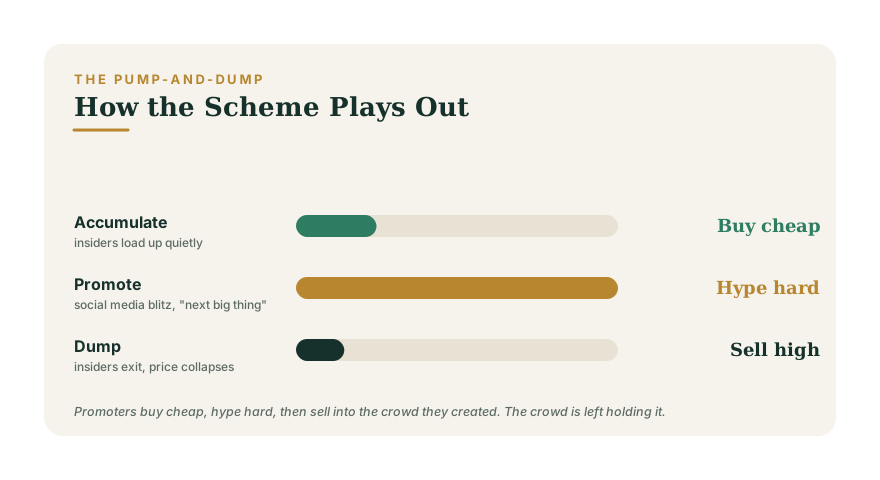
These two weaknesses make penny stocks the perfect tool for a pump-and-dump scheme. The playbook is old and remarkably consistent:
- Accumulate. Promoters quietly buy a large position in a thinly traded stock while it is cheap and nobody is watching.
- Pump. They unleash a coordinated hype campaign — glowing newsletters, breathless social media posts, hot tips in chat groups — to drive a wave of buyers in. Because the stock is illiquid, even modest buying sends the price soaring.
- Dump. As the crowd piles in and the price spikes, the promoters sell their entire position into that demand. Their selling crushes the price, and the latecomers — the people the hype was designed to attract — are left holding shares worth a fraction of what they paid.
The scheme works precisely because it is so easy to move the price of a small, illiquid stock. The promoters do not need the company to succeed; they only need a crowd to show up.
How promotion scams operate on social media
Modern pump-and-dumps live on social platforms, messaging apps, and video channels. The tactics are designed to bypass your skepticism:
- Manufactured urgency — "this is about to explode," "get in before Monday." Real opportunities do not expire in 48 hours.
- Vague, grandiose claims — a tiny company supposedly on the verge of curing a disease, dominating an industry, or signing a world-changing deal, with no verifiable details.
- Paid promoters posing as fans — many "tips" are paid promotions in disguise; the person hyping the stock may have been hired and may already own shares they plan to sell to you.
- Social proof — screenshots of supposed gains and a crowd of excited strangers, engineered to make you feel like you are missing out.
This is the same machinery that powers other speculative manias, including many of the schemes discussed in Crypto and NFTs: When the Math Never Works. The product changes; the manipulation does not.
Why "the next big thing" pitch is a red flag
The single most reliable warning sign is the promise itself. Legitimate investing is boring, diversified, and measured in years. Anyone pitching a single obscure stock as the "next big thing," with urgency and outsized return promises, is describing the bait in a pump-and-dump, not an opportunity. The structure of the pitch — secret tip, tiny window, life-changing gains — is the tell. The same red flags that mark a bad investment generally are spelled out in How to Spot a Bad Investment.
It is worth noting that the people who buy at the post-hype peak in a penny stock are in much the same position as those who buy an overhyped IPO after the first-day pop — paying the top price to the very insiders who are selling. The dynamics in IPOs: Why Retail Investors Often Get the Worst Deal rhyme closely here.
Protect yourself with boredom
The antidote to lottery-ticket investing is a plan dull enough that no hype can hijack it: broad, low-cost funds held for the long term. If you want to channel the urge to do something with your money, do it productively — run the numbers on what consistent, diversified investing can build using the Wealth Simulator, and gauge your true risk tolerance with the Investor Profile assessment. The stock that quietly compounds will outlast every "next big thing" in your feed.