Living paycheck to paycheck means your account hits near zero just as the next paycheck arrives, so every month is a tightrope walk and a single surprise expense becomes a crisis. It is stressful, and it happens to people across a wide range of incomes — raising your pay without changing the pattern often just raises the size of the tightrope. The way out is not vague advice to "spend less." It is a specific sequence of moves, done in the right order.
First, see the cycle clearly
You cannot fix a flow you have not measured. For two or three pay periods, track exactly what comes in and what goes out. The goal is to find your cash-flow gap — how far your spending runs ahead of the buffer that would let you breathe. Almost everyone who does this finds surprises: subscriptions they forgot, fees they did not notice, spending categories far bigger than they assumed. The Budget Analyzer makes this fast, and How to Build a Budget That Actually Works turns the picture into a plan.
Step one: build a one-paycheck buffer
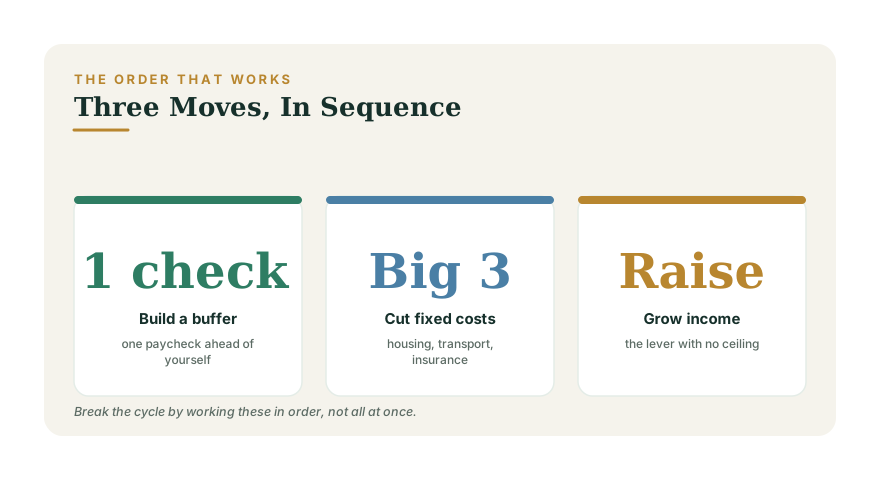
The defining feature of the cycle is timing: you spend this month's money this month, so you are always living on income you have not safely banked yet. The first and most transformative move is to get one full paycheck ahead of yourself — a buffer of roughly one pay period's worth of expenses sitting in checking. Then you pay this month's bills with last month's money, and the tightrope becomes solid ground.
This buffer is not your full emergency fund; it is a smaller, prior step, and it is the single change that most reduces money stress. Build it the same way you build any savings: with automation. Set a small automatic transfer to a buffer account every payday so it grows without a monthly decision — the system is described in Automating Your Finances. Direct any windfall — a refund, a bonus — straight at this buffer to reach it faster. Once you are one paycheck ahead, continue on to a full emergency fund.
Step two: cut the big fixed costs, not the small joys
The usual advice attacks small treats — skip the coffee — which delivers little and makes you miserable. The real money is in your large fixed costs, the recurring bills that dominate your budget. The "big three" for most households:
- Housing — usually the largest expense by far. A cheaper place, a roommate, or renegotiating rent moves the needle more than any small cut.
- Transportation — a high car payment plus insurance and fuel can quietly consume a huge share of income. A less expensive vehicle is a powerful reset.
- Insurance and recurring services — shopping your auto and home insurance, phone, and internet can save real money for an hour of effort.
Cutting one big fixed cost permanently lowers your spending floor every single month, which is what frees up cash flow for good. This is the high-leverage, low-misery approach in Cut Expenses Without Making Your Life Miserable.
Step three: raise your income — the lever with no ceiling
You can only cut spending so far; income, in principle, has no ceiling. Once you have a buffer and have trimmed the big costs, turn to the other side of the equation. Options range from negotiating a raise or seeking a higher-paying role, to adding a side income, to building a skill that lifts your earning power. The order matters here: a higher income only breaks the cycle if the buffer and the cost discipline are already in place. Otherwise the extra money simply gets absorbed — the classic trap of lifestyle creep, where rising pay is matched dollar for dollar by rising spending.
Lock in the gains with automation
Whenever your cash flow improves — from a cut cost or a raise — immediately automate the difference into savings before it disappears. This is the step that makes the change permanent rather than temporary. Money that moves to savings automatically on payday never gets spent. Without this, the cycle quietly reasserts itself within a few months.
The order is the whole point
To recap the sequence: measure your cash flow, build a one-paycheck buffer so you stop living on unbanked income, cut your largest fixed costs to permanently lower your spending floor, and then raise income — automating every gain along the way. Skipping straight to "earn more" is why so many raises vanish without breaking the cycle. Worked in order, these moves end the month-to-month panic for good.
To find your starting point and see which step to tackle first, run the Financial Resilience assessment or map the whole sequence at the planning hub.