The most common money advice is also the least useful: skip the daily latte and you will get rich. You will not. A coffee habit might run a few hundred dollars a year, while your rent, car, and groceries run tens of thousands. Cutting expenses by punishing yourself over small pleasures is both ineffective and demoralizing, which is exactly why those efforts collapse within weeks. The cuts that actually move the needle, and that you can live with, look very different.
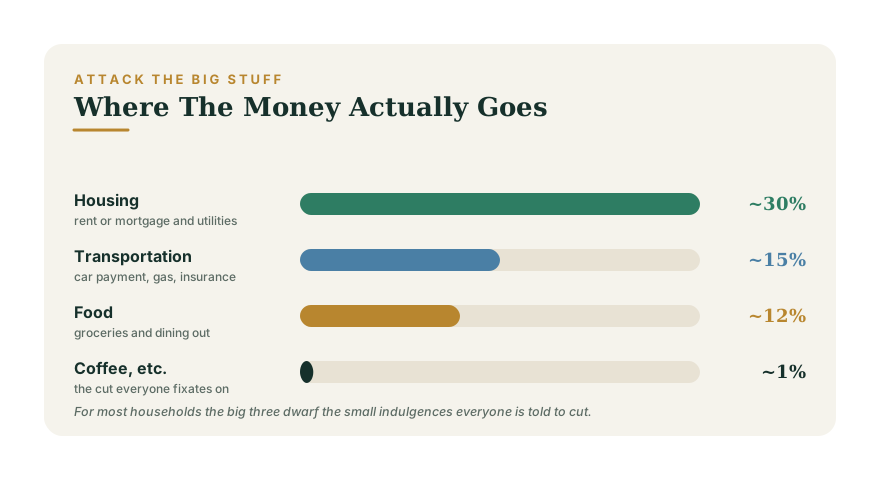
The 80/20 of spending cuts
A small number of categories drive most of a typical budget. For the majority of households, housing, transportation, and food together swallow well over half of take-home pay. Everything else, the subscriptions, the coffee, the impulse buys, is real but comparatively minor. That means the highest-leverage moves are also the least frequent ones. You decide on a car or an apartment once every few years, and that single decision dwarfs hundreds of daily choices about small treats.
This is good news, because it means you do not have to white-knuckle every purchase. Get the big three roughly right and you can spend freely on small pleasures without guilt. Get them wrong and no amount of skipped coffee will save you.
Attack the big three
Start where the dollars are largest, even though these decisions are the hardest to change.
- Housing. The biggest line for almost everyone. A roommate, a smaller place, a cheaper neighborhood, or refinancing can each save hundreds a month, far more than years of small economies. You will not revisit it often, so when you do, take it seriously.
- Transportation. A large car payment plus insurance, gas, and maintenance can quietly rival a second rent. Buying a reliable used car instead of financing a new one, or dropping to one car, is one of the single most powerful cuts available, and you make it once.
- Food. The category where habit hides the most money. The fix is rarely depriving yourself; it is shifting the ratio of dining out to cooking at home, planning meals so groceries do not rot, and reserving restaurants for occasions you actually savor.
Notice that none of these require daily willpower. They are structural decisions you make a handful of times, then benefit from automatically.
Run a subscription audit
Recurring charges are designed to be forgotten, and that is the point. Streaming services, apps, memberships, cloud storage, and software auto-renew month after month for things you no longer use. Pull your last two or three months of statements and list every recurring charge. Cancel anything you cannot remember using in the past month. This is the rare painless cut, because by definition you are eliminating spending that was already invisible to you.
Do this once or twice a year, since subscriptions accumulate the way clutter does. People routinely find 40 to 100 dollars a month leaking out this way, money that buys them nothing they would miss.
Negotiate your recurring bills
Many fixed bills are more negotiable than they look. Internet, cell phone, insurance, and even some medical bills can often be lowered with a phone call, a comparison quote, or a polite request for current promotions.
- Call your internet and phone providers and ask for retention or new-customer rates; mention you are comparing competitors.
- Re-shop your auto and home insurance every year or two, since loyalty is rarely rewarded and rates drift.
- Ask about fees on bank accounts and cards, many of which get waived simply because you asked.
An hour of calls can shave real money off bills you pay every single month, and unlike daily frugality, the savings keep arriving without any further effort.
Cut the things you do not value, keep the ones you do
The reason most expense-cutting fails is that it treats all spending as equally guilty. It is not. The smart move is to slash hard in the categories you do not care about, the forgotten subscriptions, the oversized car, the default-expensive apartment, and protect the small pleasures that genuinely make your life better. A daily coffee that you love is a fine thing to keep; a 600-dollar car payment you barely think about is not.
Done this way, cutting expenses stops feeling like deprivation and starts feeling like clarity: spending less on what you never valued, so you can keep spending on what you do. Map your biggest categories and find your real leverage points on the plan, then track how the cuts lift your scores over time.