Few pieces of mail are as alarming as a five-figure hospital bill you did not expect. The reflex is to assume the number is correct and either pay it or panic. Resist both. A surprise medical bill is frequently wrong, often negotiable, and in many cases illegal under federal law. Treating it as an opening offer rather than a final demand is the single most valuable mindset you can bring to the process.
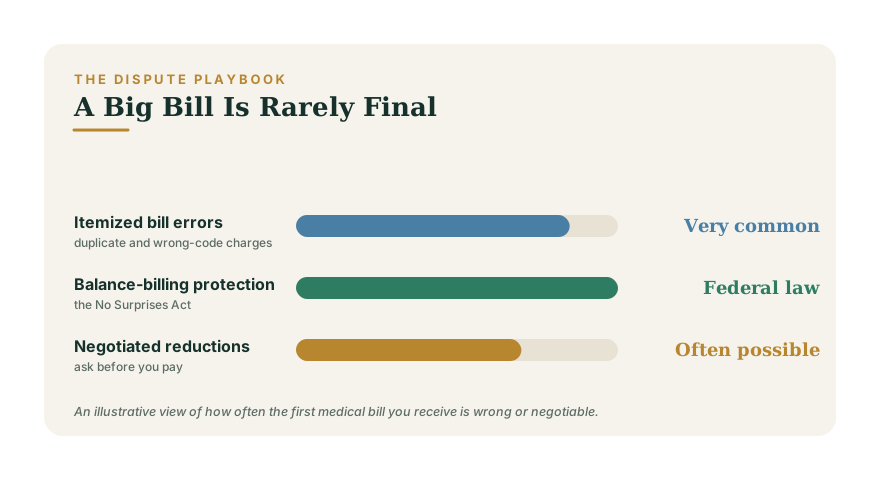
Do not pay it yet
The first rule is to slow down. Paying immediately forfeits your leverage and can be hard to reverse. A bill is not a court order, and the amount printed on it is often the highest number anyone will ever ask you for. Before a dollar moves, you want to know what you were charged for, whether your insurer processed it correctly, and whether the law even permits the charge. The broader landscape of your rights here is covered in Surprise Medical Bills and Your Rights.
Know your rights under the No Surprises Act
The federal No Surprises Act, which took effect in 2022, bans many of the worst surprise bills outright. In broad terms, it protects you from being balance billed — charged the gap between what an out-of-network provider wanted and what your insurer paid — in situations you could not control: emergency care, and care from out-of-network providers (like an anesthesiologist or radiologist) at an in-network facility. In those cases you generally owe only your normal in-network cost sharing, and the provider and insurer must sort out the rest between themselves. If you are uninsured or paying cash, you are also entitled to a good faith estimate in advance. The government explains these protections and how to dispute a violation at cms.gov. If a bill looks like illegal balance billing, that is your first and strongest line of defense.
Get an itemized bill and check every line
Hospitals often send a summary showing one intimidating total. Demand a fully itemized bill listing every charge, procedure, and billing code. Errors are common: duplicate charges, services you never received, a routine item coded as a premium one, or a room billed for more days than you stayed. Compare the itemized bill against your insurer's Explanation of Benefits to see what was billed, what insurance paid, and what they claim you owe. Discrepancies between the two are exactly where money is recovered.
Confirm the insurer processed it right
A large "you owe" figure sometimes just means the claim was denied or misprocessed, not that you genuinely owe it. Check whether the service was coded correctly, whether it was wrongly ruled out of network, and whether a required authorization was on file. If the insurer made an error, the fix is an appeal to them, not a payment to the provider. Insurers deny claims more often than people realize, a pattern worth understanding from How Insurers Deny Your Claims. File a formal appeal in writing and keep copies of everything.
Negotiate the remaining balance
If a legitimate balance survives all of the above, negotiate it — providers expect this:
- Ask for the cash or self-pay price, which is frequently far lower than the sticker charge.
- Cite fair prices. Point to what Medicare or a fair-price database pays for the same code in your area as an anchor.
- Request financial assistance. Nonprofit hospitals are required to have charity-care policies, and many people who qualify never ask.
- Offer a prompt-pay discount or set up a zero-interest payment plan — never put medical debt on a credit card.
The full menu of these tactics is in How to Lower Your Medical Bills. Whatever you agree to, get it in writing before you pay.
If it has already gone to collections
Even a bill in collections is not the end. Medical debt is treated more leniently on credit reports than it used to be, and you can still dispute the amount, request validation of the debt, and negotiate a reduced settlement. The recovery path for debt that has escalated is mapped in Medical Debt: What to Do. You can also report No Surprises Act violations and predatory billing to federal regulators.
Fight first, pay last
A surprise medical bill is a starting position, not a verdict. Slow down, invoke the No Surprises Act where it applies, get an itemized bill, confirm your insurer processed the claim correctly, and negotiate whatever legitimately remains. The people who pay the least are simply the ones who refuse to accept the first number. Make sure a medical shock cannot capsize your finances by building the right cushion — check yours with the Emergency Fund calculator and the Financial Resilience assessment, and map your protections at the planning hub.